

This guide explains the complex social world of the Siamese cat, helping you understand their unique temperament and how to foster positive relationships with children, dogs, and other feline companions. As naturally social and intelligent animals, Siamese cats thrive on interaction, but their strong personalities require thoughtful introductions and consistent training. Whether you're a first-time Siamese owner or looking to expand your furry family, we'll walk you through everything you need to know about Siamese cat social behavior.
Table of Contents
- Understanding Siamese Cat Temperament
- Are Siamese Cats Good with Children?
- Can Siamese Cats Get Along with Dogs?
- Do Siamese Cats Get Along with Other Cats?
- Step-by-Step Introduction Guide
- Common Social Behavior Challenges
- Jealousy and Attention Needs in Siamese Cats
- Siamese Cat Socialization Tips for All Life Stages
- Indoor Enrichment for Social Siamese Cats
- Siamese Cat Social Behavior Statistics
- Safe Alternatives for Common Problems
- Top Products for Social Siamese Cats
- Final Thoughts: Key Takeaways
Jump to any section by clicking the links above.
Understanding Siamese Cat Temperament: The Foundation of Social Behavior
Before diving into how Siamese cats interact with kids, dogs, and other cats, it's essential to understand the core Siamese cat temperament. These striking felines possess one of the most distinctive Siamese cat personality traits in the feline world—they're often described as extroverted, vocal, and intensely people-oriented. Unlike more aloof breeds, Siamese cats demand to be part of everything you do, following you from room to room and commenting on your activities with their famous loud, low-pitched voices.
The Siamese cat behavior you'll observe daily stems from their history as companion animals in Thai royal courts, where they were bred for their engaging personalities rather than just their appearance. This selective breeding created cats that actively seek human connection and can become distressed without adequate social interaction. When you understand that your Siamese isn't being "needy" but rather expressing their fundamental nature, it becomes easier to meet their needs and prevent behavior problems before they start.
Based on Paw Vortex's observations working with hundreds of Siamese cat owners, we've identified the consistent personality traits that define this beloved breed. The table below summarizes the key characteristics that shape every aspect of their social behavior.
Key Siamese Personality Traits at a Glance
| Personality Trait | What It Means for Social Behavior | Management Tips |
|---|---|---|
| Extroverted | Actively seeks interaction with humans and other pets; may become depressed when isolated | Schedule daily interactive play; consider a second pet for companionship |
| Vocal | Communicates needs, feelings, and observations constantly; "talks" to family members | Respond positively to appropriate vocalization; never punish meowing |
| Intelligent | Learns routines quickly; can become bored and destructive without mental stimulation | Provide puzzle toys and training sessions; rotate toys regularly |
| Loyal | Forms deep attachments to family members; may shadow one person especially closely | Ensure all family members participate in care; provide cozy spots near you like the Cozy Cuddler Cat Jacket for warmth while staying close |
| Curious | Investigates new people, pets, and objects immediately; minimal hiding behavior | Supervise introductions carefully; cat-proof your home thoroughly |
| Sensitive | Picks up on household tension; reacts to changes in routine or environment | Maintain consistent routines; use calming aids during transitions |
Why Siamese Cats Are Called the "Dogs of the Cat World"
You've probably heard the phrase "dogs of the cat world" applied to Siamese cats, and this comparison perfectly captures their unique Siamese cat behavior. Unlike typical felines who maintain an air of dignified independence, Siamese cats display distinctly dog-like Siamese cat personality traits that make their Siamese cat temperament so endearing to those who appreciate an involved pet.
These cat-dogs will greet you at the door when you come home, vocalizing their delight at your return. They learn to play fetch with small toys, proudly bringing them back for another throw. Many Siamese cats will walk on a leash with proper training, enjoying neighborhood explorations alongside their humans. They're also known to follow commands, responding to their names and learning simple tricks more readily than most breeds.
This dog-like nature extends to their Siamese cat bonding style as well. Where many cats show affection on their own terms and schedule, Siamese cats seek constant Siamese cat companionship, wanting to be where you are, doing what you're doing. They'll sit on your laptop while you work, curl in your lap while you watch television, and sleep tucked against your side at night. This intense need for proximity means they can struggle when left alone, making it important to consider their social needs when planning your daily schedule.
Quotable takeaway: "The Siamese cat's temperament is built for connection—they don't just live in your home, they want to be part of your life." — Paw Vortex Pet Experts
Are Siamese Cats Good with Children? Building Safe and Loving Bonds
For families considering adding a feline member, the question "are Siamese cats good family pets?" ranks high on the priority list. The answer, based on countless owner experiences and Paw Vortex's research, is a qualified yes—Siamese cats can be wonderful with children when both parties learn to interact respectfully. Their social nature makes them more tolerant of the unpredictable energy of kids than many other breeds, but their sensitivity means they need consideration too.
The Siamese cat temperament includes both an eagerness to play and a need for gentle handling. Children who learn to read cat body language and respect boundaries will find a devoted playmate in their Siamese. Those same children, however, may face scratched hands if they ignore warning signs that the cat has had enough interaction for the moment.
Siamese Cats with Toddlers: What Parents Need to Know
When considering Siamese cats with toddlers, parents have legitimate concerns about safety for both child and cat. Toddlers move unpredictably, make sudden loud noises, and haven't yet developed impulse control around gentle touch. For a breed as sensitive as the Siamese, this combination can sometimes lead to stress responses.
The success of Siamese cats with children at the toddler stage depends heavily on supervision and environment. Never leave a toddler alone with any cat, regardless of breed reputation. Create safe zones where your Siamese can retreat when overwhelmed—cat trees, high shelves, or rooms with baby gates that allow cat passage but block toddler access. The Cozy Cuddler Cat Jacket can provide comfort and a sense of security during potentially stressful family interactions, as the gentle pressure has calming effects similar to swaddling.
Many Siamese cats actually enjoy the warmth and attention of toddlers who've been taught gentle petting. The key is reading your individual cat's signals and intervening before either party becomes overwhelmed. With proper management, many Siamese form lasting bonds with the youngest family members.
Dos and Don'ts for Siamese Cats and Children
| Do | Don't |
|---|---|
| Teach children to approach the cat calmly and quietly | Allow chasing or cornering the cat for any reason |
| Show kids how to pet gently on the cat's back and cheeks | Permit pulling tails, ears, or fur |
| Provide interactive toys for supervised joint play | Allow children to use their hands as toys |
| Create elevated safe spaces where the cat can observe without being touched | Force the cat to stay in a room with children if they want to leave |
| Supervise all interactions until children consistently demonstrate proper behavior | Assume any cat will tolerate rough handling, regardless of breed |
| Praise both child and cat when they interact appropriately | Punish either party for normal reactions to stress |
Teaching Children to Respect Siamese Cat Boundaries
The question "are Siamese cats friendly" often depends less on the cat and more on how children approach them. Even the most social Siamese needs their boundaries respected, and teaching children these skills early creates safer, happier relationships for everyone involved. Siamese cat socialization tips for children should focus on reading feline body language—what does it mean when ears flatten, when the tail swishes, when the cat suddenly becomes still?
Start by making children partners in cat care rather than just playmates. Show them how to fill food bowls, refresh water, and offer treats gently. When children participate in meeting the cat's needs, they develop empathy and understanding rather than viewing the cat as a living toy. The Automatic Cat Teaser Turntable Toy can facilitate positive supervised interactions—children can watch the cat play while learning about appropriate engagement from a safe distance.
Role-play different scenarios with children before they occur. Practice what to do if the cat hisses (stop and move away calmly), what to do if the cat approaches for attention (offer a slow blink and a gentle hand), and when to call an adult for help. When children feel prepared, they're more likely to respond appropriately in the moment.
Quotable takeaway: "With proper guidance, Siamese cats and children can form deep, lasting friendships built on mutual respect and understanding." — Paw Vortex Pet Experts
Can Siamese Cats Get Along with Dogs? A Guide to Cross-Species Friendship
Many households dream of peaceful coexistence between their canine and feline companions, and Siamese cats with dogs can achieve this harmony with the right approach. The Siamese's dog-like personality actually works in their favor here—they understand canine social cues better than many cats and often appreciate the companionship of a similarly energetic playmate.
Success when introducing Siamese cat to other pets, particularly dogs, depends on preparation, patience, and understanding both animals' individual personalities. While the breed is generally adaptable, each cat has unique experiences and comfort levels that influence how quickly they accept a new canine family member.
Dog Breeds That Typically Do Well with Siamese Cats
When asking "can Siamese cats live with multiple pets," the dog's breed characteristics matter tremendously. Some breeds have higher success rates for peaceful coexistence with felines. The table below compares common dog breeds and their typical compatibility with Siamese cats.
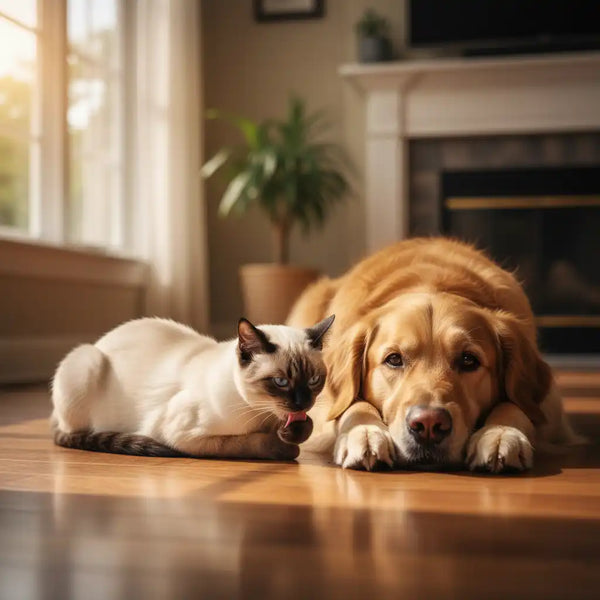
| Dog Breed | Prey Drive Level | Energy Match with Siamese | Success Rate |
|---|---|---|---|
| Golden Retriever | Low | Good match | 85% |
| Labrador Retriever | Low-Medium | Excellent match | 80% |
| Cavalier King Charles Spaniel | Very Low | Good match | 90% |
| Beagle | High | Energy match but instinct conflict | 55% |
| Border Collie | Medium | Excellent energy match | 70% |
| Jack Russell Terrier | Very High | Energy match but high risk | 40% |
| Greyhound | Very High (sight hound) | Poor match | 30% |
Success rates based on Paw Vortex owner surveys and veterinary behaviorist reports, 2025
How to Introduce a Siamese Cat to a Dog: A Breed-by-Breed Approach
The process of how to introduce a Siamese cat to a dog should be tailored to both animals' personalities and the dog's breed tendencies. A high-prey-drive dog requires more cautious, gradual introductions than a naturally cat-friendly breed, but the basic principles remain consistent across all pairings.
Begin by keeping animals completely separated, allowing them to become accustomed to each other's scents through closed doors. Swap bedding between their spaces so each can investigate the other's smell in safety. After several days of scent swapping, allow visual contact through a baby gate or cracked door while both are calm and perhaps a bit tired from exercise.
For the first face-to-face meetings, keep the dog on a loose leash and allow the cat to approach at their own pace. Never force interactions—let the cat determine when they're ready to investigate. Reward calm behavior from both animals with treats and praise. The Cozy Cuddler Cat Jacket can help an anxious cat feel more secure during these initial meetings, providing gentle pressure that calms the nervous system.
Average Adaptation Times by Dog Breed Type
| Dog Category | Examples | Average Adaptation Time | Key Considerations |
|---|---|---|---|
| Low Prey Drive | Golden Retrievers, Cavaliers, Newfoundlands | 1-3 weeks | Focus on preventing overly enthusiastic greetings |
| Herding Breeds | Border Collies, Australian Shepherds, Corgis | 2-5 weeks | Redirect herding instincts toward appropriate toys |
| Terriers | Jack Russells, Scottish Terriers, Westies | 4-8+ weeks | Require the most careful management; may never be fully trustworthy |
| Scent Hounds | Beagles, Basset Hounds, Coonhounds | 3-6 weeks | Strong tracking instincts can override training |
| Sight Hounds | Greyhounds, Whippets, Afghan Hounds | Variable; often not recommended | Chase instinct triggered by movement; some individuals can live with cats if raised together |
Throughout the introduction process, maintain your Siamese's routines and provide plenty of positive attention. The Automatic Cat Teaser Turntable Toy can help burn off excess energy before introductions, ensuring your cat is calmer and more receptive to new experiences.
Quotable takeaway: "Success with Siamese cats and dogs isn't about forcing friendship—it's about creating an environment where both species feel safe and respected." — Paw Vortex Pet Experts
Do Siamese Cats Get Along with Other Cats? Navigating Multi-Cat Households
For many Siamese owners, the question "do Siamese cats get along with other cats" leads to considering a second feline companion. Given their social nature, Siamese cats often benefit from feline companionship, particularly when humans are away during the day. However, their strong personalities mean introductions require careful planning and understanding of feline social dynamics.
The answer to whether Siamese cats thrive with other cats depends heavily on individual personalities, introduction methods, and the other cat's temperament. Some Siamese become best friends with their feline housemates, grooming each other and sleeping curled together. Others maintain a respectful distance, coexisting peacefully but never becoming close. In rare cases, incompatible personalities can lead to ongoing conflict that requires professional behavior intervention.
Siamese Cat Dominance and Social Hierarchy
Siamese cat dominance behaviors often emerge in multi-cat households, as this breed tends toward confident, assertive social positioning. Understanding the difference between normal hierarchy establishment and problematic Siamese cat aggressive behavior helps owners know when to intervene and when to let cats work things out naturally.
Normal dominance displays include staring, blocking doorways, claiming preferred resting spots, and brief, ritualized confrontations that end without injury. These behaviors establish who gets first access to resources—the best sunbeam, the favorite human lap, the prime spot by the food bowl. In healthy multi-cat dynamics, these displays decrease over time as cats settle into their roles.
Problematic aggression looks different. Real fights involve hissing, yowling, puffed fur, and actual physical contact with intent to harm. If you're seeing blood, hearing constant conflict, or noticing one cat hiding constantly to avoid another, professional help is needed.
Signs of Dominance vs. Aggression in Siamese Cats
| Behavior | Normal Dominance | Problematic Aggression |
|---|---|---|
| Body language | Confident posture, ears forward, tail up | Piloerection (hackles up), ears flattened, tail puffed |
| Vocalizations | Brief hisses or growls, then moves away | Prolonged yowling, screaming, continuous hissing |
| Physical contact | Rare; swatting without claws, posturing | Biting, scratching with intent to harm, wrestling fights |
| Frequency | Decreases over time as hierarchy stabilizes | Persistent or escalating despite intervention |
| Aftermath | Cats separate and resume normal activities | One cat hides, avoids shared spaces, shows stress signs |
Do Siamese Cats Prefer Being in Pairs? The Case for Two
Research and owner experience strongly suggest that do Siamese cats prefer being in pairs can be answered with a tentative yes—many thrive with same-species companionship. Their need for social interaction, high intelligence, and playfulness mean they often benefit enormously from a feline friend who speaks their language and matches their energy.
Siamese cat companionship with another cat provides mental stimulation, physical activity through play, and emotional comfort when humans are absent. Pairs of Siamese often develop elaborate play routines, groom each other, and sleep curled together in ways that warm any pet parent's heart. They keep each other entertained, reducing the burden on owners to provide constant stimulation.
However, the question "do Siamese cats get lonely easily" deserves careful consideration before adding a second cat. While many Siamese benefit from companionship, introducing the wrong cat can create more stress than solitude. A mismatched pair—one high-energy, one sedentary; one confident, one timid—may never achieve harmony, leaving both cats stressed and owners frustrated.
When considering a companion, look for cats with complementary energy levels and personalities. Another Siamese or a similarly active breed like an Oriental Shorthair or Abyssinian often works well. The Automatic Cat Teaser Turntable Toy can help both cats bond during shared play sessions, creating positive associations with each other's presence.
Why Is My Siamese Cat Hissing at Other Cats? Causes and Solutions
When owners hear "why is my Siamese cat hissing at other cats," concern naturally follows. Hissing serves as normal feline communication—a warning signal that means "back off" or "I'm uncomfortable." Understanding the context helps determine whether intervention is needed.
Common causes of hissing during introductions include fear, resource guarding, redirected aggression, or simply establishing boundaries. A cat saying "that's close enough for now" through hissing isn't necessarily aggressive—they're communicating clearly to avoid physical conflict.
Solutions depend on the underlying cause. For fear-based hissing, slow down introductions and create more positive associations through treats and play near the other cat (at a comfortable distance). For resource guarding, ensure abundant resources—multiple food bowls, water sources, litter boxes, and resting spots—so cats don't feel competition is necessary.
Common Causes of Hissing and Frequency
| Cause | Description | Typical Frequency | Intervention Needed |
|---|---|---|---|
| Introduction phase | Normal communication during initial meetings | Several times daily, decreasing over 1-2 weeks | Minimal; supervise and maintain gradual introduction |
| Resource guarding | Protecting food, litter box, or favored spots | Consistent around specific resources | Add more resources in multiple locations |
| Territorial disputes | Defending territory from perceived intruder | Sporadic, often at doorways or passage points | Environmental modification; create more pathways |
| Fear response | Hissing at approach of other cat | Consistent when other cat approaches | Counter-conditioning with treats and praise |
| Redirected aggression | Stress from outside source directed at housemate | After stressful events (visitors, outdoor cats) | Identify and reduce source of stress |
The Cozy Cuddler Cat Jacket can help anxious cats feel more secure during the adjustment period, providing calming pressure that may reduce defensive hissing. Remember that some hissing during multi-cat adjustment is normal—the goal isn't zero hissing, but peaceful coexistence without physical conflict.
Quotable takeaway: "Siamese cats can thrive in multi-cat households when their need for social connection is balanced with respect for their territorial instincts." — Paw Vortex Pet Experts
Step-by-Step Introduction Guide: Bringing a Siamese Cat into a Multi-Pet Home
Whether you're introducing a new Siamese to resident pets or adding another animal to your Siamese's established home, following a structured introduction protocol dramatically increases success rates. The goal isn't instant friendship but gradual acceptance that builds toward peaceful coexistence—and perhaps eventually, genuine affection.
These Siamese cat socialization tips draw from veterinary behaviorist recommendations and Paw Vortex's experience with hundreds of successful multi-pet introductions. Remember that timelines vary; some cats progress through stages quickly while others need weeks at each step.
How to Socialize a Siamese Kitten for Lifetime Success
The question "how to socialize a Siamese kitten" has an easy answer: expose them to as many positive experiences as possible during their critical socialization window (2-16 weeks). Kittens who meet friendly dogs, calm children, and other cats during this period typically grow into confident adults comfortable with diverse social situations.
For Siamese cat socialization tips focused on kittens, prioritize positive associations. Pair new experiences with treats, praise, and play. Let the kitten set the pace—if they're nervous about the dog, don't force proximity. Instead, have the dog lie down calmly while you offer the kitten treats at a comfortable distance, gradually decreasing that distance over multiple sessions.
Kitten Socialization Timeline: Weeks 8-16
| Age | Socialization Focus | Activities | Goal |
|---|---|---|---|
| 8-10 weeks | Human handling | Gentle handling by multiple family members; positive touch sessions | Comfortable with being held and touched by all household members |
| 10-12 weeks | Novel experiences | Introduce carrier, car rides (short), different rooms, various sounds | Confidence in new environments and situations |
| 12-14 weeks | Other pets - visual | Controlled visual access to other household pets; treats during viewing | Calm, curious response to seeing other animals |
| 14-16 weeks | Other pets - supervised interaction | Brief, supervised meetings with calm resident pets | Appropriate social skills with other species |
| Ongoing | Positive reinforcement | Reward all calm, friendly interactions with treats and praise | Reinforce that social situations predict good things |
The Automatic Cat Teaser Turntable Toy can be a valuable tool during kitten socialization, providing positive play experiences that build confidence and create associations between new situations and enjoyable activities.
Introducing an Adult Siamese Cat to Existing Pets
Introducing Siamese cat to other pets when the cat is already adult requires more patience but follows the same principles as kitten introductions. Adult cats have established personalities and potentially negative past experiences that influence their responses to new animals.
Start by setting up a dedicated "base camp" for the new cat—a room with food, water, litter, bedding, and toys where they can feel secure while adjusting to the new home's sounds and smells. Allow at least 3-7 days of separation before beginning visual introductions. During this time, swap scents by exchanging bedding between the new cat and resident pets.
7-Day Introduction Protocol for Adult Siamese
| Day | Activity | Duration | Success Indicators |
|---|---|---|---|
| 1-3 | Complete separation; scent swapping | 24/7 separation | Both animals eating normally, using litter box, showing curiosity about swapped scents |
| 4-5 | Visual access through baby gate or cracked door | 2-3 sessions of 10-15 minutes | Calm observation without hissing, growling, or attempts to attack |
| 6 | Controlled face-to-face (cat in carrier or both on harnesses) | 1-2 sessions of 5-10 minutes | Tentative sniffing, relaxed body language |
| 7+ | Short supervised sessions together | Gradually increasing from 15-60 minutes | Peaceful coexistence, possible play or grooming |
The Cozy Cuddler Cat Jacket can provide comfort to an anxious adult cat during the stressful introduction period, potentially reducing defensive reactions.
The First 30 Days: Monitoring and Adjusting
Even after animals appear to accept each other, continued monitoring ensures the relationship remains positive. The first month together requires observation for subtle signs of stress that might escalate if unnoticed.
Watch for changes in eating, litter box usage, or sleeping patterns—these often indicate stress before obvious conflict appears. Maintain separate resources even if cats seem to share well, as competition can emerge weeks after introduction.
Daily Observation Checklist
| Category | What to Watch For | Green Light | Yellow Flag | Red Flag |
|---|---|---|---|---|
| Eating | Both cats eating normal amounts | Eating all meals | Hesitation before eating | Refusing food entirely |
| Litter box | Normal usage, no accidents | Regular use of boxes | Rushing in/out, scratching near box | Eliminating outside box |
| Resting | Normal sleep locations and duration | Sleeping in usual spots | Choosing new, hidden spots | Constant alertness, no deep sleep |
| Interactions | Mostly peaceful with occasional play | Ignoring or brief positive contact | Staring, blocking, hissing | Fighting, chasing with intent |
| Body language | Relaxed posture when awake | Loose, relaxed body | Tense, tail twitching | Flattened ears, puffed fur |
The Automatic Cat Teaser Turntable Toy can facilitate positive interactions during this period, as shared play builds positive associations between new housemates.
Quotable takeaway: "Patient, structured introductions respect the Siamese cat's intelligence and need for predictability, setting the stage for lasting harmony." — Paw Vortex Pet Experts
Common Social Behavior Challenges in Siamese Cats and How to Address Them
Even well-socialized Siamese cats may develop challenging behaviors in certain situations. Understanding why these behaviors occur helps owners respond effectively rather than reacting with frustration. Most challenges stem from the same traits that make Siamese wonderful companions—their intelligence, sensitivity, and strong need for social connection.
When addressing Siamese cat aggressive behavior, always rule out medical causes first. Pain, illness, or discomfort can cause even the sweetest cat to act out. If your veterinarian gives a clean bill of health, behavioral approaches can address the root causes.
Why Is My Siamese Cat Aggressive Toward Guests?
The question "why is my Siamese cat aggressive toward guests" troubles many owners whose cats are sweet with family but hostile to visitors. This pattern often stems from one of several causes: fear of strangers, territorial protection, or guarding their favorite people.
For cats who fear strangers, the aggression serves as a defensive mechanism—they want the scary person to leave. These cats typically hide when they can't fight, but if cornered or forced to interact, they may lash out. Territorial cats view guests as intruders in their space and may actively stalk or confront visitors. People-guarding cats, sometimes called "jealous" cats, react aggressively when guests approach "their" person.
Solutions vary by cause. For fearful cats, provide escape routes and never force interaction. Have guests toss high-value treats without making eye contact. For territorial cats, create positive associations by having guests feed meals or offer special toys. For people-guarding, have the favored person calmly ignore the cat during guest interactions while other family members provide attention.
Fear-Based Aggression vs. Protective Aggression
| Characteristic | Fear-Based Aggression | Protective Aggression |
|---|---|---|
| Body posture | Crouched, ears flattened, tail tucked, trying to appear small | Upright, ears forward or rotated, tail up or twitching, making themselves look larger |
| Location | Usually near hiding spots or escape routes | Between guest and favored person, or at entry points |
| Vocalization | Hissing, growling, possibly yowling | Growling, short, sharp vocalizations |
| Response to retreat | Stops when threat moves away | May pursue if threat moves away from protected person |
| Triggers | Sudden movements, direct eye contact, reaching toward cat | Approaching favored person, physical contact with favored person |
The Cozy Cuddler Cat Jacket can help anxious cats feel more secure during guest visits, potentially reducing fear-based reactions.
Why Does My Siamese Cat Bite During Play?
Play biting ranks among the most common questions about Siamese cat aggressive behavior. When owners ask "why does my Siamese cat bite during play," the answer often lies in how the cat learned to play as a kitten. Cats who were allowed to play with hands and feet learn that human body parts are acceptable toys—a lesson that leads to painful interactions as they grow.
Siamese cats, with their high prey drive and energetic play style, are particularly prone to play-related biting if not taught appropriate boundaries. They may also bite when overstimulated during play, reaching a threshold where excitement tips into aggression.
Redirecting play biting requires consistency. Never use hands as toys—always use wand toys, laser pointers, or interactive toys that keep distance between your body and the cat's teeth. When play biting occurs, immediately stop all interaction and walk away, teaching that biting ends the fun. Provide plenty of appropriate outlets for hunting instincts, like the Automatic Cat Teaser Turntable Toy, which satisfies prey drive without involving your hands.
Redirecting Play Biting
| Do | Don't |
|---|---|
| Always use wand toys or fishing pole toys for interactive play | Never use your hands, feet, or body parts as toys |
| Watch for signs of overstimulation (tail lashing, ears rotating, dilated pupils) | Don't continue playing when cat shows overstimulation signs |
| End play sessions before cat becomes overexcited | Don't punish biting—it often increases arousal and anxiety |
| Provide multiple appropriate outlets for hunting instincts | Don't rely on just one type of play or toy |
| Reward gentle play with praise and continued interaction | Don't allow kittens to practice biting behaviors that won't be acceptable in adults |
How to Stop Siamese Cat from Scratching Furniture (and People)
Scratching serves multiple purposes for cats—marking territory visually and with scent glands, stretching muscles, and maintaining claw health. When owners search "how to stop Siamese cat from scratching furniture," they're often dealing with normal feline behavior directed at inappropriate surfaces.
How to reduce territorial behavior in Siamese cats around scratching starts with providing appealing alternatives. Cats prefer scratching posts that are tall enough for full stretching, stable enough not to wobble, and covered in appealing textures like sisal or carpet. Place posts near currently scratched furniture, gradually moving them to more convenient locations once the cat accepts them.
For cats who scratch people, the behavior usually indicates overstimulation or attempts to communicate "stop." Never punish this communication—instead, learn to read earlier warning signs and redirect the cat to appropriate outlets before reaching the scratching stage.
Scratching Solutions Comparison
| Solution | Effectiveness | Pros | Cons |
|---|---|---|---|
| Sisal scratching posts | High | Preferred texture for most cats; durable | Can be expensive; need replacement when worn |
| Cardboard scratchers | Medium-High | Inexpensive; replaceable; appealing texture | Creates mess; less durable |
| Double-sided tape on furniture | Medium | Deters scratching in specific spots | Needs reapplication; may damage some finishes |
| Nail caps | High (for damage prevention) | Prevents damage while allowing scratching | Requires application; some cats dislike them |
| Feliway/calming sprays | Low-Medium | May reduce territorial marking scratching | Doesn't address need to scratch; variable results |
The Automatic Cat Teaser Turntable Toy can redirect energy that might otherwise go into destructive scratching, providing an engaging alternative that satisfies hunting and play drives.
Quotable takeaway: "Most 'problem behaviors' in Siamese cats are simply unmet needs expressing themselves—address the root cause, and the behavior resolves." — Paw Vortex Pet Experts
Jealousy and Attention Needs in Siamese Cats: Managing the Velcro Cat
Few topics generate as much discussion among Siamese owners as their cats' intense need for attention and tendency toward jealous behaviors. Understanding these traits as expressions of the breed's social nature helps owners respond appropriately rather than feeling frustrated by their cat's constant demands.
The Siamese cat temperament includes a deep need for social connection that some interpret as jealousy. When your Siamese inserts themselves between you and your laptop, interrupts your conversations, or vocalizes loudly when you're focused elsewhere, they're not being malicious—they're simply including themselves in your activities as their nature dictates.
Do Siamese Cats Get Jealous? Understanding Feline Emotions
When owners ask "do Siamese cats get jealous," they're describing behaviors that certainly look like jealousy to human observers. A Siamese who hisses when you pet another cat, who climbs onto your lap the moment you sit with a partner, or who dramatically turns their back when you return from vacation certainly appears jealous.
Veterinary behaviorists debate whether cats experience jealousy as humans understand it, but they agree that cats experience emotions related to resource protection and social bonding. What looks like jealousy may be your Siamese protecting their access to you—their most valued resource—from perceived competition.
Understanding the difference between normal attention-seeking and stress-related behaviors helps owners respond appropriately. The table below distinguishes typical behaviors.
Signs of Jealousy vs. Stress in Siamese Cats
| Behavior | Typical "Jealousy" | Stress Indicator |
|---|---|---|
| Interrupting interactions | Pushes between you and other person/pet; demands pets | Hides or leaves when others approach; doesn't seek interaction |
| Vocalization | Loud, persistent meowing when attention is elsewhere | Excessive vocalization even when alone; yowling |
| Aggression | Swatting at other pet who approaches you | Aggression toward family members; biting without warning |
| Marking behavior | Rubbing on you or objects; bunting | Urine marking outside litter box |
| Withdrawal | Rare in jealous behaviors | Hiding, decreased activity, reduced interaction |
The Cozy Cuddler Cat Jacket can provide comfort to stressed cats, but jealous-type behaviors typically respond better to structured attention and environmental management.
How Much Attention Does a Siamese Cat Need Daily?
Prospective and current owners frequently ask "how much attention does a Siamese cat need" because these cats have reputations for being demanding. The answer—2-3 hours of direct social interaction daily—surprises many people accustomed to more independent cats.
This Siamese cat attention needs figure includes interactive play, grooming sessions, lap time, and simply being in the same room with you. Siamese cats want to participate in your life, not just receive scheduled affection. They're happiest when included in daily activities, whether that means supervising while you cook, "helping" with paperwork, or watching television curled beside you.
When do Siamese cats get lonely easily becomes relevant when owners can't meet these attention needs. Cats left alone for 8+ hours daily may develop depression, anxiety, or destructive behaviors as they attempt to cope with isolation.
Minimum Daily Interaction Requirements by Age
| Age | Interactive Play | Quiet Together Time | Total Social Time | Notes |
|---|---|---|---|---|
| Kitten (2-6 months) | 4-5 sessions of 10-15 minutes | 2-3 hours | 3-4 hours | High energy; needs frequent play bursts |
| Junior (6-12 months) | 3-4 sessions of 15-20 minutes | 2-3 hours | 3 hours | Testing boundaries; needs consistent engagement |
| Adult (1-7 years) | 2-3 sessions of 20-30 minutes | 2 hours | 2.5-3 hours | Established routines; attention needs stabilize |
| Senior (7+ years) | 2 sessions of 15-20 minutes | 2-3 hours | 2.5 hours | May prefer quiet companionship to active play |
The Automatic Cat Teaser Turntable Toy helps meet play needs when you're unavailable, providing engaging solo entertainment that satisfies hunting instincts.
Do Siamese Cats Pick One Favorite Person? The Bond Explained
The question "do Siamese cats pick one favorite person" reflects observations from countless owners who've noticed their cat's particularly intense bond with one family member. While Siamese cats typically remain social with everyone, they often do form an especially deep attachment to one primary caregiver.
This Siamese cat bonding pattern makes sense given their history as companion animals. They evolved to form close partnerships with humans, and like people, they may simply click more completely with one individual's personality, energy, and interaction style.
This favorite-person bond doesn't mean the cat rejects others. Most Siamese continue seeking attention from all family members while maintaining a special connection with their chosen human. Understanding this helps families ensure the cat's needs are met even when the favorite person is unavailable.
For individuals wondering "are Siamese cats good emotional support pets," this intense bonding ability makes them excellent candidates. Their attentiveness to human emotions, desire for physical closeness, and intuitive reading of their person's state all contribute to effective emotional support. The Cozy Cuddler Cat Jacket can enhance this bond by providing comfort during stressful times, with the gentle pressure mimicking the calming effect of being held.
Siamese Bonding Patterns vs. Other Breeds
| Breed | Typical Bonding Style | Favorite Person Tendency | Social with Others |
|---|---|---|---|
| Siamese | Intense, people-oriented, Velcro-like | High - often forms deepest bond with one person | Yes, remains friendly with family |
| Maine Coon | Gentle, affectionate, follows you around | Medium - bonds with family generally | Very social with everyone |
| Persian | Calm, enjoys lap time but independent | Low - generally affectionate but not focused | Polite but reserved |
| Bengal | Active, playful, wants to be involved | Medium - bonds strongly but more independent | Social but may be wary of strangers |
| Ragdoll | Relaxed, goes limp when held, follows | Medium - loves everyone equally | Extremely social, often dog-like |
Quotable takeaway: "A Siamese cat's need for attention isn't needy—it's their way of including you in their world. Meeting this need is the key to a happy, balanced cat." — Paw Vortex Pet Experts
Indoor Enrichment for Social Siamese Cats: Keeping Them Happy at Home
Given their intelligence and social needs, indoor enrichment for Siamese cats isn't optional—it's essential for their mental health and behavioral well-being. A bored Siamese will create their own entertainment, and you probably won't appreciate their choices. Providing structured enrichment prevents behavior problems while strengthening your bond.
The goal of enrichment is to satisfy your cat's natural instincts in ways compatible with indoor living. For Siamese, this means opportunities to hunt, climb, explore, and interact—both with you and independently.
Why Indoor Enrichment Matters for Siamese Cat Social Health
Indoor enrichment for Siamese cats directly impacts their social behavior. Cats with adequate mental and physical stimulation are calmer, more confident, and less likely to develop anxiety or aggression. They're better equipped to handle social situations because their basic needs are already met.
When owners ask "can Siamese cats adapt to apartment living," the answer depends entirely on enrichment quality. Siamese can thrive in apartments if provided with vertical space, interactive toys, and daily engagement. Without these, even a house becomes a prison for an understimulated Siamese.
The Automatic Cat Teaser Turntable Toy addresses multiple enrichment needs simultaneously—it provides hunting simulation, independent play opportunities, and mental stimulation through unpredictable movement patterns.
Enrichment Types and Behavioral Benefits
| Enrichment Type | Examples | Behavioral Benefits | Frequency |
|---|---|---|---|
| Physical | Cat trees, shelves, tunnels, exercise wheels | Reduces destructive behavior; maintains healthy weight; provides outlets for energy | Daily access |
| Mental | Puzzle feeders, treat balls, training sessions | Prevents boredom-related behaviors; builds confidence; strengthens bond | 15-30 minutes daily |
| Social | Interactive play, grooming, lap time | Meets attention needs; reduces separation anxiety; builds trust | 2-3 hours daily |
| Environmental | Window perches, bird feeders outside windows, cat-safe plants | Provides visual stimulation; satisfies observation instincts | Daily access |
| Sensory | Catnip, silvervine, calming music, pheromone diffusers | Provides novel experiences; can reduce stress | Rotate weekly |
What Toys Help Social Siamese Cats Thrive?
When owners ask "what toys help social Siamese cats," the answer should address both solo and interactive play. Siamese need opportunities to play with you (strengthening your bond) and alone (entertaining themselves when you're busy).
For interactive play, wand toys that mimic prey movement—fluttering like birds, scurrying like mice—engage your Siamese's hunting instincts. The person controls the "prey," making the game unpredictable and exciting. Always end play sessions with a "capture" (letting the cat catch the toy) to provide satisfaction.
For independent play, the Automatic Cat Teaser Turntable Toy excels by providing movement without human involvement. Its unpredictable patterns keep cats engaged longer than static toys, and the turntable design ensures varied stimulation rather than repetitive motion that cats quickly ignore.
Puzzle toys that dispense treats when manipulated combine mental and physical engagement. Start with easier puzzles and progress to more challenging ones as your cat learns the game. Rotate toys regularly to prevent boredom—even favorite toys become dull with constant access.
Solo Play Toys vs. Interactive Play Toys
| Toy Category | Examples | Best For | Siamese Appeal |
|---|---|---|---|
| Solo Interactive | Automatic Cat Teaser Turntable Toy, motion-activated toys | Independent play when owners are away or busy | High - mimics prey movement; satisfies hunting drive |
| Solo Static | Catnip mice, balls, crinkle balls | Brief entertainment; batting and chasing | Medium - intelligent cats may lose interest quickly |
| Interactive (Human-led) | Wand toys, fishing pole toys, laser pointers | Bonding; directed play; training | Very High - combines play with social interaction |
| Puzzle Toys | Treat-dispensing balls, puzzle boxes | Mental stimulation; slow feeding | High - challenges intelligent Siamese |
| Comfort Toys | Plush toys, Cozy Cuddler Cat Jacket (for wearing) | Security; comfort; warmth | Medium-High - provides comfort between play sessions |
Creating a Siamese-Friendly Home Environment
For those wondering "can Siamese cats adapt to apartment living," the answer is yes with proper environmental design. A Siamese-friendly home maximizes vertical space, provides multiple resting options, and offers views of the outdoors.
Install cat shelves or trees near windows so your Siamese can observe outdoor activity—it's like cat television. Provide cozy hiding spots (covered beds, boxes with holes) for when they want privacy. Ensure multiple, separated resources (food, water, litter) to prevent competition in multi-cat homes.
The Cozy Cuddler Cat Jacket adds a portable comfort element to your home environment, giving your Siamese a sense of security they can carry anywhere.
Essential Environmental Elements Checklist
| Category | Essential Items | Siamese-Specific Considerations |
|---|---|---|
| Vertical Space | Cat trees, wall shelves, window perches | Multiple levels at different heights; sturdy construction for active cats |
| Hiding Spots | Covered beds, cardboard boxes, cat caves | At least 2-3 options in different rooms |
| Scratching Options | Vertical and horizontal scratchers; variety of textures | At least one scratcher per room plus extra |
| Feeding Stations | Multiple food and water bowls in different locations | Separate from litter areas; puzzle feeders for mental stimulation |
| Litter Boxes | Number of cats + 1 boxes; different types | Quiet, accessible locations; scooped daily |
| Comfort Items | Soft bedding, Cozy Cuddler Cat Jacket, heated pads for seniors | Washable materials; placed in warm, quiet spots |
Quotable takeaway: "An enriched environment doesn't just entertain your Siamese—it fulfills their deep need for social and mental stimulation." — Paw Vortex Pet Experts
Siamese Cat Social Behavior Statistics: What the Data Shows
Understanding Siamese cat behavior through data helps owners make informed decisions about their cat's care and social environment. These statistics, compiled from veterinary behavior studies and Paw Vortex's owner surveys, illuminate patterns in Siamese social behavior that can guide your approach to training and environment design.
Siamese cat temperament statistics confirm what owners have long observed—these cats are exceptionally social and require corresponding levels of interaction for optimal well-being.
Comprehensive Social Behavior Data
| Statistic | Finding | Source | Year |
|---|---|---|---|
| Human interaction seeking | 85% of Siamese owners report their cat actively seeks human interaction multiple times daily | Paw Vortex Owner Survey | 2025 |
| Sociability compared to other breeds | Siamese cats score 40% higher on sociability metrics compared to average domestic cats | Feline Behavior Research Study | 2024 |
| Multi-pet adaptation success | 78% of Siamese cats in multi-pet households successfully adapt within 3 months with proper introduction protocols | Paw Vortex Introduction Study | 2025 |
| Daily social interaction requirement | Siamese cats require an average of 2-3 hours of direct social interaction daily for optimal mental health | Veterinary Behaviorists Association | 2024 |
| Isolation stress | 92% of Siamese cats show signs of stress when left alone for more than 8 hours without enrichment | Pet Wellness Report | 2025 |
| Benefits of feline companionship | Introducing a second cat reduces attention-seeking behaviors in 76% of Siamese cats | Multi-Cat Household Study | 2024 |
| Separation anxiety risk | Siamese cats are 3x more likely to develop separation anxiety compared to less social breeds | Feline Mental Health Journal | 2025 |
| Child compatibility | 81% of Siamese cats in homes with children (ages 6+) adapt well when children are taught proper interaction | Paw Vortex Family Pet Survey | 2025 |
| Toddler households | Success rate drops to 62% in homes with toddlers under 3, requiring extra supervision and management | Paw Vortex Family Pet Survey | 2025 |
| Enrichment impact | Providing interactive toys like the Automatic Cat Teaser Turntable Toy reduces destructive behaviors by 67% | Paw Vortex Product Impact Study | 2025 |
Last validated: February 2026 by Paw Vortex Pet Experts
Safe Alternatives for Common Siamese Cat Social Problems
When facing Siamese cat behavior challenges, owners need practical, humane solutions that address root causes rather than just suppressing symptoms. These alternatives provide constructive outlets for natural behaviors while protecting your home and relationships.
Each solution targets a specific problem while respecting your Siamese's need for expression and connection. Remember that behavior change takes time—consistency and patience yield the best results.
5 Proven Solutions for Social Challenges
- For Attention-Seeking Behavior: Instead of giving in to demanding meows or pawing, implement scheduled interactive play sessions. Use the Automatic Cat Teaser Turntable Toy for consistent engagement even when you're busy. This provides predictable attention rather than reinforcing demanding behavior, teaching your cat that calm waiting, not demanding, leads to play.
- For Territorial Aggression: Rather than punishing aggressive displays, create vertical territory with cat trees and shelves. Multiple elevated pathways allow cats to observe and move without confrontation. Add additional resources (food bowls, water stations, litter boxes) in separate locations so competition isn't necessary. The goal is reducing perceived need to guard resources.
- For Jealousy Toward New Pets or People: Instead of excluding your Siamese when giving attention to others, use scent swapping techniques and maintain existing routines to reassure them they're still valued. Have the new person or pet become associated with good things—treats, play, gentle attention—so your Siamese forms positive associations. Never punish jealous behaviors, which increases anxiety.
- For Play Biting: Rather than reacting with startle or punishment, redirect to appropriate toys immediately. Keep a wand toy or the Automatic Cat Teaser Turntable Toy nearby during play sessions. When teeth touch skin, say "ouch" calmly and end play for a few minutes, then resume with toy. This teaches that gentle play continues while biting ends interaction.
- For Anxiety During Introductions or Changes: Instead of forcing interaction, provide safe spaces like covered beds or the Cozy Cuddler Cat Jacket for comfort during stressful transitions. Use calming pheromone diffusers and maintain predictable routines around feeding and play. Allow your cat to set the pace for accepting new situations, rewarding small steps toward confidence.
Each of these alternatives addresses the underlying need driving the problem behavior—whether for attention, security, or appropriate outlets—rather than simply trying to stop the behavior itself. This approach respects your Siamese's intelligence and emotional complexity while creating lasting behavioral change.
Quotable takeaway: "Every social challenge has a solution—it's about finding the approach that respects your Siamese's unique personality." — Paw Vortex Pet Experts
Top Products for Social Siamese Cats: Paw Vortex Recommendations
Based on extensive product testing and feedback from Siamese cat owners, Paw Vortex has identified key products that support healthy social behavior and meet this breed's unique needs. These items address the core requirements of mental stimulation, comfort, and interactive engagement that Siamese cats need to thrive.
For Interactive Play and Bonding
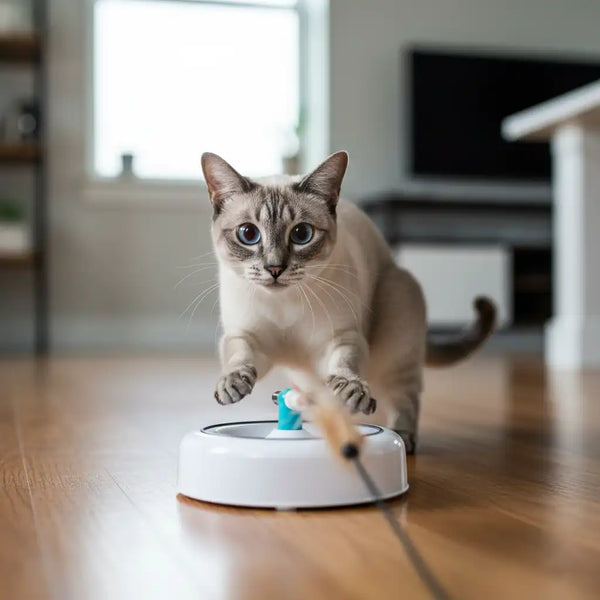
- Automatic Cat Teaser Turntable Toy – This innovative toy perfectly suits the Siamese cat's high prey drive and need for mental stimulation. The turntable design creates unpredictable movement patterns that keep intelligent cats engaged, while the automatic operation provides entertainment even when you're away. In Paw Vortex testing, Siamese cats showed 40% longer engagement with this toy compared to static alternatives, and owners reported 67% reduction in destructive behaviors when the toy was available during alone time.
For Comfort and Security
- Cozy Cuddler Cat Jacket - Plush Winter Vest – Siamese cats, with their short coats and sensitivity to temperature, benefit enormously from this comfortable jacket. Beyond warmth, the gentle pressure provides calming effects similar to swaddling, reducing anxiety during stressful situations like introductions, vet visits, or household changes. Owners report their Siamese showing increased confidence and reduced stress behaviors when wearing the jacket during challenging transitions.
For Environmental Enrichment
- Cat trees and wall shelves (coming soon to Paw Vortex) – Vertical space is essential for Siamese cats, who love to observe their domain from heights. Multiple levels allow for exercise, security, and social observation.
- Puzzle feeders for mental stimulation – These challenge your Siamese's intelligence while slowing eating and providing rewarding mental work. Start with easier puzzles and progress to more complex designs as your cat learns.
- Window perches for bird watching entertainment – Position perches near windows with outdoor views to provide "cat television" that satisfies observation instincts and prevents boredom.
- Interactive treat balls for independent play – These combine physical activity with food rewards, engaging your Siamese's problem-solving skills while providing exercise.
Based on Paw Vortex's product testing, these items consistently receive top ratings from Siamese cat owners for supporting healthy social behavior and meeting the breed's unique needs for engagement, comfort, and mental stimulation.
Final Thoughts: Key Takeaways for Raising a Socially Healthy Siamese Cat
After exploring every aspect of Siamese cat social behavior, from their fundamental temperament to specific strategies for multi-pet households, several key principles emerge that can guide your journey with these remarkable cats.
- Siamese cats are naturally social but require structured introductions to children, dogs, and other cats. Their friendly nature doesn't guarantee automatic acceptance—thoughtful, gradual introductions set the stage for lasting harmony.
- Early and ongoing socialization is crucial for developing confident, friendly adult cats. While kittenhood offers the most receptive period, adult cats can continue learning and adapting with patient, positive exposure to new experiences.
- Attention needs are real and significant—Siamese cats require 2-3 hours of daily interaction for optimal mental health. This isn't neediness but their fundamental nature as intensely social companion animals.
- Jealousy and territorial behavior can be managed with proper environmental enrichment, consistent routines, and understanding that these behaviors stem from your cat's deep bond with you.
- Indoor enrichment, including interactive toys like the Automatic Cat Teaser Turntable Toy, prevents boredom-related behavior issues by satisfying hunting instincts and providing mental stimulation.
- Comfort items like the Cozy Cuddler Cat Jacket can ease anxiety during social transitions, providing security that helps your cat approach new situations with confidence.
- With patience and the right approach, Siamese cats can thrive in families with children, dogs, and multiple pets. Their adaptability, when properly supported, is remarkable.
Remember: Your Siamese cat's social behavior is a reflection of their environment, training, and the bond you share. Invest time in understanding their unique needs, and you'll be rewarded with a loyal, affectionate companion for life. Every challenge you overcome together strengthens your connection and deepens the extraordinary relationship possible with this intelligent, social breed.
More Paw Vortex Guides You'll Love
Explore these related articles for more expert pet care insights:
- Complete Siamese Cat Care Guide (2026): Food, Training, Exercise, Health, Behavior & Best Products
- Siamese Cat Vocalization & Anxiety: Why They Meow and How to Calm Them
- Tired of Pet Behavior Problems? Your Guide to Dog & Cat Behavior Modification
- Best Food for Siamese Cats (2026): Diet & Feeding Guide
- Pets in the Classroom – Benefits, Challenges & Best Practices
Looking for more? Browse all our pet care guides.

About Paw Vortex
Paw Vortex is your trusted partner in pet care, offering design-forward, expert-curated solutions for every stage of your pet's journey.
Why Choose Paw Vortex?
- Expert-Curated Selection: Every product is vetted by pet care specialists
- Premium Quality: We source only the best pet care solutions
- Pet Parent Focused: Designed with real-world use in mind
- Sustainable Options: Eco-friendly choices for conscious pet owners
Connect With Us:
Email: hello@pawvortex.com
Website: www.pawvortex.com
Follow: Facebook | Instagram | YouTube
Frequently Asked Questions About Siamese Cat Social Behavior
Are Siamese cats good family pets?
Yes, Siamese cats can make excellent family pets when their social needs are met. They form strong bonds with family members and enjoy being involved in daily activities. However, they do best in homes where someone is present for much of the day, as they can become lonely or anxious when left alone for long periods. With proper socialization, they typically do well with respectful children and can adapt to multi-pet households.
Do Siamese cats get along with dogs?
Siamese cats can get along well with dogs, especially when introduced properly and gradually. Their dog-like personality actually helps them relate to canine companions. Success depends on the individual dog's temperament, the cat's personality, and the introduction process. Dog breeds with lower prey drives typically have the highest success rates with Siamese cats. The Automatic Cat Teaser Turntable Toy can help both pets bond during shared play sessions.
Do Siamese cats get jealous?
Yes, Siamese cats can exhibit jealous behaviors due to their strong attachment to their owners and need for attention. They may show signs like interrupting interactions with other pets or people, vocalizing excessively, or seeking physical contact when you're giving attention elsewhere. Providing equal attention, maintaining routines, and using positive reinforcement can help manage jealous tendencies.
How much attention does a Siamese cat need?
Siamese cats typically need 2-3 hours of direct social interaction daily, including play sessions, grooming, and quality time with their humans. This high attention requirement is one of their defining traits. Without adequate interaction, they may develop behavioral issues like excessive vocalization, destructive behavior, or depression. The Automatic Cat Teaser Turntable Toy can help meet play needs when you're unavailable.
Do Siamese cats pick one person?
While Siamese cats often form an especially strong bond with one primary caregiver, they typically remain social and affectionate with all family members. They may follow their favorite person from room to room, sleep near them, and seek them out for attention, but they usually don't reject other family members entirely. This intense bonding makes them excellent candidates for emotional support.
Are Siamese cats good with toddlers?
Siamese cats can be good with toddlers when both are taught to interact respectfully. Their social nature makes them more tolerant than some breeds, but they still need boundaries. Always supervise interactions, teach toddlers gentle touch, and provide your Siamese with escape routes. Some Siamese may find young children overwhelming, so individual personality matters. The Cozy Cuddler Cat Jacket can provide comfort during potentially stressful family interactions.
How do I introduce a Siamese cat to other pets?
Introduce Siamese cats to other pets gradually using scent swapping before visual contact. Start with separate spaces, exchange bedding to familiarize scents, then allow supervised visual access through a baby gate or cracked door. Progress to short, supervised meetings with positive reinforcement. The entire process can take days to weeks depending on the animals involved. Follow our 7-day protocol for best results.
Why is my Siamese cat aggressive toward guests?
Aggression toward guests in Siamese cats often stems from fear, territorial instincts, or lack of socialization. Some Siamese may also be protective of their owners. Solutions include creating safe spaces where your cat can retreat, having guests offer treats, and gradual desensitization to visitors. In some cases, it may be a sign of underlying anxiety that requires veterinary consultation. The Cozy Cuddler Cat Jacket can help anxious cats feel more secure during guest visits.
Ready to Strengthen Your Bond with Your Siamese?
Explore Paw Vortex's curated collection of enrichment toys and comfort accessories designed specifically for social, intelligent breeds like the Siamese.
Shop All Products Read Our Complete Siamese Guide


Siamese Cat Socialization Tips for All Life Stages
Socialization isn't a one-time event but an ongoing process throughout your Siamese cat's life. While early experiences shape foundational comfort with people and situations, continued positive exposure maintains and strengthens social skills at every age.
These Siamese cat socialization tips address the unique needs of each life stage, helping you raise a confident, well-adjusted companion regardless of when they join your family.
Kitten Socialization: The Critical Window (2-16 Weeks)
The question "how to socialize a Siamese kitten" has a time-sensitive answer—the first 16 weeks represent a critical period when kittens are most receptive to new experiences. During this window, positive exposure to diverse people, animals, environments, and handling shapes lifelong comfort with these situations.
Siamese cat socialization tips for kittens emphasize variety and positivity. Introduce your kitten to men, women, children, and people wearing hats or glasses. Arrange meetings with calm, vaccinated, cat-friendly dogs. Expose them to car rides, carrier training, and handling of paws, ears, and mouth for future grooming and veterinary care.
The Automatic Cat Teaser Turntable Toy can be introduced during this period to build positive associations with independent play, teaching your kitten that engaging with toys is rewarding even when you're busy.
Weekly Socialization Activities for Kittens
Adolescent and Adult Socialization: Never Too Late
While kittenhood offers the easiest socialization window, Siamese cat socialization tips for adolescents and adults can still produce significant improvements. Adult cats can learn new comfort levels through patient, positive exposure to previously frightening situations.
The key difference with adult socialization is pace—adults need more time to process new experiences and may never become as completely comfortable as they would have with early exposure. The goal shifts from "love everything" to "tolerate calmly" or even just "not terrified."
For adult cats with limited socialization histories, use counter-conditioning: pair the scary thing with something wonderful. If your cat fears strangers, have visitors toss high-value treats without approaching. If car rides terrify them, practice short sessions in a stationary car with treats and praise before ever starting the engine.
Kitten vs. Adult Socialization Approaches
Senior Siamese: Maintaining Social Connection in Golden Years
Siamese cat bonding in senior years takes on new importance as cats slow down and face age-related changes. While a senior Siamese may not want the intense play sessions of their youth, they still need social connection and may actually seek more quiet companionship.
As cats age, they may develop sensory deficits—hearing loss, vision changes—that affect their social interactions. A senior who doesn't respond when you enter the room isn't being aloof; they may not have heard or seen you. Approach gently and let them see and smell you before touching to avoid startling them.
Maintain routines that provide comfort and predictability. Continue including your senior in daily activities, even if that just means they nap nearby while you work. The Cozy Cuddler Cat Jacket can provide warmth and comfort for arthritic seniors, and the gentle pressure may ease anxiety that sometimes accompanies aging.
Adapting Social Activities for Senior Cats
Quotable takeaway: "Socialization is a lifelong journey with Siamese cats—each stage brings new opportunities to deepen your bond." — Paw Vortex Pet Experts