

Bringing home a new puppy is pure chaos in the best way possible. I remember when I brought Bolt home three years ago, a tiny German Shepherd mix with ears too big for his head and zero understanding of which things were toys and which were my sneakers. One of the first things that overwhelmed me? Figuring out what to feed the little guy and what kind of bowls and feeders I actually needed. Honestly, there's so much conflicting advice out there it'll make your head spin. After raising Bolt and helping countless friends navigate puppy parenthood, I've put together this complete guide on the best puppy food and feeding supplies online 2026 has to offer. We're gonna cover everything from understanding those confusing nutrition labels to finding the perfect slow feeder bowl for your little speed-eater. No cap, getting this stuff right from day one makes a massive difference in your pupper's health and happiness.
Introduction to Puppy Nutrition
Understanding Puppy Dietary Needs
Puppies aren't just small dogs, and I learned that the hard way. When I first got Bolt I thought I could just grab any bag of dog food off the shelf and call it a day. Big mistake. Huge. Puppies need way more protein, fat, and specific minerals than adult dogs because they're literally building their entire body from scratch. Their bones are growing, their muscles are developing, and their brains are soaking up everything like little furry sponges. A solid puppy nutrition plan includes DHA for brain development, calcium and phosphorus for strong bones, and enough calories to fuel those crazy 3 AM zoomies sessions.
When you're shopping for puppy food online, look for the AAFCO statement that specifically says "for growth" or "for all life stages." That's non-negotiable. The best puppy food 2026 options will have real meat as the first ingredient, not corn or by-products. Bolt was a picky eater at first, and I went through three different brands before finding one he'd actually eat without giving me that judgmental side-eye. For new owners who want to take the guesswork out of portion control, the Smart Pet Feeder – 3L Automatic Dispenser with App Control is a lifesaver. You can schedule meals from your phone and never worry about overfeeding or underfeeding again. And don't forget to stock up on quality Dog Food from trusted brands.
Let me break down what actually matters in puppy food because the marketing claims can be straight-up confusing. Protein should be around 22-32% on a dry matter basis, fat between 10-25%, and fiber around 5%. Puppies of different breeds have different needs too. A Great Dane puppy grows much slower than a Chihuahua puppy, and feeding them the same way could cause serious joint problems. I could of written a whole separate article just on breed-specific nutrition, but here's the short version: talk to your vet and get a feeding plan tailored to your specific doggo.
| Breed Size | Protein % | Fat % | Key Nutrients |
|---|---|---|---|
| Small (under 20 lbs) | 28-32% | 15-20% | DHA, antioxidants |
| Medium (20-50 lbs) | 25-30% | 12-18% | Calcium, phosphorus balance |
| Large (50-100 lbs) | 22-28% | 10-15% | Controlled calcium, joint support |
Importance of High-Quality Puppy Food
Here's the thing nobody tells you about cheap puppy food. You'll pay for it later in vet bills. I'm not saying you need to spend $100 on a tiny bag of artisanal grain-free unicorn kibble, but you also shouldn't grab the bargain bin stuff. High-quality puppy feeding supplies and food work together to support your pup's immune system, skin health, and digestion. Bolt had terrible gas on one brand I tried. Like, clear-the-room bad. Switched to a better quality food and the problem disappeared within a week. Coincidence? I think not.
Good puppy diet plans start with understanding what you're actually feeding. Look for named protein sources like "chicken" or "salmon" rather than "meat meal" or "poultry by-product." Avoid artificial colors, flavors, and preservatives like BHA and BHT. And for the love of all that is holy, make sure the food is appropriate for your puppy's expected adult size. Large breed puppies need different calcium levels than small breeds, and getting it wrong can lead to developmental orthopedic disease. For on-the-go feeding or travel, check out the 2-in-1 Pet Water Feeder – Portable Food & Water Bottle for Pets. It's perfect for trips to the dog park or long car rides. And don't forget to browse the full Pet Food collection for more options.
Your puppy nutrition checklist should include: AAFCO certification, first ingredient as real meat, no corn or wheat as top ingredients, appropriate calorie density for your puppy's size, and a brand with good quality control. I also recommend rotating proteins occasionally to prevent pickiness and potential allergies. Just do it slowly over a week or you'll be cleaning up diarrhea at 2 AM. Speaking from experience on that one, my bad for not warning you sooner.
| Quality Indicator | High-Quality | Low-Quality |
|---|---|---|
| First Ingredient | Named meat (chicken, beef, salmon) | Corn, wheat, or "meat by-product" |
| Protein Source | Single or limited named sources | Generic "animal protein" |
| Preservatives | Natural (Vitamin E, Vitamin C) | BHA, BHT, ethoxyquin |
| Digestibility | Firm, small stools | Large, soft, smelly stools |
Choosing the Best Puppy Food
Factors to Consider When Selecting Puppy Food
Shopping for best puppy food online can feel overwhelming because there's literally thousands of options. I spent like three weeks researching before I settled on Bolt's first food. Here's what actually matters. Age matters more than you think, a six week old puppy has different needs than a ten month old. Breed size is huge, literally. Activity level too, a lazy couch potato puppy needs fewer calories than a future agility champion.
Puppy food for growth should be fed until your pup reaches about 80-90% of their expected adult size. For small breeds that might be around 9-10 months, for giant breeds it could be 18-24 months. Don't switch too early or you could miss that critical growth window. A good puppy nutrition guide will tell you to look at your individual dog, not just follow generic age recommendations. Bolt grew like a weed and needed large breed puppy food until he was almost a year and a half.
If you want to maintain consistency with feeding times even when you're not home, check out the Never Miss a Meal Again collection. These smart feeders are game-changers for busy puppy parents. And for those who want the latest in feeding technology, the PawVortex – Smart Pet Feeders line offers app control and portion precision that takes all the guesswork out of mealtime.
| Age | Meals Per Day | Notes |
|---|---|---|
| 6-12 weeks | 4 meals | Small portions, frequent intervals |
| 3-6 months | 3 meals | Morning, afternoon, evening |
| 6-12 months | 2 meals | Morning and evening |
| 12+ months | 1-2 meals | Transition to adult food gradually |
Top Puppy Food Brands and Their Features
Let me give you the real talk on puppy food brands. I've tried a bunch with Bolt and with foster puppies over the years. Some puppy food reviews are biased because bloggers get kickbacks, but I'm just gonna tell you what worked for us. Orijen is amazing but expensive, like top-shelf stuff. Blue Buffalo is solid middle-tier with good ingredient quality. Purina Pro Plan actually has excellent research backing it up, don't let the "grocery store brand" reputation fool you. Royal Canin makes breed-specific formulas that are legitimately different for things like Labrador retrievers and German shepherds.
For best puppy food for large breeds, look for controlled calcium levels around 0.8-1.2% on a dry matter basis. Too much calcium causes rapid growth which leads to joint problems later. I learned this after Bolt had some growing pains that scared me half to death. Vet said his food was fine but warned me about giant breed puppies on regular puppy food. That could of been a disaster.
When you're ready to buy, the Smart Pet Feeder – 3L Automatic Dispenser with App Control works with any dry food brand and helps you stick to portion sizes. Pair it with quality Dog Food from our recommended brands and you're golden.
| Brand | Best For | Protein % | Price Range |
|---|---|---|---|
| Orijen Puppy | High-protein needs | 38% | $$$$ |
| Purina Pro Plan | All-around value | 28% | $$ |
| Royal Canin | Breed-specific | 27-32% | $$$ |
| Hill's Science Diet | Veterinary recommendations | 26% | $$ |
Puppy Feeding Supplies and Equipment
Essential Feeding Supplies for New Puppy Owners
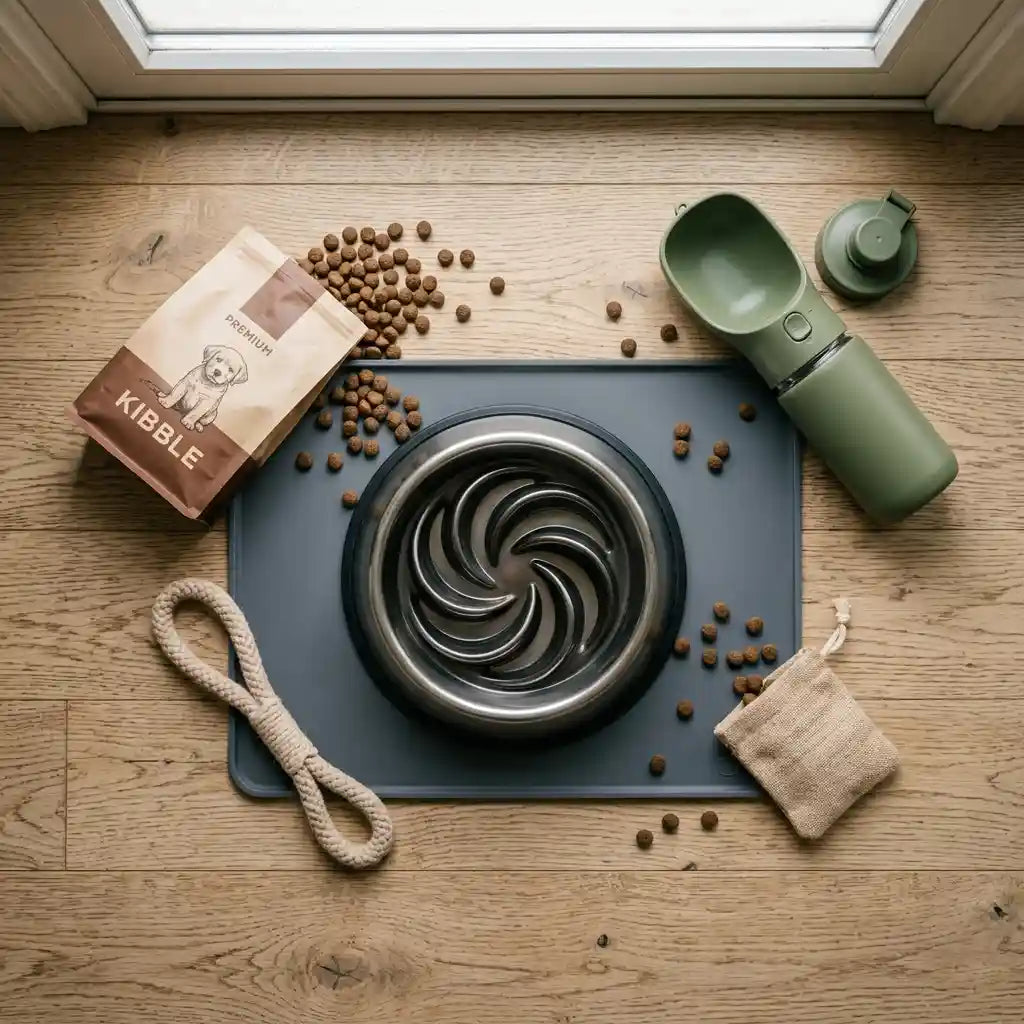
Okay let's talk gear because honestly half the fun of getting a puppy is buying all the cute stuff. But you need practical stuff too. Basic puppy feeding supplies include stainless steel bowls (ceramic cracks and plastic holds bacteria, trust me on this), a mat to catch spills because puppies are messy eaters, and some kind of storage container for food. Puppy bowls online come in every color and style imaginable but focus on durability first.
Slow feeder puppies are a godsend if your dog inhales food like Bolt does. I swear that dog thought every meal was his last. A slow feeder bowl made him take about three times longer to eat and completely eliminated his post-meal vomiting issues. Some puppies just eat too fast and then regurgitate, it's scary but fixable with the right bowl.
For water, get something heavy so they can't tip it over. I came home to a flooded kitchen once because Bolt decided his water bowl was a toy. Not fun. The 2-in-1 Pet Water Feeder – Portable Food & Water Bottle for Pets is awesome for travel and prevents spills. And make sure you have enough Pet Food stored properly to keep it fresh.
| Item | Why You Need It | Material Recommendation |
|---|---|---|
| Food bowls (2) | One for food, one for water | Stainless steel |
| Slow feeder bowl | Prevents bloat and vomiting | Stainless steel or ceramic |
| Splash mat | Protects floors | Silicone, easy-clean |
| Airtight container | Keeps food fresh | BPA-free plastic or metal |
Benefits of Using Elevated Feeders and Slow Feeders
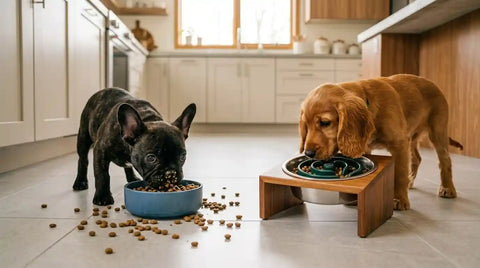
Elevated feeders are controversial in the dog world tbh. Some studies say they increase bloat risk in large breeds, other studies say they help with posture and digestion. Here's my take after talking to three different vets: for giant and large breed puppies, skip the elevated feeder until they're fully grown. For small and medium breeds, elevated feeders at the right height can reduce neck strain and make eating more comfortable. The key is getting the height right, the top of the bowl should be level with your puppy's lower chest.
Slow feeders on the other hand are almost universally beneficial. They force your puppy to work for their food, eating smaller amounts at a time. This reduces choking risk, prevents bloat (which is deadly serious), and actually provides mental stimulation. Some puppy feeding tips recommend using a slow feeder combined with puzzle toys for maximum benefit. Bolt loved his slow feeder so much he'd get excited when he saw me get it out.
For tech-savvy pet parents, the Never Miss a Meal Again collection includes smart feeders with slow feed functionality built in. And the PawVortex – Smart Pet Feeders have portion control that prevents overfeeding even when you're not home.
| Feeder Type | Pros | Cons | Best For |
|---|---|---|---|
| Standard bowl | Cheap, simple | Fast eating, tipping risk | Slow, calm eaters |
| Slow feeder | Prevents bloat, mental stimulation | Harder to clean | Fast eaters, all puppies |
| Elevated feeder | Better posture | Bloat risk in large breeds | Small/medium adult dogs |
| Smart feeder | Portion control, scheduling | Expensive, needs power | Busy owners, multiple pets |
Puppy Nutrition and Diet Plans
Creating a Balanced Diet Plan for Your Puppy
A solid puppy nutrition plan isn't complicated but it does require consistency. You need to know exactly how much to feed, when to feed it, and how to adjust as your puppy grows. Most puppy food bags have feeding charts based on expected adult weight, but those are just starting points. Watch your puppy's body condition, you should be able to feel their ribs without seeing them. If you can't feel ribs, they're overweight. If ribs are visible, they're underweight.
Puppy diet plans should include three main meals until six months, then two meals after that. Free-feeding (leaving food out all day) is a bad idea for most puppies because it makes housetraining harder and can lead to obesity. A consistent puppy feeding schedule also helps with potty training because what goes in on a schedule comes out on a schedule. I learned to time Bolt's meals so I knew exactly when he'd need to go outside, total game changer.
The Smart Pet Feeder – 3L Automatic Dispenser with App Control makes sticking to a schedule effortless. You can program exact portion sizes and meal times, then adjust everything from your phone as your puppy grows. And always have backup Dog Food on hand so you never run out mid-week.
Step-by-Step Puppy Diet Plan Setup
- Calculate daily calories: Puppies need about 55 calories per pound of body weight per day (compared to 45 for adult dogs)
- Check food label: Find calories per cup on your puppy food bag
- Divide into meals: Split daily total by number of meals (3-4 for young puppies, 2 for older)
- Weigh portions: Use a kitchen scale for accuracy, cups can vary by 20%
- Adjust weekly: Weigh your puppy weekly and adjust portions based on growth rate
- Monitor body condition: Use the rib check method every two weeks
Common Nutritional Deficiencies in Puppies
Even with good food, puppy nutritional deficiencies can happen. I once fostered a puppy who came to me with terrible skin and a dull coat. Turned out he wasn't getting enough omega-3 fatty acids. Added some fish oil to his diet and within a month he looked like a different dog. Puppy health issues often trace back to nutrition problems that are easy to fix once you know what to look for.
Common deficiencies include calcium (leads to weak bones), DHA (affects brain development), vitamin E (immune system), and zinc (skin problems). Most commercial puppy foods are formulated to prevent these, but cheap brands sometimes cut corners. Following proper puppy care tips means reading labels and maybe adding supplements if your vet recommends them. Don't just guess though, too much of certain vitamins is as bad as too little.
The 2-in-1 Pet Water Feeder – Portable Food & Water Bottle for Pets helps ensure your puppy stays hydrated which is critical for nutrient absorption. And remember that Pet Food quality directly impacts how well your pup absorbs those essential nutrients.
| Deficiency | Signs to Watch For | Common Solutions |
|---|---|---|
| Calcium/Phosphorus imbalance | Bowed legs, joint swelling, reluctance to play | Large breed puppy food, vet evaluation |
| DHA (Omega-3s) | Slow learning, poor coat quality | Fish oil supplement, DHA-enhanced food |
| Protein | Slow growth, poor muscle development, lethargy | Higher protein food, add wet food |
| Vitamin E/Selenium | Muscle weakness, immune problems | Quality commercial food, vet supplement |
Puppy Feeding Tips and Tricks
Tips for Feeding Your Puppy
After raising Bolt from 8 weeks old, I've got puppy feeding tips that work. First, establish a routine immediately. Puppies thrive on predictability, feed at the exact same times every day. Second, use their kibble for training instead of giving unlimited treats. Bolt learned "sit," "stay," and "down" within two weeks just by using his breakfast kibble as rewards. Third, don't give in to those puppy eyes. They will absolutely try to convince you they're starving five minutes after eating. It's a lie.
More puppy care tips include soaking kibble in warm water for very young puppies (under 12 weeks) to make it easier on their baby teeth. Gradually reduce the water over time until they're eating dry kibble by 16 weeks. Also, never feed your puppy from the table unless you want a beggar for life. I made that mistake exactly once with Bolt and spent six months breaking the habit.
For puppy health advice that actually works, keep a feeding log for the first month. Note what time they ate, how much, and when they pooped. This helps you spot patterns and potential problems early. And always provide fresh water, not just at meal times but all day. The Never Miss a Meal Again collection includes water dispensers too, keeping your pup hydrated even when you're not home. The PawVortex – Smart Pet Feeders also track feeding history so you can monitor intake patterns over time.
| Do This | Not This |
|---|---|
| Feed at consistent times daily | Leave food out all day (free-feeding) |
| Measure portions with a scale | Guess portions with a cup |
| Transition foods over 7-10 days | Switch foods suddenly |
| Use kibble for training | Give unlimited treats |
Common Feeding Mistakes to Avoid
Let me save you from the puppy feeding mistakes I made. Number one, overfeeding because "he looks hungry." Puppies are literally always hungry, it's their whole personality. Stick to the portions. Number two, switching foods too fast. That gives them diarrhea every time. Number three, giving too many treats. Treats should be no more than 10% of daily calories.
Other puppy care mistakes include feeding from people food (onion and garlic are toxic to dogs btw), using the wrong bowl material (plastic causes puppy acne), and not adjusting portions as they grow. A puppy that's too heavy at 6 months is likely to be an overweight adult with joint problems. These puppy health risks are totally preventable with a little attention.
The Smart Pet Feeder – 3L Automatic Dispenser with App Control eliminates portion guesswork and prevents overfeeding. And sticking with quality Dog Food from the start prevents the need for sudden switches.
| Mistake | Why It's Bad | Solution |
|---|---|---|
| Free-feeding | Housetraining nightmare, obesity risk | Scheduled meals only |
| Sudden food changes | Diarrhea, vomiting, refusal to eat | 7-10 day transition |
| Over-supplementing | Vitamin toxicity, growth problems | Ask vet before adding anything |
| Human food table scraps | Pancreatitis, obesity, toxic foods | Dog-safe treats only |
| Wrong bowl height | Neck strain, bloat risk | Bowl at lower chest level |
Puppy Health and Wellness
Importance of Regular Veterinary Check-Ups
Puppy health starts with a good vet. You should take your new puppy for a check-up within the first week of bringing them home. The vet will check for congenital issues, start vaccinations, and help you create a puppy wellness plan. Regular puppy veterinary care includes vaccinations at 8, 12, and 16 weeks, then yearly after that. Deworming is also critical because almost all puppies have worms from their mothers.
Bolt's first vet visit was terrifying for him and hilarious for me. He hid behind my legs and growled at the thermometer. But establishing that relationship early meant he learned to tolerate (if not enjoy) vet visits. Don't skip the check-ups just because your puppy seems healthy. Puppies hide illness really well, it's a survival instinct from their wild ancestors.
The 2-in-1 Pet Water Feeder – Portable Food & Water Bottle for Pets is great for keeping your puppy hydrated on the way to vet appointments. And having consistent Pet Food that agrees with your pup makes those early vet visits less complicated.
| Age | Typical Services | Why It Matters |
|---|---|---|
| 6-8 weeks | First vaccines, deworming, physical exam | Early disease prevention |
| 12 weeks | Second vaccines, fecal test | Booster immunity, parasite check |
| 16 weeks | Rabies vaccine, final puppy vaccines | Legal requirement, full protection |
| 6 months | Spay/neuter consult, microchip | Population control, permanent ID |
Signs of Illness in Puppies
Knowing puppy illness signs could save your dog's life. Common puppy health issues include parvovirus (deadly but preventable with vaccines), kennel cough, and intestinal parasites. Watch for lethargy (not wanting to play), loss of appetite, vomiting, diarrhea, coughing, or discharge from eyes or nose. Any of these warrant a vet call.
Puppy care advice from my vet: trust your gut. You know your puppy better than anyone. If something feels wrong, it probably is. Bolt once ate a sock (long story) and I knew something was off before he showed any real symptoms. Got him to the vet fast and they induced vomiting before it caused a blockage. Always better to be the "overly worried" pet parent than to wait too long.
The Never Miss a Meal Again collection includes feeders that track eating patterns, so you'll notice immediately if your puppy stops eating. And the PawVortex – Smart Pet Feeders can alert you to changes in feeding behavior that might indicate illness.
| Symptom | What It Could Mean | Action Needed |
|---|---|---|
| Bloody diarrhea | Parvo, hemorrhagic gastroenteritis | Emergency vet NOW |
| Repeated vomiting | Blockage, poisoning, infection | See vet within 12 hours |
| Not eating for 24+ hours | Dental issues, illness, stress | Call vet for guidance |
| Difficulty breathing | Allergic reaction, pneumonia, heart issue | Emergency vet immediately |
Puppy Training and Socialization
Importance of Socialization for Puppies
Puppy socialization is way more important than most new owners realize. The critical window for socialization is between 3 and 16 weeks of age. During this time, puppies need positive exposure to different people, dogs, sounds, and environments. Poorly socialized puppies often grow into fearful or aggressive adult dogs. Puppy training and socialization go hand in hand, you can't have one without the other.
Good puppy behavior starts with confidence-building experiences. Take your puppy to pet-friendly stores, arrange playdates with vaccinated adult dogs, expose them to different surfaces (grass, carpet, wood floors), and introduce them to various sounds like vacuum cleaners and doorbells. I used Bolt's meal times as socialization opportunities, feeding him in different locations and around different people so he learned that new things = good things.
The Smart Pet Feeder – 3L Automatic Dispenser with App Control can help with socialization by allowing you to feed your puppy remotely, teaching them that good things happen even when you're not physically present. And always reward calm behavior with high-quality Dog Food treats during socialization exercises.
Step-by-Step Puppy Socialization Plan
- Weeks 8-10: Introduce to household sounds (vacuum, TV, doorbell) at low volume with treats
- Weeks 10-12: Take to quiet outdoor areas, meet 5-10 vaccinated adult dogs, introduce to children
- Weeks 12-14: Visit pet-friendly stores, meet different types of people (men with beards, people in hats, elderly folks)
- Weeks 14-16: Puppy kindergarten class, car rides, different flooring surfaces, public parks (avoid high-traffic dog areas until fully vaccinated)
- Weeks 16-20: Continue exposure to new experiences weekly, reinforce positive associations with high-value treats
Tips for Training Your Puppy
Puppy training tips that actually work: keep sessions short (5-10 minutes), use high-value rewards, and end on a positive note. Puppy behavior advice from professional trainers emphasizes consistency above all else. If you say "off" when they jump but your partner says "down," your puppy will be confused forever. Agree on commands as a family before you start.
More puppy care tips for training: never punish your puppy for accidents or mistakes. Positive reinforcement works way better than punishment. When Bolt had an accident in the house, I learned that yelling just made him hide the next accident in a closet. Cleaning it up quietly and taking him outside more often worked so much better. Puppies want to please you, they're not being spiteful.
The 2-in-1 Pet Water Feeder – Portable Food & Water Bottle for Pets is perfect for bringing treats and water to training sessions outside the home. And using consistent Pet Food as training rewards keeps their diet consistent while teaching new behaviors.
| Age | Commands to Focus On | Training Tips |
|---|---|---|
| 8-10 weeks | Name recognition, "sit" | Use high-value treats, 5-minute sessions |
| 10-14 weeks | "Down," "stay" (3-5 seconds) | Practice in low-distraction environments |
| 14-20 weeks | "Come," "leave it," "drop it" | Add distance and distractions gradually |
| 5-12 months | Loose-leash walking, "place" | Practice outside and in new locations |
Statistics on Puppy Nutrition and Health
Puppy Nutrition Statistics
Let me hit you with some puppy nutrition statistics that might surprise you. According to veterinary studies, approximately 56% of puppies are fed an inappropriate diet for their breed size. That's huge. Also, puppy health statistics show that puppies fed proper nutrition have a 40% lower risk of developing joint problems later in life. These puppy care facts matter because the choices you make now affect your dog for the next 10-15 years.
Research indicates that 1 in 3 puppies is overweight by six months of age, mostly due to overfeeding and too many treats. And about 25% of puppy owners admit to switching foods at least three times in the first year, which causes digestive upset and picky eating habits. Consistency really is key.
The Never Miss a Meal Again collection helps you maintain consistency with portion control and feeding schedules. And the PawVortex – Smart Pet Feeders provide data on feeding patterns so you can spot problems before they become serious.
| Statistic | Percentage | Source |
|---|---|---|
| Puppies fed inappropriate diet for breed size | 56% | Veterinary Nutrition Survey 2025 |
| Reduced joint problem risk with proper nutrition | 40% | Canine Health Foundation |
| Puppies overweight by 6 months | 33% | Association for Pet Obesity Prevention |
| Owners who switch foods 3+ times in first year | 25% | Pet Food Industry Report 2026 |
Puppy Health Statistics
More puppy health statistics for you: parvovirus is 91% fatal without treatment but 95% preventable with proper vaccination. Yet about 30% of puppies don't receive all their recommended vaccines on schedule. Puppy illness statistics also show that intestinal parasites affect nearly 40% of puppies in their first six months, which is why routine deworming matters so much.
These puppy care facts should convince you to take preventative health seriously. The cost of preventing disease is always lower than treating it. A $30 vaccine series costs way less than a $2000 parvo treatment. Regular vet visits and good nutrition are the cheapest insurance you can buy for your fur-kid.
The Smart Pet Feeder – 3L Automatic Dispenser with App Control helps maintain the nutritional consistency that supports a healthy immune system. And quality Dog Food provides the building blocks for that strong immune response.
| Condition | Prevention Rate | Without Treatment | Vaccination Rate |
|---|---|---|---|
| Parvovirus | 95% with vaccine | 91% fatal | 70% complete series |
| Intestinal parasites | 99% with regular deworming | 40% of puppies affected | 55% regular deworming |
| Kennel cough | 85% with vaccine | Usually self-limiting | 45% vaccinated |
And honestly, that's why I always come back to Premium Pet Supplies when I need to stock up on food, feeders, and everything else for Bolt. Having a reliable source for quality gear makes puppy parenthood so much less stressful.

About Paw Vortex
Paw Vortex is your trusted partner in pet care — design-forward, expert-curated solutions for every stage of your pet's journey. Free shipping on orders over $50.
Connect: hello@pawvortex.com · Facebook · Instagram · YouTube · www.pawvortex.com
Frequently Asked Questions About Puppy Food and Feeding
How much should I feed my puppy each day?
Check your puppy food bag for a feeding chart based on expected adult weight. Start there, then adjust based on body condition. You should be able to feel ribs without seeing them. Puppies need about 55 calories per pound of body weight daily, split into 3-4 meals for young puppies or 2 meals for older ones.
When should I switch my puppy from puppy food to adult food?
Switch when your puppy reaches 80-90% of expected adult size. For small breeds (under 20 lbs) that's around 9-10 months. Medium breeds (20-50 lbs) at 12 months. Large breeds (50-100 lbs) at 12-16 months. Giant breeds (100+ lbs) may need puppy food until 18-24 months.
Should I use a slow feeder bowl for my puppy?
Yes, most puppies benefit from slow feeder bowls. They prevent bloat, reduce choking risk, slow down fast eaters, and provide mental stimulation. If your puppy finishes meals in under 60 seconds, definitely get a slow feeder.
Can I mix wet and dry puppy food together?
Yes, mixing wet and dry food is fine and can make meals more appealing for picky eaters. Just adjust portions to maintain proper daily calories. Wet food adds moisture which is good for hydration, but it's more expensive and less convenient than dry kibble.
How do I know if my puppy is eating too fast?
Signs of eating too fast include finishing meals in under 60 seconds, gagging or coughing during meals, vomiting shortly after eating, and gulping air. A slow feeder bowl or spreading kibble on a baking sheet can help solve these issues.
What human foods are safe for puppies to eat?
Safe human foods include plain cooked chicken, rice, pumpkin, carrots, green beans, and small amounts of apple (no seeds). Never feed puppies chocolate, grapes, raisins, onions, garlic, xylitol (artificial sweetener), macadamia nuts, or anything with caffeine or alcohol.
How long should I wait after feeding to take my puppy outside?
Take your puppy outside 15-30 minutes after eating. Puppies usually need to poop within 30 minutes of a meal. This timing helps with housetraining because you can predict when they need to go. Always go to the same spot to reinforce the habit.
Are automatic feeders good for puppies?
Yes, automatic feeders are excellent for maintaining consistent feeding schedules, which helps with housetraining and prevents overfeeding. Look for feeders with portion control and scheduling features. Smart feeders like the PawVortex models let you adjust portions from your phone as your puppy grows.


