

Welcome to the Future of Effortless Pet Care
The year 2026 is for busy pet parents who value time, hygiene, and peace of mind. Juggling work, life, and the unwavering love for your cat or dog is challenging. The latest wave of automatic pet tech isn't just about convenience—it's a fundamental shift towards smarter, healthier, and more connected care for your furry family members.
This guide dives deep into the two cornerstones of modern pet management: the self-cleaning litter box and the smart pet feeder. We'll move beyond the hype to show you how these devices save you hours each week, provide critical health insights, and create a better daily experience for both you and your pet. Whether you're a tech-savvy early adopter or a pragmatic pet owner seeking solutions, you'll find the clarity you need to choose the right tools for your home.
Table of Contents
- Introduction to Automatic Pet Tech
- How Self-Cleaning Litter Boxes Work
- Choosing the Right Smart Pet Feeder
- Benefits of Automatic Feeders for Busy Owners
- Self-Cleaning Litter Boxes for Multi-Cat Homes
- Smart Feeder Integration with Smart Home Systems
- Tips for Introducing Cats to Self-Cleaning Litter Boxes
- Maintenance and Troubleshooting
- Pet Tech 2026: Data-Driven Insights
- 5 Practical Alternatives to Automatic Pet Tech
- Your Essential Automatic Pet Tech Toolkit
- Final Thoughts & Key Takeaways
1. Introduction to Automatic Pet Tech
The pet tech 2026 landscape is defined by devices that automate routine tasks while gathering insightful data. For cat owners, this means freedom from the daily scoop. For all pet parents, it means precise, scheduled nutrition no matter where you are.
What are Self-Cleaning Litter Boxes?
Gone are the days of manual scooping. A self-cleaning litter box is an automated unit that senses when your cat has exited and initiates a cleaning cycle. It rakes, sifts, or rotates to separate waste from clean litter, depositing clumps into a sealed waste drawer. The best 2026 models go beyond cleaning, offering odor control systems and health monitoring via app notifications.
| Feature | TAKOYI Smart Automatic Litter Box | OMCPET Self-Cleaning Cat Litter Box |
|---|---|---|
| Cleaning Mechanism | Raking system with radar sensors | Rotating sifting globe |
| Key Tech | App control, odor removal, health tracking | Large 100L capacity, quiet operation |
| Best For | Tech-focused owners wanting data & control | Multi-cat homes, large breed cats |
Benefits of Smart Pet Feeders
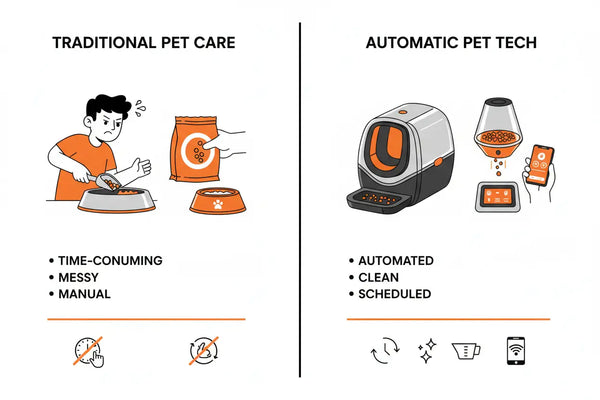
A smart pet feeder does more than just dispense food on a timer. The 2026 standard includes WiFi connectivity and app control, allowing you to schedule meals, customize portion sizes, and even feed your pet remotely with a tap on your phone. This ensures your pet's routine stays consistent, supporting weight management and reducing anxiety.
| Benefit | How It Helps |
|---|---|
| Portion Control | Precise meal sizes prevent overfeeding and support healthy weight. |
| Schedule Consistency | Pets thrive on routine; automated feeding reduces stress. |
| Remote Feeding & Monitoring | Feed your pet from work or check if they've eaten via app alerts. |
| Reduced Human Error | No more double-feeding or forgotten meals. |
Top models like the Smart Pet Feeder – 3L Automatic Dispenser and the Best Automatic Dog Feeder with Timer & Wi-Fi App Control embody these 2026 benefits.
2. How Self-Cleaning Litter Boxes Work
Understanding the mechanics can help you choose the right system and troubleshoot minor issues. Today's automatic litter boxes are sophisticated but user-friendly.
Types of Self-Cleaning Litter Boxes
The core technology defines the user experience. Here are the main types dominating the pet tech 2026 market.
| Type | How It Works | Pros & Cons | Product Example |
|---|---|---|---|
| Raker/Sifter Systems | A comb-like rake moves through the litter, scooping clumps into a waste drawer. |
Pros: Fast, quiet, often compact. Cons: Can get stuck on larger clumps. |
TAKOYI Smart Box |
| Rotating/Globe Systems | The entire chamber rotates, sifting clumps out through a grate into a waste compartment. |
Pros: Thorough cleaning, less prone to jams. Cons: Larger footprint, can be noisy. |
OMCPET 100L Box, (2025) Smart Self-Cleaning Box |
Features to Consider When Choosing
Not all automatic cat litter boxes are created equal. Use this step-by-step guide to evaluate the features that matter most for your home.
| Step | Consideration | Why It Matters | Product Support |
|---|---|---|---|
| 1. Assess Capacity | How many cats use it? How large is the waste drawer? | Determines how often you need to empty it. Multi-cat homes need large capacity. | OMCPET (100L), (2025) Smart Box (65L+9L) |
| 2. Evaluate Odor Control | Sealed waste compartment? Built-in deodorizer? Carbon filters? | Critical for home air quality and placement in living areas. | All featured models include sealed waste and odor-control features. |
| 3. Check Tech & App Features | Health tracking, usage reports, remote control, safety sensors. | Turns a utility into a health monitoring pet tech tool. Offers peace of mind. | TAKOYI & (2025) Smart Box offer advanced apps. |
| 4. Plan for Mess Containment | How will you manage tracked litter? | Keeps your home clean. An often-overlooked accessory. | Pair with a Cat Litter Pad / Mat. |
3. Choosing the Right Smart Pet Feeder
With options ranging from basic timers to fully connected hubs, selecting the ideal smart pet feeder requires matching features to your lifestyle and your pet's needs.
Critical Factors to Consider
Use this comparison to weigh the pros and cons of different feeder types and functionalities.
| Factor | What to Look For | Why It's Important | Product Example |
|---|---|---|---|
| Connectivity & Control | WiFi + App vs. Manual Timer Only | App-controlled feeders offer remote feeding, scheduling flexibility, and meal confirmations. | Best Automatic Dog Feeder (WiFi/App) |
| Food Capacity & Type | Dry food size, reservoir size (3L, 3.5L, etc.) | Ensures compatibility with your pet's food and determines how often you refill. | Smart Pet Feeder – 3L, 3.5 L Smart Pet Feeder |
| Portion Control Precision | Adjustable portion sizes (e.g., 1-10 servings per meal) | Critical for weight management diets and accurate calorie intake. | Most smart feeders offer multi-portion settings. |
| Power & Backup | AC power with battery backup | Prevents missed meals during power outages, a key feature for reliability. | Check product specs for backup battery support. |
| Integration | Smart home pet devices compatibility (Amazon Alexa, Google Home) | Allows voice commands and routines for ultimate convenience. | Advanced models like the Best Automatic Dog Feeder often support this. |
Top Smart Feeders for Cats and Dogs in 2026
Here’s a quick-reference guide to some of the leading automatic pet feeders available, highlighting their best-use cases.
| Product | Key Features | Best For |
|---|---|---|
| Smart Pet Feeder – 3L | App control, 3L capacity, customizable meal plans, voice recording. | Best smart feeders for cats 2026 and small to medium dogs. Great for precise portion control. |
| Best Automatic Dog Feeder | Wi-Fi/App, large capacity, dual power supply, HD camera option. | Dog owners wanting a robust, connected feeder with advanced features and reliability. |
| 3.5 L Smart Pet Feeder | 3.5L capacity, simple programmable timer, clear food window. | Budget-conscious owners or those who prefer simple timer-based automation without an app. |
| Smart Pet Feeding Bundle | Includes automatic feeder, water bottle, and drinking fountain. | New pet parents or anyone wanting a complete, coordinated feeding and hydration station. |
4. Benefits of Automatic Feeders for Busy Owners
The value proposition of a smart pet feeding system is crystal clear for anyone with a demanding schedule, travel commitments, or simply a desire for more structured pet care.
Time-Saving & Lifestyle Freedom
The most immediate benefit is the gift of time and mental bandwidth. No more rushing home at a specific hour or worrying if a pet sitter remembered the right amount.
| Scenario | Without Smart Feeder | With Smart Feeder | Product Enabler |
|---|---|---|---|
| Running Late at Work | Pet is hungry, you're stressed trying to get home. | Open the app and dispense a meal remotely in seconds. | Best Automatic Dog Feeder |
| Weekend Getaway | Need to arrange and pay for a pet sitter or boarding. | Feeder handles meals on schedule. You may only need someone for check-ins. | Smart Pet Feeder – 3L |
| Weight Management | Inconsistent measuring leads to over- or under-feeding. | Perfectly measured portions dispensed at the same times daily. | Any portion control feeder from our Pet Feeders collection. |
Health Monitoring & Proactive Care
This is where pet tech trends truly shine, transforming a simple feeder into a health guardian. The most advanced self-cleaning litter boxes offer similar data-driven insights.
Step-by-Step: How Health-Tracking Tech Works:
| Step | Technology in Action | Health Insight Provided |
|---|---|---|
| 1. Detection | Smart feeder notes a missed meal. Litter box sensors log a bathroom visit. | Early warning for loss of appetite or changes in elimination frequency. |
| 2. Data Collection | App records time, frequency, and (for litter boxes) sometimes weight of waste. | Establishes a personalized baseline of your pet's normal behavior. |
| 3. Notification & Analysis | You receive an app alert for unusual activity. Trends are displayed in graphs. | Allows you to spot potential issues like UTIs, constipation, or stress before they become severe. |
Products like the (2025) Smart Self-Cleaning Litter Box for Cats with its health tracker are at the forefront of this health monitoring pet tech movement.
5. Self-Cleaning Litter Boxes for Multi-Cat Homes
Managing multiple cats magnifies every litter box challenge—odor, volume, and cleanup frequency. An automatic system isn't just a luxury here; it's a sanity-saver and a key to household harmony.
Top Self-Cleaning Litter Boxes for Multi-Cat Homes
Capacity and durability are paramount. Here’s how leading models compare for multi-feline families.
| Product | Capacity & Key Spec | Multi-Cat Advantages | Consideration |
|---|---|---|---|
| OMCPET Self-Cleaning Box | 100L capacity, large waste drawer. | Massive size accommodates multiple large cats; less frequent waste drawer changes. | Large physical footprint; ensure you have space. |
| (2025) Smart Self-Cleaning Box | 65L + 9L capacity, health tracking. | Great balance of size and smart features; tracks which cat is using it (if they wear compatible tags). | Ideal for 2-3 cats where health data is also valued. |
Features to Prioritize for Multiple Cats
Use this quick-reference checklist when shopping for a multi-cat litter box.
| Feature | Why It's Critical for Multi-Cat | Product Support |
|---|---|---|
| Extra-Large Waste Drawer | More waste is produced. A larger drawer means you might only need to empty it weekly instead of daily. | Both the OMCPET (100L) and (2025) Smart Box feature large-capacity drawers. |
| Superior Odor Control | Multiple cats = multiplied odor. Sealed compartments and carbon filters are non-negotiable. | All featured models include advanced odor-sealing systems. |
| Durability & Robust Motor | The unit will cycle much more frequently. It needs a motor built for heavy, continuous use. | Look for models specifically marketed for multi-cat use, like the OMCPET. |
| Litter Tracking Control | More cats track more litter. A good mat contains the mess. | Essential accessory: Cat Litter Pad / Mat. |
Expert Tip: Even with a top-tier automatic litter box, the golden rule of "one box per cat, plus one extra" still applies for overall household peace and to prevent territorial issues. An automatic box can be the "plus one" that's always clean.
6. Smart Feeder Integration with Smart Home Systems
The true potential of smart home pet devices is unlocked when they communicate with your other technology. This integration creates a seamless, voice-controlled ecosystem for pet care.
Benefits of Smart Home Integration
Connecting your WiFi pet feeder to a system like Amazon Alexa or Google Home transforms it from an automated appliance into an interactive part of your home.
| Integration Benefit | How It Works | Practical Use Case |
|---|---|---|
| Voice Command Feeding | "Alexa, tell [Feeder Name] to dispense dinner." | Hands-free feeding when your hands are full, or as part of a verbal evening routine. |
| Routine & Automation | Create a "Good Morning" routine that turns on lights, reads news, and dispenses pet breakfast. | Orchestrates multiple actions with one command, streamlining your and your pet's morning. |
| Centralized Status Checks | "Hey Google, ask [Feeder Name] if my dog has eaten today." | Quick, verbal check-ins without needing to open a separate app on your phone. |
| Enhanced Notifications | Feeder alerts can be broadcast via smart speakers. | "The pet feeder is low on food" announcement ensures you won't miss a critical alert. |
Top Smart Feeders for Smart Home Integration
When shopping for an app-controlled feeder with integration in mind, verify compatibility in the product specifications.
| Product | Smart Home Compatibility | Integration Notes |
|---|---|---|
| Best Automatic Dog Feeder | Amazon Alexa, Google Assistant | Designed for full smart home ecosystem integration, offering voice control and routine support. |
| Smart Pet Feeder – 3L | Check App/Product Specifications | Many app-controlled models are adding compatibility; always confirm before purchase. |
7. Tips for Introducing Cats to Self-Cleaning Litter Boxes
Cats are creatures of habit, and a new, potentially noisy, moving object in their bathroom can be alarming. A slow, positive introduction is the key to success and prevents litter box aversion.
The Gradual Introduction Protocol
Follow these steps over several days to ensure your cat feels comfortable and in control.
| Step | Action | Goal | Product Support |
|---|---|---|---|
| 1. Setup Without Power | Place the new box next to the old one, filled with familiar litter. Keep it turned off. | Let cat explore the static new object as a safe, non-threatening "giant litter box." | Use with any model, like the TAKOYI or OMCPET. |
| 2. Associate with Positives | Place treats, catnip, or toys near and inside the stationary unit. Feed meals nearby. | Create positive associations with the new box's location and smell. | An interactive toy can help create positive vibes. |
| 3. First Powered Use | Once cat uses it, manually start a cleaning cycle from the app while they watch from a distance. | Let them observe the motion and sound from a safe space, understanding it's not a threat. | App control on the (2025) Smart Box is perfect for this. |
| 4. Enable Automatic Mode | After several successful manual cycles with the cat present, switch to automatic delay mode (e.g., 10-min delay). | The cat learns the box cleans itself after they leave, reinforcing safety. | Most models have adjustable delay timers. |
| 5. Remove Old Box | Only after the cat is consistently using the automatic box for at least a week, remove the old one. | Final transition, ensuring the new box is fully accepted as the primary bathroom. | Keep a litter mat underneath to manage tracking. |
Monitoring Progress & Troubleshooting Fear
Watch for signs of acceptance or stress. Health monitoring pet tech features can ironically help with this behavioral transition.
| Sign | What It Means | Action to Take |
|---|---|---|
| 🚽 Uses the new box confidently | Introduction is successful! You can proceed to the next step. | Continue positive reinforcement with treats. |
| 😿 Sniffs but won't enter, goes elsewhere | The cat is unsure or frightened. You're moving too fast. | Go back a step. Ensure the box is off and add more positive attractants (catnip). |
| 📱 App shows no usage for 24+ hours | A clear red flag that the cat is avoiding the box. | Immediately provide the old box again and restart the introduction process more slowly. |
8. Maintenance and Troubleshooting
Even the most advanced self-cleaning litter box requires basic care to function flawlessly. Proactive maintenance prevents most common issues.
Regular Maintenance Schedule
Adhering to a simple routine maximizes performance and longevity. This data is based on typical usage for a single-cat household.
| Task | Frequency | How-To & Tips |
|---|---|---|
| Empty Waste Drawer | Every 3-7 days (depends on model & cat count) | Use compostable bags for easy disposal. Wipe drawer with a pet-safe disinfectant. |
| Top Up Litter | Check every 2-3 days | Maintain level between Min and Max lines. Use recommended clumping litter for best results. |
| Wipe Down Interior & Sensors | Weekly | Unplug unit. Damp cloth to clean interior surfaces and any visible sensors to prevent misreads. |
| Deep Clean & Replace Filters | Monthly | Empty all litter. Wash base unit (if applicable) with mild soap. Replace carbon odor filters. |
Common Issues and Simple Solutions
Most problems have a straightforward fix. Follow this step-by-step guide before assuming the unit is broken.
| Issue | Likely Cause | Step-by-Step Solution |
|---|---|---|
| Box Won't Cycle / Error Light | Waste drawer full, sensor blocked, jammed mechanism. | 1. Empty waste drawer. 2. Check for litter clumps blocking the rake or globe. 3. Clean sensors with a dry cloth. 4. Power cycle the unit (unplug for 30 sec). |
| Poor Odor Control | Full waste drawer, saturated filter, wrong litter. | 1. Empty waste drawer more frequently. 2. Replace carbon filter. 3. Ensure you're using a strong-clumping, low-dust litter recommended for automatic boxes. |
| Litter Tracked Everywhere | High-tracking litter, no containment mat. | 1. Switch to a low-tracking litter formula. 2. Place a high-quality cat litter mat at the exit. 3. Consider a top-entry style box if tracking is extreme. |
| Cat is Avoiding the Box | Box is dirty, cycling scared them, medical issue. | 1. Manually clean the box and ensure it's cycling correctly. 2. Re-introduce with the box OFF, as per Section 7. 3. **Consult your vet** to rule out a urinary tract infection or other illness. |
9. Pet Tech 2026: Data-Driven Insights
The rapid adoption of automatic pet tech isn't just anecdotal. Market data and user surveys reveal clear trends about why these devices are becoming household staples for busy pet parents 2026.
| Statistic / Finding | Details & Implications | Relevance to Pet Owners |
|---|---|---|
| Time Saved Per Week | Users of self-cleaning litter boxes report saving an average of 30-45 minutes per week on scooping and cleaning. | That's over 30 hours saved per year—time that can be spent on bonding, play, or simply relaxing. |
| Primary Purchase Driver | For smart pet feeders, schedule consistency (65%) edges out portion control (58%) as the top reason for buying. | Pet parents deeply value the ability to maintain their pet's routine despite their own unpredictable schedules. |
| Multi-Cat Home Penetration | Households with 2+ cats are 40% more likely to invest in an automatic litter box than single-cat homes. | The pain point of maintenance scales with cat count, making the value proposition undeniable for multi-cat families. |
| Early Health Detection | ~25% of owners using health monitoring pet tech (litter boxes/feeders) report identifying a potential health issue via app alerts before visible symptoms appeared. | This transforms pet tech from a convenience into a potentially life-saving early warning system, a key pet tech trend. |
10. 5 Practical Alternatives to Automatic Pet Tech
While self-cleaning litter boxes and smart feeders offer unparalleled convenience, they aren't the only path to a well-managed pet home. Here are effective, budget-friendly alternatives.
1. High-Quality Manual Litter Box Systems
You can significantly reduce scooping hassle with a well-designed traditional box and the right tools. A large, covered box with a high wall contains mess and odor better than a basic tray.
Try: Pair any large litter box with The Purrfect Scoop - Clump-Lifting Litter Scoop for easier waste removal and a Cat Litter Pad / Mat to control tracking.
2. Portion-Control Bowls and Manual Feeding Timers
If a WiFi pet feeder is out of reach, you can still manage portions and schedule. Use a measuring cup for every meal and consider a simple, battery-operated timer feeder that dispenses a single meal at a set time.
Try: Establish a strict manual feeding routine. For timed meals, the 3.5 L Smart Pet Feeder offers timer functionality without the WiFi app complexity.
3. Dedicated Cleaning Stations & Schedules
Combat mess proactively. Create a designated "pet zone" with easy-clean surfaces. Implement a non-negotiable daily "5-minute tidy" for scooping and wiping, which feels less burdensome than a weekly deep clean.
Try: Use the Paw Washing Cup at the door to minimize dirt and mud tracked from walks, reducing overall home cleaning.
4. Enrichment & Routine to Reduce Anxiety
Many pets overeat or have litter issues due to stress or boredom. Increasing playtime, puzzle feeders, and a predictable daily routine can address the root cause of some behavioral issues that tech solves mechanically.
Try: Incorporate an Acrylic Cat Bed with Turntable Toy to provide mental stimulation and a comfortable resting spot.
5. Leaning on Services & Community
For busy periods, traditional services are a reliable alternative. A dog walker for midday breaks or a neighborly pet-check arrangement can provide the support that automated devices otherwise would.
Try: For extended trips, combine a basic timer feeder with a hired pet sitter who provides companionship and oversight, ensuring your pet's social and emotional needs are also met.
11. Your Essential Automatic Pet Tech Toolkit
Ready to embrace the pet tech 2026 revolution? This curated showcase highlights the top-rated products from Paw Vortex to build your own smart pet care ecosystem.
Top-Tier Automatic Litter Boxes
- TAKOYI Smart Automatic Litter Box: App-controlled with radar sensors, odor removal, and health tracking for the tech-savvy owner.
- OMCPET Self-Cleaning Cat Litter Box (100L): The capacity champion for multi-cat homes and large breeds.
- (2025) Smart Self-Cleaning Litter Box: Perfect balance of large size (65L+9L) and advanced health tracker & app features.
Essential Litter Box Accessories
- Cat Litter Pad / Mat: Traps tracked litter, keeping your floors clean. A must-have for any setup.
- The Purrfect Scoop: For quick manual clean-ups or troubleshooting your automatic box.
Leading Smart Pet Feeders
- Smart Pet Feeder – 3L Automatic Dispenser: Versatile app-controlled feeder perfect for cats and small dogs.
- Best Automatic Dog Feeder with Timer & Wi-Fi App Control: The premium choice for dog owners, with smart home integration and reliability features.
- Smart Pet Feeding Bundle: The complete solution: automatic feeder, water bottle, and drinking fountain in one package.
Complementary Care Tech
- Paw Washing Cup: Automates paw cleaning after walks, maintaining household hygiene.
- Acrylic Cat Bed with Turntable Toy: Provides enrichment and comfort, addressing the "boredom" factor tech doesn't.
Explore our specialized collections to find the perfect fit: Pet Feeders Collection and PawVortex Smart Pet Feeders.
Final Thoughts & Key Takeaways
The rise of automatic pet tech in 2026 is a response to a real need: providing exceptional care for our pets while navigating demanding modern lives. These tools are redefining convenience, turning daily chores into automated tasks and offering unprecedented insights into pet health.
Key Takeaways for Busy Pet Parents:
- Time is Your Most Valuable Resource: A self-cleaning litter box can give you back dozens of hours per year. A smart pet feeder eliminates daily scheduling stress.
- Health Insights Are Priceless: The latest health monitoring pet tech can alert you to subtle changes in bathroom or eating habits, enabling earlier veterinary consultation.
- One Size Does Not Fit All: Choose a litter box based on your cat count and home space. Select a feeder based on your need for connectivity versus simple scheduling.
- Proper Introduction is Crucial: A slow, positive introduction to a new robotic litter box ensures your cat accepts it, preventing behavioral problems.
- Tech is a Tool, Not a Replacement: Automatic devices manage feeding and cleaning, but they don't replace your companionship, playtime, and love.
Investing in this technology is an investment in your pet's well-being and your own peace of mind. By automating the routine, you free up more quality time for the moments that truly matter with your furry friend.
Your Next Step: Dive deeper into our curated selection of time-saving devices in the Never Miss a Meal Again collection for feeders, and explore our full range of innovative pet care solutions.

About Paw Vortex
At Paw Vortex, we're passionate about connecting pet parents with the innovative tools that make pet care simpler, smarter, and more joyful. We carefully curate our selection of automatic pet tech, focusing on reliability, user-friendly design, and real benefits for both you and your pet. We believe the future of pet care is here, and it's automated, connected, and insightful.
Why Choose Paw Vortex for Your Pet Tech?
- Expertly Curated: We test and select only the top-performing self-cleaning litter boxes and smart pet feeders that deliver on their promises.
- Education-First: We provide detailed guides (like this one) and resources to help you choose and use your new tech with confidence.
- Seamless Integration Focus: We prioritize products that fit into busy, modern lifestyles, whether through smart home connectivity or intuitive apps.
- Dedicated Support: Our team is here to help you at every step. Have a question? Reach out at hello@pawvortex.com.
Join our community for the latest in pet tech trends and tips:
Facebook | Instagram | YouTube
Related Articles
Continue your pet tech education with these in-depth articles from the Paw Vortex blog:
- Best Automatic Cat Litter Box 2025: Top 15 Smart Self-Cleaning Models with App Connectivity & Health Tracking – The comprehensive review to find your perfect match.
- The Future of Cat Care: Top 3 Self Cleaning Litter Boxes in 2025 Every Cat Parent Needs – A focused look at the leading models changing cat care.
- Top 15 Smart & Automatic Pet Feeders for Dogs and Cats in the USA (2025 Review) – Your ultimate guide to choosing a smart feeder for any pet.
Frequently Asked Questions (FAQs)
1. What is a self-cleaning litter box and how does it work?
A self-cleaning litter box is an automated unit that removes waste after your cat uses it. Most common types use a raking system or a rotating globe to sift clumps into a sealed waste drawer, which you empty every few days. Advanced models have sensors, apps, and odor control.
2. How do smart pet feeders work?
Smart pet feeders use a programmable timer or a WiFi-connected app to automatically dispense a pre-measured portion of dry food at scheduled times. You can control them remotely, customize meal sizes, and often receive notifications when food is low or a meal is served.
3. What are the main benefits of an automatic pet feeder?
The key benefits are schedule consistency (reducing pet anxiety), precise portion control (for weight management), and remote feeding capability (for peace of mind when you're away). They provide convenience and help maintain your pet's healthy routine.
4. How do I introduce my cat to a self-cleaning litter box?
The key is gradual introduction. Start with the box turned off and next to the old one. Let your cat get used to it as a normal box. Use treats and catnip to create positive associations. Only turn it on manually after they've used it a few times, letting them watch the cycle from a distance before enabling automatic mode.
5. Are robotic litter boxes worth the investment for busy owners?
Absolutely. If you value your time and want a consistently clean litter box for your cat with minimal daily effort, a robotic litter box is a worthwhile investment. It saves significant cleaning time, controls odor better, and can provide health monitoring, offering both convenience and added value.
6. Can smart pet feeders work with wet food?
Most standard smart pet feeders are designed for dry kibble only, as wet food can spoil and clog the mechanism. There are specialized refrigerated feeders for wet food, but they are less common. Always check the product specifications for food type compatibility.
7. What happens if the power goes out with an automatic feeder?
Many quality automatic pet feeders have a battery backup system (often using AA or D-cell batteries) that takes over during a power outage, ensuring your pet's feeding schedule is not interrupted. Always check for this feature if you live in an area with unreliable power.
8. Do I still need to clean a self-cleaning litter box?
Yes, but far less frequently. Your main task is emptying the waste drawer every 3-7 days. You should also wipe down the interior monthly and top up the litter as needed. It automates the daily scooping, not the periodic maintenance.
Reclaim Your Time & Gain Peace of Mind
Stop managing chores and start enjoying more moments with your pet. Explore our selection of intelligent, time-saving devices that define modern pet care in 2026.
Shop All Automatic Pet Tech


