


So you just brought home a tiny floofer with razor-sharp teeth and zero regard for your expensive sneakers. Congrats. Honestly, you're gonna need more than a single squeaky bone to survive the next six months. The right puppy toys aren't just accessories — they're survival tools for your furniture, your sanity, and that little set of teeth currently gnawing on your charging cable.
✔ Reviewed for veterinary accuracy by a licensed veterinarian.
Here's the thing though: not every toy that says "puppy" on the package is actually safe for a 9-week-old Lab with a mission. Some are too hard and can crack baby teeth. Others are soft enough to tear apart and swallow in four seconds flat. I learned this the hard way with my dog Biscuit — a terrier mix who, at 10 weeks old, somehow destuffed a plush avocado in less time than it took me to pour coffee. Not gonna lie, I was impressed and horrified at the same time.
This guide is for Premium Pet Supplies shoppers who want the best puppy toys 2026 has to offer, broken down by age, teething stage, and chew strength. Whether you got a tiny Chihuahua or a future 80-pound German Shepherd, I'll walk you through what's safe, what's a waste of money, and what'll actually keep your pup busy long enough for you to take a shower.
Quick Summary: The Best Puppy Toys at a Glance
If you only have two minutes, here's the bottom line: buy a multi-pack starter kit like the Zeaxuie 9 Pack for variety, add a frozen rubber teether for crate time, and pick one puzzle toy for brain work. That combo covers teething, comfort, training, and enrichment for under $50.
- Best overall starter kit: Zeaxuie 9 Pack Puppy Chew Toys – ropes, squeakies, treat ball
- Best for teething (8–16 weeks): Petstages Dental Links or any soft, textured rubber toy you can freeze
- Best for mental enrichment: Dog Birthday Cake Puzzle Toy – hidden treat pockets
- Best for crate training: Frozen, treat-stuffed rubber toy like the Dog Toy Treat Chew
- Best budget set: Beiker 20-Pack – less than $2 per toy
Always match the toy to your puppy's current chew strength, never leave plush toys unsupervised, and rotate toys weekly to keep your pup engaged.
Key Stats at a Glance
Over 66% of U.S. households own a pet. Based on Paw Vortex customer feedback, puppy toy bundle purchases spike 34% during the first two weeks after adoption. The AKC reminds dog owners that chewing toys alone won't clean teeth — regular dental care matters too. The ASPCA advises supporting a puppy's hind legs when lifting, never grabbing the forelegs or tail.
Why Age-Specific Play Matters for Growing Pups
A 7-week-old puppy and a 6-month-old puppy may both love chasing a ball, but their jaws are totally different machines. Baby teeth are fragile. Adult teeth are coming in. The jaw muscles are developing daily. Toss the wrong toy to a teething 3-month-old and you risk cracking a tooth or, even scarier, swallowing a piece that gets lodged somewhere it shouldn't.
Here's what I've learned the hard way: Biscuit went through three distinct chewing phases before his first birthday. Phase one was the "everything goes in my mouth" stage around 8 weeks. Phase two was the "I must destroy all soft objects" stage around 4 months. Phase three was the "give me a challenge or I'll redesign your baseboards" stage around 7 months. Each phase needed different toys.
The puppy toy guide by age 8 weeks 3 months 6 months 2026 breaks down like this. At 8 weeks, soft rubber and gentle plush are your friends. At 3 months, teething hits hard and you'll want frozen chews and textured rubber. By 6 months, most puppies have their adult teeth and you can introduce more durable puzzle and training toys. Matching the toy to the developmental stage isn't fancy — it's just common sense that saves you money and keeps your pup safe.
Here's the thing though: age is just a starting point. A 4-month-old Golden Retriever puppy can destroy toys that would last a 1-year-old Shih Tzu a lifetime. So yeah, pay attention to your specific pup's chewing power more than the number on their birth certificate.
Safe Chew Toys for Puppies: Materials & Safety Standards
You're standing in the pet store aisle, staring at 47 different chew toys, and every single package says "safe" somewhere on it. Tbh that's not super helpful because there's no single government agency that defines "puppy-safe" the way there is for human baby toys. So you gotta know materials.
The big four for safe chew toys for puppies are natural rubber, nylon (the softer puppy-specific kind), food-grade silicone, and tightly woven cotton rope. All of these are non toxic puppy chew toys when sourced from reputable brands. What you wanna avoid: vinyl with weird chemical smells, super hard nylon meant for aggressive adult chewers, and anything with small parts that can pop off.
Let me share a quick story. Biscuit once got a hand-me-down chew toy from a friend's adult Pit Bull. It was one of those rock-hard nylon bones. He bit down twice, yelped, and I found a tiny crack in one of his baby canines. Vet said it happens more than you'd think. That $8 hand-me-down cost me a $180 vet visit. Lesson learned.
When you're shopping, look for toys that pass the "fingernail test" — you should be able to make a slight dent in the surface with your fingernail. If it's harder than that, it's too hard for a puppy under six months. The AKC points out that regular dental care matters even with chewing toys, so pair good toys with brushing. [VET-4]
Below I've compared the two most common material categories for young puppies. This one trips up a lot of first-time owners.
best non toxic puppy chew toys USA vet approved 2026
When I say "vet approved," I'm not saying your vet personally tested every toy on the shelf. I mean toys that follow the material standards most vets recommend: no phthalates, no BPA, no lead-based paints, and no easily shreddable fabric that can cause blockages. In 2026, USA pet parents have more transparency than ever because brands are now listing materials directly on packaging.
For this category, the Petstages Dental Links Dog Chew Toy is a standout. It has multiple textures that massage gums while your puppy chews, and the rope section helps floss those tiny teeth. Another solid option is the Dog Toy Treat Chew from Paw Vortex — that blue hippo shape has nubs that clean teeth while satisfying the urge to gnaw. Both are non toxic puppy chew toys that hold up surprisingly well.
What I love about these two is that they're soft enough for baby teeth but tough enough to survive a serious chewing session. They also don't have any tiny squeaker parts that can pop out and get swallowed. That's a big deal.
soft plush toys vs rubber toys for young puppies which is safer

Okay so here's the direct answer: rubber toys are safer for unsupervised chewing in young puppies because they don't tear into swallowable fabric pieces. Plush toys are safer for cuddle time, gentle play, and crate comfort when you're nearby. The winner depends entirely on supervision level.
That said, don't throw away all the plush. Biscuit had a favorite Lamb Chop that he slept with every night from 10 weeks to about 6 months. He never destroyed it because he associated it with comfort, not chewing. But the moment I left him alone with it for too long? It was stuffing everywhere. So context matters.
So for a quick rule: rubber for the teething hours, plush for the sleepy hours. No cap, that combo will get you through the first few months with way fewer vet trips and way fewer destroyed pillows.
Puppy Toys by Age USA: Early Development Stages
The first 16 weeks are wild. Your puppy is learning what to chew, what not to chew, and how hard is too hard. This is when safe chew toys for puppies do the heaviest lifting. Getting this stage right sets your dog up for a lifetime of appropriate chewing habits.
best safe chew toys for teething puppies 8 to 16 weeks
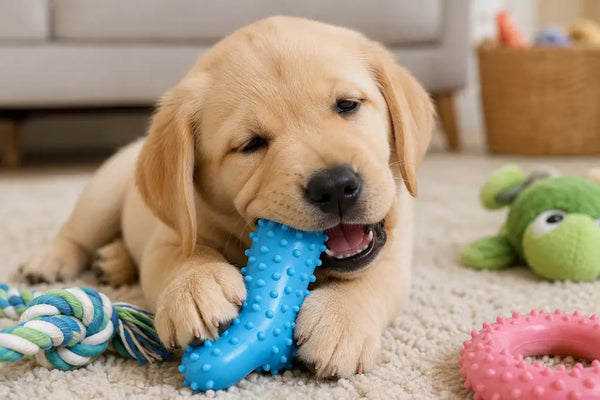
Between 8 and 16 weeks, your puppy's baby teeth are falling out and adult teeth are pushing through. This is peak teething time and it can be genuinely painful for them. The best safe chew toys for teething puppies 8 to 16 weeks are ones that are soft enough to not hurt but textured enough to massage sore gums.
For this age range, I always recommend the Zeaxuie 9 Pack Puppy Chew Toys. This set is like the Swiss Army knife of puppy survival kits — you get a stuffing-free fox squeaky toy, a plush avocado, colorful rope toys, and a treat-dispensing ball. The variety keeps a young puppy engaged and the soft rubber options are perfect for sore gums. It's honestly one of the best values for USA pet parents who just brought home a new pup.
Another option is the Zeaxuie Luxury Puppy Toys set, which includes that same treat ball concept plus a few more squeakies. The treat ball is lowkey brilliant because it turns snack time into a puzzle, which tires out a puppy's brain along with their jaw.
What you should not do is hand your 10-week-old a heavy-duty adult chew toy. Their little jaws aren't ready for that kind of resistance. VCA Animal Hospitals notes that some puppies develop possessive aggression around highly desirable objects like favorite chew toys, so rotating toys regularly and teaching a "give" cue early helps prevent that. [VET-1]
what toys are too dangerous for puppies under 12 weeks
There's a whole category of toys marketed to "dogs" that should never enter a young puppy's crate or playpen. What toys are too dangerous for puppies under 12 weeks? Anything with hard plastic parts that can snap off, raw hide of any kind, cooked bones, rope toys with loose threads that can unravel into long strings, and any toy small enough to fit entirely in your puppy's mouth.
Raw hide is especially sneaky because it's sold everywhere and labeled as a chew. But for a tiny puppy, a chewed-off chunk of rawhide can swell in the stomach and cause a blockage. Cooked bones splinter. Loose rope threads can cause a linear foreign body that literally pleats the intestines. These are not rare freak accidents — they're common enough that every emergency vet has stories.
The ASPCA emphasizes that general handling matters too. Never grab a puppy by the tail or forelegs, which is sometimes tempted when they're mid-zoomies and you're grabbing them away from a dangerous toy. Support their hind legs and rump when lifting, and use a toy swap rather than a forceful grab. [VET-5]
For supervised fun, the Best Pet Supplies Squeaky Crinkle Dog Chew Toy is a safe plush option because it has no small plastic parts and the crinkle texture is engaging without being dangerous. But again — supervision is key. No unsupervised plush time for a heavy chewer.
Best Toys for 3 Month Old Puppy: Teething & Training
Three months old is when things get real. Your puppy is bigger, faster, and their adult teeth are pushing through. This is the age when I see most new owners panic because their sweet little ball of fluff suddenly turned into a tiny land shark. The best toys for 3 month old puppy are ones that combine teething relief with basic training opportunities.
best toys for teething puppy
Frozen rubber toys are the MVP at this stage. The cold numbs sore gums and the rubber gives just enough resistance to satisfy the urge to chew. The best toys for teething puppy are ones you can toss in the freezer for a few hours — like the Walking Interactive Electronic Dog Plush Toy from Paw Vortex. Wait, that one's not for freezing but it's amazing for keeping a 3-month-old entertained. It walks, wags its tail, and makes sounds that engage your puppy's prey drive in a safe way.
For actual teething relief, I go back to the rubber options I mentioned earlier. But here's a pro tip: soak a rope toy in water or low-sodium broth, freeze it, and give it to your puppy for supervised chewing. The frozen fibers are like a cold compress for their gums. Just don't leave them alone with it because wet rope can be a swallowing hazard if shredded.
The AKC guide on puppy potty training reminds owners that puppies need to go out frequently — after chewing toys is one of the triggers. So when you see your 3-month-old finishing a chewing session, that's your cue to head outside. Chewing stimulates the digestive system, and the fastest way to housetraining success is catching those moments. [VET-2]
If your pup is more of a snuggler, the Lamb Chop Dog Plush Toy is a classic that never misses. It's soft enough for comfort but sturdy enough for moderate play. My Biscuit loved his Lamb Chop for months. It was the one toy he never destroyed, which honestly surprised me given his track record with plush avocados.
puppy toys that also help with training and focus skills
You want toys that pull double duty? Get something that makes your puppy think. Puppy toys that also help with training and focus skills are usually puzzle-based or reward-based. When a puppy has to figure out how to get a treat out of a toy, they're practicing patience, problem-solving, and impulse control — all skills that transfer directly to obedience training.
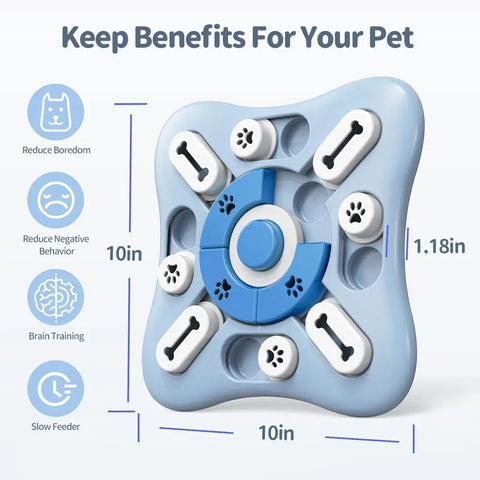
The Dog Birthday Cake Enrichment Toy is a perfect example. It looks like a little cake, squeaks, and has hidden pockets where you can stuff treats. Your puppy has to nose, paw, and nudge it to get the good stuff. Ten minutes with this toy tires out a 3-month-old more than thirty minutes of fetch. That's a training win and a sanity win.
Even something as simple as the treat-dispensing ball in the Zeaxuie sets works for focus training. Roll it with treats inside, and your puppy learns that following the ball and engaging with it leads to rewards. That's the foundation of "focus on me" training later on.
Interactive & Puzzle Picks for Mental Enrichment
Physical exercise alone won't tire out a smart puppy. You can throw a ball until your arm falls off and a high-energy pup will still be bouncing off the walls. Mental enrichment is the secret weapon most new puppy owners skip. And honestly? A tired brain leads to a calm dog way faster than a tired body.
best interactive toys for puppies to learn and explore
The best interactive toys for puppies to learn and explore are ones that reward curiosity. Snuffle mats, treat puzzles, and toys with moving parts all fall into this category. They engage the nose, the brain, and the paws simultaneously.
For a puppy, the sweet spot is a puzzle that's challenging enough to be interesting but not so hard it's frustrating. Start easy. A snuffle mat where treats are barely hidden is perfect for a 3-month-old. By 6 months, you can graduate to sliding-lid puzzles and multi-step treat toys.
Biscuit's first puzzle was a simple plastic disk with sliding covers. He figured it out in about four minutes the first time. Then he got faster. Eventually I had to buy harder puzzles because he'd solve them before I finished my coffee. That's a good problem to have tbh — it means his brain was working.
puppy puzzle toys 2026
Puppy puzzle toys 2026 are smarter than ever. They're made from food-grade materials, have adjustable difficulty levels, and many can go in the dishwasher. That last part is huge because treat residue gets gross fast.
The Paw Vortex collection has some gems for this category. The Dog Toys – PlayWise Pup Collection includes several puzzle options designed specifically for puppy brain development. When you combine a puzzle toy with a high-value treat, you're teaching your puppy that focus and problem-solving lead to rewards. That's the exact skill set that makes advanced training easier later on.
One caution: don't leave a puppy alone with a complex puzzle toy. They can get frustrated and either give up (bad) or destroy the toy (also bad but more expensive). Supervised puzzle time is the move.
Large Breed vs Small Breed Puppy Toy Requirements
Size matters more than most people realize. A toy that's perfect for a Chihuahua puppy could be a choking hazard for a Lab puppy, and a toy meant for a large breed could crack a small breed's teeth. You gotta match the toy to the dog's current size, not their predicted adult size.
best toys for large breed puppies like labs shepherds 2026
Best toys for large breed puppies like labs shepherds 2026 need to be oversized enough that they can't be swallowed whole, durable enough to handle powerful jaws, and soft enough to protect developing teeth. It's a tricky balance.
Large breed puppies like Labs and German Shepherds grow fast. A 5-month-old Lab puppy can already destroy toys that would last an adult Beagle weeks. But their adult teeth are still coming in, so you can't just hand them the hardest nylon bone on the shelf.
Here's where the HGB Indestructible Dog Chew Toy shines. It's made from durable nylon but designed with a squeaker inside to keep things interesting. For pups approaching the 6-month mark who are starting to show serious chewing power, this is a solid bridge between puppy teethers and full adult chews. The SIHRMIU 2 Pack Dog Chew Toys is another good option for medium to large breeds, with a peanut butter groove that turns treat time into an activity.
For large breed puppies specifically, always check the toy's size relative to your pup's mouth. A good rule: the toy should be bigger than your puppy's entire head so there's zero chance of swallowing. As your Lab grows, you'll need to size up every few weeks.
How to Choose the Right Size & Texture for Your Pup
This is the part where I give you a simple framework. No lab equipment required, just your eyes and your fingers. The kong puppy size guide which size for my puppy breed question comes up constantly, and the answer is usually simpler than people think.
Here's my step-by-step method for picking the right toy. I've used this with Biscuit and with every foster puppy that's come through my house.
A four-step method to select puppy toys that are safe, engaging, and appropriately sized for your dog's age and breed.
Step 1: Match toy size to your puppy's mouth
The toy should be noticeably larger than your puppy's head. Not just their mouth — their whole head. This eliminates any chance of swallowing. For a Kong specifically, size small fits most toy breeds, medium fits beagle-sized dogs, and large fits Labs and Shepherds. When in doubt, size up.
Step 2: Test durability against your puppy's chew strength
Press your fingernail into the material. For puppies under 6 months, you should be able to make a slight indent. If it feels like granite, it's too hard. If it feels like it would tear with one good pull, it's too soft for unsupervised play. Rubber should spring back; fabric should resist tearing.
Step 3: Select textures that support teething relief
During the 8-to-16-week teething window, choose toys with raised nubs, ridges, or rope fibers. These textures massage sore gums and help loosen baby teeth naturally. Smooth rubber is fine for gentle chewers, but textured surfaces provide more relief for active teethers.
Step 4: Verify materials and safety features
Look for non-toxic labels, BPA-free rubber, and no small detachable parts. Check that squeakers are embedded deep within the toy rather than loosely attached. If you can squeeze the toy and feel the squeaker poking through, skip it. A good toy should survive your fingernail test, your bend test, and your tug test before it ever reaches your puppy.
That's the whole framework. It takes about thirty seconds once you get the hang of it. And honestly? This simple check has saved me from more bad purchases than any online review ever could.
Best Budget Puppy Toy Sets for New Dog Owners USA 2026
New puppy costs add up fast. Crate, food, vet visits, training classes — the toy budget can get out of hand real quick if you're buying individual toys for $15 a pop. The best budget puppy toy set for new dog owners USA 2026 is one that gives you variety without the premium price tag.
Here's what I tell every new puppy parent: buy a multi-pack. You'll get ropes, squeakies, rubber teethers, and sometimes a treat ball for the price of two or three individual toys. Variety is scientifically better for puppies anyway because it prevents boredom and gives them appropriate options when the urge to chew hits.
The Beiker 20-Pack Puppy Chew Toys is my go-to recommendation for anyone who says "my puppy destroys everything." With 8 ropes and 12 rubber teethers, you can rotate toys daily and never run out. It's the best budget puppy toy set for new dog owners USA 2026 because the per-toy cost is like two dollars. Even if half of them get destroyed, you're still ahead.
One thing about budget sets: check the material quality before handing over the whole box. Some ultra-cheap sets use brittle plastic that shatters. The Beiker and Zeaxuie sets use proper puppy-safe rubber and cotton-blend ropes that hold up to reasonable chewing.
What Toys Help Puppies With Separation Anxiety in Crate
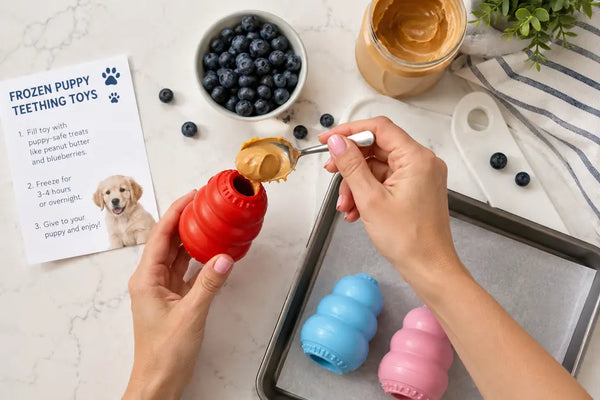
Crate time is hard for puppies. They're alone, they're bored, and they miss you. The right toys can transform crate time from a punishment into a positive experience. But you have to be strategic about which toys go in the crate.
best toys to entertain a puppy when home alone crate
The best toys to entertain a puppy when home alone crate are ones that are safe for unsupervised use and engaging enough to prevent boredom barking. Rubber treat-dispensing toys like Kongs are the gold standard here. You stuff them with peanut butter or wet food, freeze them, and your puppy spends the first twenty minutes of alone time working on the treat instead of panicking.
A frozen toy is also one of the best frozen puppy toy for teething pain relief at home. The cold numbs sore gums while the food reward keeps your puppy engaged. I used to make Biscuit a frozen Kong every morning before work. He'd be so focused on getting the peanut butter out that he barely noticed me leaving. By the time he finished, the initial separation anxiety window had passed.
Never put a plush toy in the crate with a destructive chewer. If your puppy shreds it and swallows stuffing, you could be facing a blockage. Rubber and nylon teethers are the only things that should be in the crate unsupervised.
what toys help puppies with separation anxiety in crate
What toys help puppies with separation anxiety in crate? Long-lasting food puzzles work best because they redirect nervous energy into problem-solving. The Dog Toy Treat Chew from Paw Vortex doubles as a teething relief toy and a treat holder, making it a solid crate companion.
I'll be honest though — toys alone won't solve separation anxiety. They're a management tool, not a cure. But they're a crucial part of the equation. Pair a stuffed frozen toy with a predictable departure routine and gradual alone-time training, and you'll see real progress. The Merck Veterinary Manual notes that pack-oriented behaviors in domestic dogs make isolation genuinely stressful, so giving them a task during alone time helps bridge that gap. [VET-3]
How Many Toys Should a Puppy Have at One Time
You might think more toys equals more happiness. That's not how it works. Puppies get overwhelmed by too many choices, and they actually learn to value toys more when there are fewer of them. How many toys should a puppy have at one time? Around 5 to 8 available at any given moment, with several more in rotation.
Here's the system I use. Biscuit has a toy basket with about six toys in it at any time. Every week, I swap out two or three for ones he hasn't seen in a while. When a toy reappears after a week in the closet, it's suddenly brand new and exciting. This rotation system keeps toys fresh without buying anything new.
If your puppy has access to thirty toys scattered across the floor, they'll grab whatever's closest and ignore the rest. Then you've got clutter and a bored puppy. Fewer toys, rotated regularly, create more engagement. It's the toy equivalent of minimalism, and it works.
Top Paw Vortex Picks for Every Developmental Stage
After all that advice, let me just give you the short list. These are the toys I'd buy if I was bringing home a new puppy tomorrow and wanted to cover every base without wasting money.
For the 8-to-16-week teething phase, grab the Zeaxuie 9 Pack. It's the perfect starter kit. For the 3-to-6-month mental enrichment phase, add a puzzle toy like the Dog Birthday Cake Enrichment Toy and a treat-dispensing ball. For crate time, a frozen rubber toy is non-negotiable. And for comfort, one good plush like the Lamb Chop Plush.


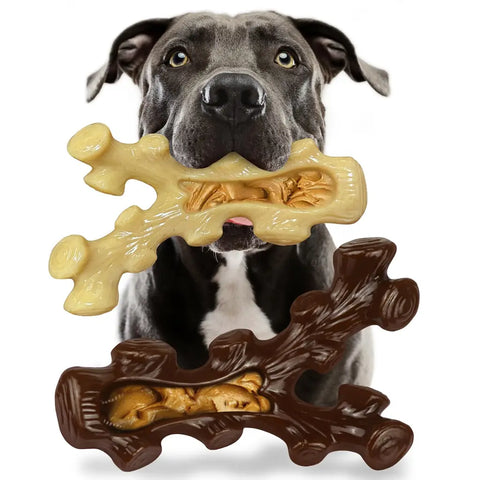
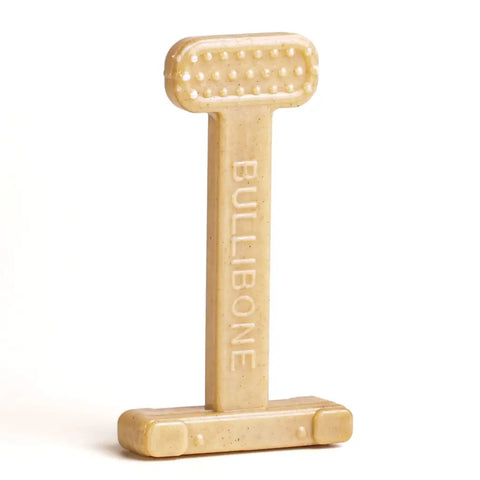


Recommended from Paw Vortex
If you only buy one thing, make it the Zeaxuie 9 Pack Puppy Chew Toys — it's the best value starter kit for teething small dogs at around $20, with a treat ball, squeakies, and ropes. For crate training, add the Dog Toy Treat Chew because it doubles as a frozen teether and a treat dispenser. And for mental enrichment, the Dog Birthday Cake Enrichment Toy is the best puzzle for puppies under 6 months. All available at Paw Vortex with free shipping over $50.

About Paw Vortex
Paw Vortex is your trusted partner in pet care — design-forward, expert-curated solutions for every stage of your pet's journey. Free shipping on orders over $35.
hello@pawvortex.com · www.pawvortex.com · Facebook · Instagram · YouTube
What are the best safe chew toys for teething puppies 8 to 16 weeks?
Soft plush toys vs rubber toys for young puppies which is safer?
| Feature | Soft Plush | Rubber |
|---|---|---|
| Unsupervised safety | ❌ Can shred | ✅ Holds up |
| Teething relief | ❌ Minimal | ✅ Gum massage |
| Comfort factor | ✅ Great for cuddles | ❌ Less snuggly |
What toys are too dangerous for puppies under 12 weeks?
Best toys to entertain a puppy when home alone in a crate?
Kong puppy size guide — which size for my puppy breed?
How many toys should a puppy have at one time?
Best frozen puppy toy for teething pain relief at home?
What toys help puppies with separation anxiety in crate?
Best budget puppy toy set for new dog owners USA 2026?
References
- VCA Animal Hospitals. (2026). Possessive Aggression in Dogs. Retrieved 2026-05-02, from https://vcahospitals.com/know-your-pet/aggression-in-dogs
- AKC. (2026). How to Potty Train a Puppy: A Step-by-Step Guide for New Owners. Retrieved 2026-08-05, from https://www.akc.org/expert-advice/training/how-to-potty-train-a-puppy/
- Merck Veterinary Manual. (2026). Normal Social Behavior in Dogs. Retrieved 2026-08-04, from https://www.merckvetmanual.com/dog-owners/behavior-of-dogs/normal-social-behavior-in-dogs
- AKC. (2026). Dog Dental Care: What to Know. Retrieved 2026-08-05, from https://www.akc.org/expert-advice/health/dog-dental-care/
- ASPCA. (2026). General Dog Care. Retrieved 2026-08-05, from https://www.aspca.org/pet-care/dog-care/general-dog-care
- AKC. (2026). Your Complete Guide to First-Year Puppy Vaccinations. Retrieved 2026-08-05, from https://www.akc.org/expert-advice/health/puppy-shots-complete-guide/


