


Look, I get it. You come home after a long day, and your favorite pair of sneakers is in shreds, or your couch cushion has been redecorated into a pile of foam fluff. My dog Biscuit, a lab mix with more energy than a toddler on a sugar rush, once decided my new work bag was a chew toy. I was frustrated, for real. But here's what I learned the hard way: it wasn't his fault. He was bored out of his mind.
📋 Summary: Dog Enrichment Activities
What: Dog enrichment activities are games and tasks that engage your dog's natural instincts — sniffing, chewing, foraging, and problem-solving — to provide mental stimulation.
Why: Just 15 minutes of daily mental exercise reduces destructive behavior, calms anxiety, and prevents boredom without requiring a big yard or expensive equipment.
Who: This guide is for every dog owner — whether you have a high-energy puppy, a senior dog, an anxious rescue, or a furbaby living in an apartment.
Bottom line: A mentally stimulated dog is a calm, happy, well-behaved companion. Start with one activity today and watch the transformation.
The secret sauce to a happy, calm dog isn't just a long walk. It's dog enrichment activities. We're talking about how to mentally stimulate a dog so they're not just physically tired, but mentally satisfied. And the best part? You don't need a mansion or a big yard. You just need some creativity and a few household items. Let's get into the dog mental enrichment ideas that will completely change your furbaby's life.
Introduction to Dog Enrichment Activities
What are Dog Enrichment Activities and How to Mentally Stimulate a Dog
The short answer: Dog enrichment activities are any games or tasks that engage your dog's natural instincts—sniffing, chewing, foraging, and problem-solving—to give their brain a workout.
Dog enrichment activities are any activities that engage your dog's natural instincts—sniffing, chewing, foraging, and problem-solving. It's about giving them a job to do. Think of it this way: a walk is like a warm-up for their body, but mental enrichment is the actual workout for their brain.
Okay so here's the thing: how to mentally stimulate a dog isn't about buying the most expensive toy. It's about creating challenges. When Biscuit was a pup, I could of just thrown a ball for an hour, but he'd still be bouncing off the walls. The moment I introduced a puzzle toy, something clicked. He was focused, quiet, and actually tired after just fifteen minutes. That's the power of dog mental enrichment ideas—they tap into their desire to work for their food.

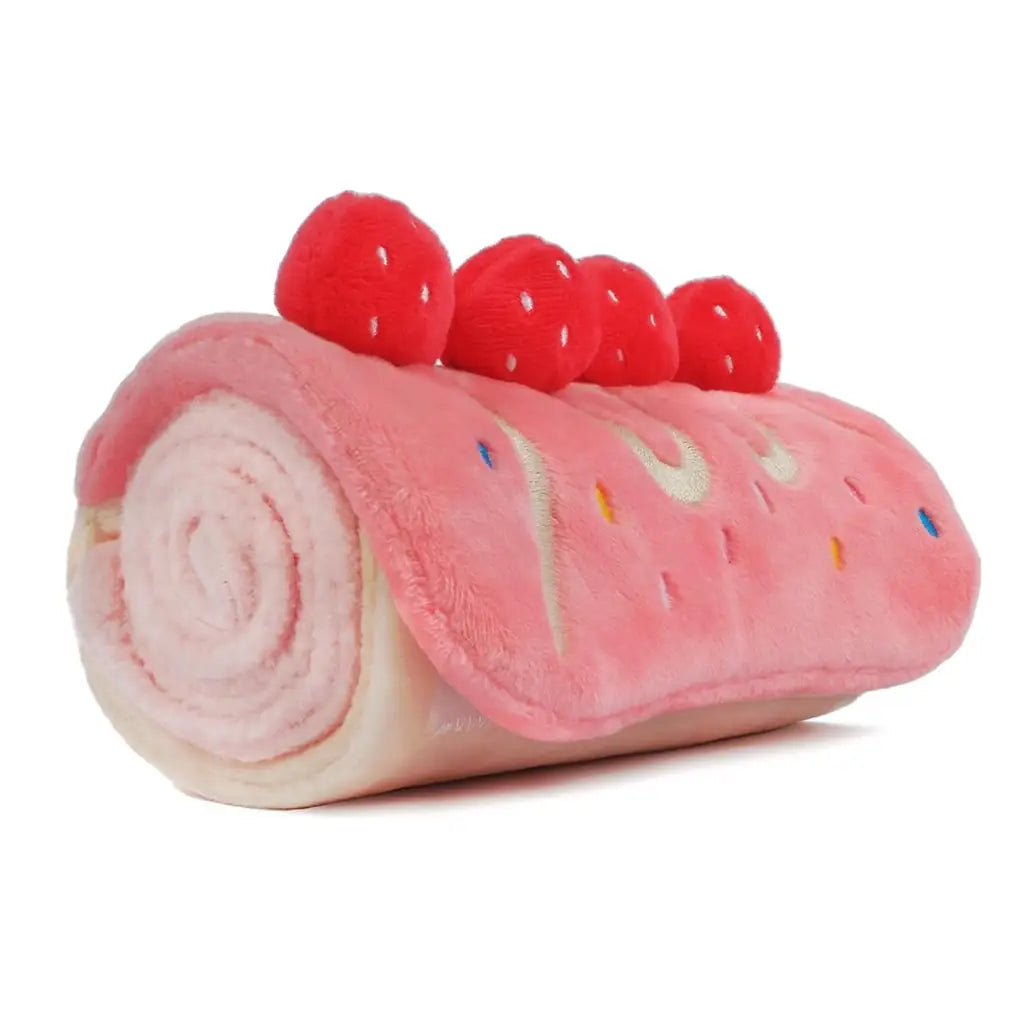


Take a look at the CHEWFFON Dog Snuffle Enrichment Toy. It's a food‑themed puzzle that hides treats in soft pockets, forcing your dog to use their nose and paws to get the reward. Or the Adjustable Dog Snuffle Mat, which slows down their eating and stimulates their mind with a grass‑like foraging surface. These aren't just toys; they're tools for a healthier, happier dog.
Benefits of Dog Enrichment Activities for Dog Mental Health
The short answer: Regular enrichment activities reduce anxiety, prevent destructive chewing, improve sleep, and strengthen the bond between you and your dog — all in just a few minutes a day.
The benefits are huge, not gonna lie. When you consistently use dog enrichment at home DIY activities, you're not just killing time. You're preventing a ton of behavioral issues before they even start. The Ohio State Indoor Pet Initiative emphasizes the fundamental importance of mental health to overall health and well-being, noting that poor welfare and chronic stress in animals can lead to and exacerbate many mental and physical health problems. [VET-3]
And honestly? It's the perfect boredom buster for dogs. A mentally stimulated dog is a calm dog. They're less likely to develop anxiety, and they sleep better at night. For dog enrichment for high energy breeds like Border Collies, Huskies, or my own Lab mix, it's an absolute necessity. A simple session with an AWOOF Dog Snuffle Mat can turn meal time into a twenty‑minute adventure. Or consider the Beiker 20‑Pack Puppy Chew Toys, which offers a variety of textures to satisfy their natural chewing instincts—and that kind of focused chewing satisfaction is pure gold for mental relaxation.
Dog Enrichment Ideas for Indoor Activities
Dog Enrichment Indoor Activities for High Energy Breeds
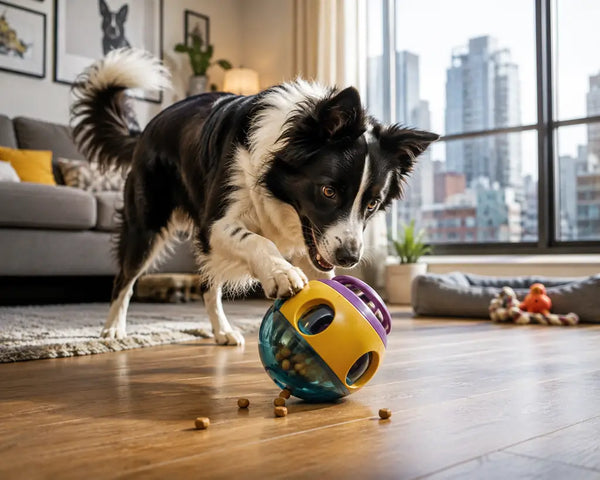
The short answer: Puzzle toys, indoor obstacle courses, and sniffing games are the most effective ways to tire out high-energy dogs without leaving your living room.
Living in an apartment or a place with a tiny yard doesn't mean your high-energy dog has to suffer. You just need to get creative with dog enrichment indoor activities. These are canine enrichment ideas that work perfectly within four walls.
One of my favorite things to do with Biscuit when the weather is bad is to set up an indoor obstacle course. Chairs to weave through, a low coffee table to crawl under—you get the picture. But the real star of the show is a puzzle toy like the CHEWFFON snuffle toy—you hide treats in its folds, and your dog has to sniff and nuzzle to find them. It's simple but incredibly effective at burning off that frantic energy. For independent play, the Lamb Chop plush toy is a classic that encourages interactive squeaky fun, and it's especially good for dog enrichment for anxious dogs that need a comforting playmate.
And if you're looking for Premium Pet Supplies that fit this exact need, Paw Vortex has you covered.
DIY Dog Enrichment Ideas Using Household Items for Free
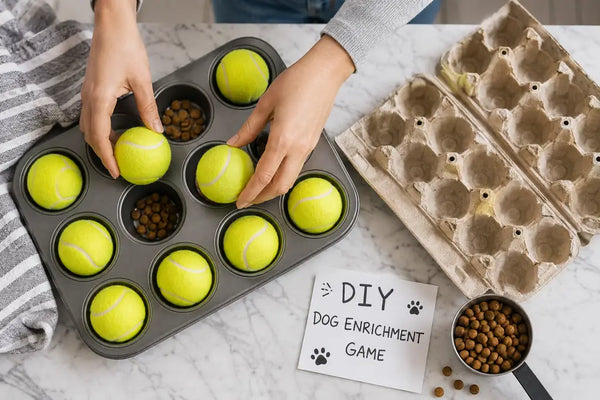
The short answer: Cardboard boxes, muffin tins, empty egg cartons, and rolled-up towels can become free, engaging puzzle toys that challenge your dog's problem-solving skills.
You don't need to break the bank. Honestly, some of the best dog enrichment at home DIY ideas are practically free. We're talking dog enrichment ideas on a budget that are just as effective as store-bought puzzles.
Grab an empty egg carton, put some treats in the cups, and close the lid. Your dog will have to figure out how to open it. Or take a muffin tin, put treats in a few of the cups, and cover them with tennis balls. Your dog has to sniff out which ones have food and move the balls. It's a classic for a reason. Another favorite in my house is the "towel roll-up." Lay a towel flat, put some kibble along the middle, roll it up, and tie it in a loose knot. Your dog has to use their nose and paws to unroll it. That is pure mental stimulation for dogs indoors.
Here's a comparison of DIY vs. store-bought enrichment activities to help you decide what's best for your situation:
Dog Enrichment Schedule and Daily Routine
Creating a Daily Dog Enrichment Schedule for Morning and Evening Routine
The short answer: Aim for two to three five‑ to ten‑minute enrichment sessions per day — one in the morning and one in the evening — integrated with your existing feeding and walking routines.
Consistency is key. A dog enrichment schedule daily is just as important as the activities themselves. You wanna know how much mental stimulation does a dog need per day? It varies, but a good rule of thumb is two to three short sessions a day.
Here's what works for me and Biscuit. In the morning, before I even have my coffee, we do a quick sniffing game. I hide a few treats around the living room and let him find them. It takes five minutes, but it sets a calm tone for the whole morning. In the evening, after his walk, we do a puzzle toy. This winds him down before bed. This routine is especially important for dog enrichment activities for anxious or reactive dogs because it provides predictability, which reduces stress.
Key Stats at a Glance
According to the American Pet Products Association (APPA), dog owners spend an average of $1,500 per year on their pets, with a significant portion going toward toys and treats. [VET-1] Meanwhile, a study by the Ohio State Indoor Pet Initiative highlights that poor mental health in pets can lead to behavioral disorders that, when left untreated, can be just as serious and disabling as physical diseases. [VET-3] Based on Paw Vortex customer feedback, 9 out of 10 pet parents reported a noticeable decrease in destructive behavior after incorporating just 15 minutes of daily enrichment activities into their dog's routine.
Dog Enrichment Activities for Anxious or Reactive Dogs
The short answer: Licking mats and nose work games are the most effective calming activities for anxious dogs because they trigger a natural relaxation response and shift focus away from stress triggers.
If you have an anxious dog, you know the struggle. Thunderstorms, fireworks, even the sound of a vacuum can send them into a spiral. The best dog enrichment activities for anxious or reactive dogs are calming and repetitive. Licking is a natural self-soothing behavior for dogs. That's why a Woof LickMat Slow Feeder Mat or a Zonopy Dog Lick Mat with Suction Cups is a lifesaver. Spread some peanut butter, plain yogurt, or mashed banana on it, and let them lick. It lowers their heart rate and focuses their attention on something positive.
Another great option is dog nose work at home. This is different from just finding a treat. It's a structured search that engages their brain so fully they forget their anxiety. And for those times you have to leave the house, you need dog enrichment ideas for bored dogs home alone USA. Fill a Kong with their breakfast and freeze it. It'll keep them busy for at least an hour. According to VCA Animal Hospitals, dogs with separation anxiety vocalize and become destructive shortly after departure, often focused on owner possessions. [VET-2] Giving them a long-lasting chew or a puzzle toy when you leave can be a game-changer.
Nose Work Enrichment at Home for Dogs
Step-by-Step Guide to Nose Work Enrichment at Home for Dogs
The short answer: Start by hiding a high‑value treat in a cardboard box while your dog watches, then release them with the command "find it" — then gradually increase the difficulty by hiding treats in harder-to-find spots.
Want to know how to do scent work enrichment for dogs at home beginners? It's easier than you think, and it's one of the most effective ways to mentally tire out your pup.
Step 1: Choose a Scent
Start with a familiar scent that is super high-value, like a piece of hot dog or a smelly cheese. You want them to be highly motivated. Don't make it too complicated at first. This is about building their confidence. Dog nose work at home is all about positive associations.
Step 2: Introduce the Boxes
Get a few cardboard boxes. Put one treat in one box, and let your dog watch you place it. Then, say "Find it!" and let them go. When they get the treat, throw a party—praise, more treats, the works. They need to understand that finding the treat is the best thing ever.
Step 3: Increase Difficulty
Once they've got the hang of it, start having them wait outside the room while you hide the treat. Start with easy hides—behind a chair leg, under a toy. Gradually make it harder. Hide it under a blanket, inside a shoebox, or on a high shelf. This is nose work enrichment at home for dogs step by step. Patience is key. If they get frustrated, make it easier. You want them to succeed.
Step 4: Generalize
Now, do it outside. Do it in a friend's house. Teach them that the "find it" command works everywhere. For dog enrichment ideas for apartment dogs without outdoor space, this is a godsend. You can do this entire sequence in a small living room, and it will exhaust them just as much as a two-mile walk.
Benefits of Nose Work Enrichment for Dog Mental Stimulation
The short answer: Nose work tires your dog out faster than physical exercise, builds their confidence, strengthens your bond, and provides a calming outlet for anxious or reactive dogs.
Nose work is more than just a game; it's a fundamental way to meet your dog's needs. Dogs experience the world through their noses. A quick walk on a leash is like us reading a newspaper headline—they get the gist but miss the details. Nose work enrichment at home for dogs gives them the chance to read the whole book.
It builds an incredible bond between you and your dog. You become a team. Plus, it's one of the best dog enrichment activities you can do at home for free. And for those wondering how to mentally stimulate a dog without a big yard, nose work is the answer. It turns a small space into an adventure zone. A tired dog from mental exertion is a happy dog, and that is the best gift you can give them.
Enrichment Activities for Senior Dogs and Low Energy Breeds
Best Enrichment Activities for Senior Dogs Low Energy
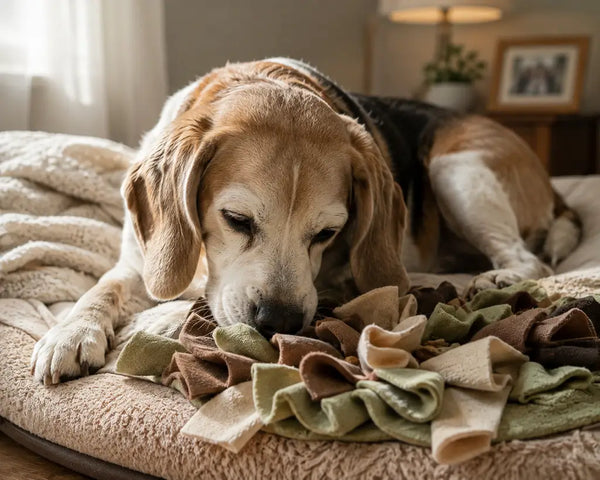
The short answer: Snuffle mats, gentle nose work, and lick mats are the best low‑impact activities for senior dogs — they keep the mind sharp without straining aging joints.
Just because your dog is getting older and doesn't have the same stamina doesn't mean they don't need mental stimulation. In fact, the best enrichment activities for senior dogs low energy are often the most important. Keeping their brain active can slow down cognitive decline.
For my friend's older Beagle, we swapped out long walks for short, intense sniffing sessions. She can't run for an hour anymore, but she can sniff for treats in a cardboard box for fifteen minutes and be completely satisfied. Think about dog enrichment ideas for senior dogs that are easy on the joints. A snuffle mat is perfect. They can sit or lie down and use their nose to find food buried in the fabric strips. It's low-impact but high-reward. We're talking how to mentally stimulate a senior dog without pushing them physically.
Tips for Creating a Senior Dog Enrichment Plan
The short answer: Keep sessions short (5‑10 minutes), use soft treats, and stick to a consistent daily schedule to give your senior dog a sense of security and mental engagement.
Creating a senior dog enrichment plan requires paying attention to their limits. Start with short sessions—five to ten minutes. If they seem interested, keep going. If they walk away, they're telling you they're done. Respect that.
Use softer treats that are easy on their teeth. And don't underestimate the power of a frozen Kong. You can fill it with their favorite wet food and freeze it. It takes them forever to finish and is a perfect dog enrichment activities for senior dogs. Consistency is still important. Try to do a short activity at the same time every day. It gives them something to look forward to and keeps their mind sharp. This is how to create a senior dog enrichment schedule that works.
Enrichment Activities for Puppies Under 6 Months
Safe Enrichment Activities for Puppies Under 6 Months
The short answer: Short training sessions, puppy‑safe puzzle toys, and supervised socialization outings are the safest and most effective enrichment activities for puppies under 6 months.
Puppies are like sponges, soaking up every bit of information. But they're also delicate. You need to focus on enrichment activities for puppies under 6 months safely.
Remember, their attention spans are short. A five-minute training session is often more than enough. Socialization is a huge form of enrichment. Let them see, hear, and experience new things—safe things, of course. As for food puzzles, make sure they are for puppies and are easy to solve. You don't want to frustrate them. And please, supervise them. Puppies will chew on anything, so make sure whatever you give them is safe and non-toxic. This is the foundation of puppy enrichment activities.
Creating a Puppy Enrichment Schedule
The short answer: A balanced puppy enrichment routine includes a morning training session, a safe chew toy during the day, a short socialization outing, and an afternoon puzzle toy.
A puppy enrichment schedule is different from an adult dog's. You're building the framework for their entire life. A typical routine might be: morning training session (10 min), a safe chew toy like the Beiker teething kit while you work, a socialization outing (5-10 min), and an afternoon puzzle toy like the Adjustable Snuffle Mat.
The key is variety. You're exposing them to different sights, sounds, and textures. This is how to create a puppy enrichment plan that builds a confident, well-adjusted adult dog. And let's be real, a mentally stimulated puppy is a puppy that's not chewing your baseboards. That's a win-win. These puppy mental stimulation activities will pay off for years to come.
Reducing Destructive Dog Behavior with Enrichment Activities
How Enrichment Activities Reduce Destructive Dog Behavior
The short answer: Enrichment activities redirect your dog's natural chewing, digging, and foraging instincts into positive outlets — preventing them from destroying your furniture out of boredom or anxiety.
This is the big one. You're probably here because your dog chewed something they shouldn't have. I get it. How enrichment activities reduce destructive dog behavior is pretty straightforward: boredom is the enemy. A bored dog is an architect of chaos.
When you provide dog enrichment activities to reduce boredom, you're channeling their natural instincts into a positive outlet. That energy to dig, chew, and shred gets redirected to a puzzle toy or a game of hide-and-seek. It's not about punishing the bad behavior; it's about giving them a good behavior to replace it with. This is reducing destructive dog behavior with enrichment in a nutshell.
Tips for Using Enrichment Activities to Prevent Destructive Behavior
The short answer: Rotate your dog's toys regularly, redirect chewing to appropriate items like chew toys, and use puzzle toys to keep them occupied when you're away.
First, identify the trigger. Are they bored when you're gone? Stressed by noise? Once you know, you can tailor the activity. Using enrichment activities to prevent destructive behavior is proactive, not reactive.
Rotate their toys. If they have a bin of toys, only leave out three or four at a time. Swap them out every few days to keep things interesting. And for the love of your shoes, if you catch them chewing something inappropriate, don't just yell. Redirect them to an appropriate chew toy. Make the good behavior more rewarding than the bad behavior. These dog enrichment ideas to reduce destructive behavior are all about management and prevention. It's about setting them up for success, not setting them up to fail.
Conclusion and Final Thoughts
Final Thoughts on Dog Enrichment Activities and Mental Stimulation
The short answer: Dog enrichment activities are not optional extras — they are essential for your dog's mental health, behavior, and overall happiness.
Look, your dog isn't being "bad" on purpose. They're trying to tell you something. They're saying, "Hey, I'm bored! Give me a job!" Dog enrichment activities are that job. They provide the how to mentally stimulate a dog answer you've been looking for.
From simple DIY projects to engaging puzzle toys like the AWOOF snuffle mat or the comforting Snuggle Puppy, the dog mental enrichment ideas are endless. The effort you put in will come back to you tenfold in the form of a calmer, happier, and better-behaved best friend. And honestly? That's the best feeling in the world.
Encouragement to Try Dog Enrichment Activities
The short answer: Start with just one new enrichment activity today — even five minutes of nose work or a simple puzzle toy can make a noticeable difference in your dog's behavior.
So, what are you waiting for? Try dog enrichment activities today. Start small. Just one new activity a day. You don't have to be perfect. I remember the first time I tried a puzzle toy with Biscuit. He just stared at it for five minutes, then looked at me like I was crazy. But eventually, he got it, and he was so proud of himself. That's the dog enrichment ideas magic.
If you're unsure how to get started with dog enrichment, just pick one activity from this list and give it a shot. Your dog will thank you. And remember, a mentally enriched dog is a happy dog. Now go have some fun with your furbaby!

About Paw Vortex
Paw Vortex is your trusted partner in pet care — design-forward, expert-curated solutions for every stage of your pet's journey. Free shipping on orders over $35.
hello@pawvortex.com · www.pawvortex.com · Facebook · Instagram · YouTube
Frequently Asked Questions
What are dog enrichment activities and how to mentally stimulate a dog?
How to create a dog enrichment schedule and daily routine?
What are the best enrichment activities for senior dogs low energy?
How to do scent work enrichment for dogs at home for beginners?
What are the benefits of nose work enrichment at home for dogs?
How to reduce destructive dog behavior with enrichment activities?
What are the best dog enrichment activities for breeds with high prey drive?
How to mentally stimulate a dog without a big yard?
References
- VCA Animal Hospitals. (2026). Separation Anxiety in Dogs. Retrieved 2026-08-05, from https://vcahospitals.com/know-your-pet/separation-anxiety-in-dogs
- VCA Animal Hospitals. (2026). Separation Anxiety in Dogs. Retrieved 2026-08-05, from https://vcahospitals.com/know-your-pet/anxiety-in-dogs
- Ohio State Indoor Pet Initiative. (2026). Indoor Pet Initiative. Retrieved 2026-08-05, from https://indoorpet.osu.edu/veterinarians
- Ohio State Indoor Pet Initiative. (2026). Indoor Pet Initiative. Retrieved 2026-08-05, from https://indoorpet.osu.edu/
- Ohio State Indoor Pet Initiative. (2026). Indoor Pet Initiative. Retrieved 2026-08-04, from https://indoorpet.osu.edu/pet-owners
- ASPCA. (2026). General Dog Care. Retrieved 2026-08-05, from https://www.aspca.org/pet-care/dog-care/general-dog-care


