

✔ Reviewed for veterinary accuracy by a licensed veterinarian.
Understanding Normal Dog Heart Rate
A dog’s heart rate (pulse) tells you how hard their cardiovascular system is working. The normal range is wide because size matters more than almost anything else. A Great Dane’s heart beats slower than a Chihuahua’s – that’s not a problem, it’s physics. According to the VCA Hospitals, adult dogs typically have resting heart rates between 60 and 140 beats per minute. Puppies and very small breeds often sit at the higher end (120–160 bpm), while large and giant breeds stay lower (60–100 bpm).
What surprised me when I dug into the research is how much a dog’s emotional state changes their heart rate. Excitement, fear, or even a doorbell can spike the pulse by 30–50 beats instantly. That’s why you always measure at rest – when your dog is calm, lying down, and hasn’t been active for at least ten minutes.
What is Normal Heart Rate for a Dog by Size
Here’s the breakdown by weight class. Toy breeds (under 10 lbs) like Yorkies and Chihuahuas: 120–160 bpm. Small to medium breeds (10–50 lbs) like Beagles and French Bulldogs: 90–120 bpm. Large breeds (50–90 lbs) like Labradors and Goldens: 70–100 bpm. Giant breeds (over 90 lbs) like Great Danes and Mastiffs: 60–80 bpm. Puppies of any breed often hit 160–200 bpm until they reach about a year old – their tiny hearts are working overtime to fuel rapid growth. Athletes (hunting dogs, agility champions) sometimes have resting rates as low as 50 bpm, which is a sign of excellent conditioning, not a problem.
Quotable takeaway: A normal dog heart rate varies by size more than any other factor – always compare your dog’s pulse to their breed’s typical range, not a one‑size‑fits‑all number.
How to Check Dog Heart Rate at Home
Following these three steps will give you an accurate resting heart rate for your dog in under a minute.
Find the pulse location
The easiest spot is inside the hind leg, high up where the leg meets the body. Press gently with your index and middle fingers (not your thumb – your thumb has its own pulse) until you feel the femoral artery pulsing. Alternatively, place your hand over the left side of the chest just behind the elbow to feel the heartbeat directly.
Count beats for 15 seconds
Once you feel a steady rhythm, use a timer or watch to count how many beats occur in 15 seconds. Make sure your dog is lying down and calm – not panting, not just running around.
Multiply by four
Take that 15‑second count and multiply by 4 to get beats per minute. For example, 25 beats in 15 seconds × 4 = 100 bpm. Normal? Compare to your dog’s size category above. Repeat a few times to confirm consistency.
Most owners I’ve spoken with notice an irregular rhythm before they notice an abnormal rate. A healthy heartbeat is steady like a drum – if it feels like jazz (skipping beats, random fast runs, then pauses), that’s worth mentioning to your vet even if the rate itself is normal.
Dog Normal Temperature Explained
Dogs run hotter than humans. While we sit around 98.6°F, a dog’s normal temperature is 99.5–102.5°F. Anything below 99°F (hypothermia) or above 103°F (fever) is a red flag. Above 106°F can cause organ damage. The most accurate reading always comes from a rectal thermometer – ear thermometers designed for dogs can be convenient but are less reliable, especially if your dog has ear wax or an ear infection.
A dog’s temperature fluctuates slightly during the day: it’s often lowest in the morning and highest in the evening after activity or meals. But a true fever (caused by infection, inflammation, or heatstroke) will stay elevated even after your dog has rested in a cool room for 30 minutes.
How to Take Dog Temperature at Home

Taking a dog’s temperature sounds intimidating, but most dogs tolerate it well when you’re calm and quick. Use a digital rectal thermometer (never glass – it can break). Lubricate the tip with petroleum jelly or coconut oil. Have a helper hold your dog’s head gently, lift the tail, and insert the thermometer about 1 inch into the rectum for small dogs, 1–2 inches for larger dogs. Wait for the beep (usually 10–20 seconds). Remove, read, and clean the thermometer with rubbing alcohol. Reward your dog with a treat after every session so they associate it with something positive. If your dog is aggressive or panicking, stop and call your vet for alternatives – a bite isn’t worth the reading.
Normal Dog Temperature Chart by Breed Size
Temperature ranges don’t vary by breed size as much as heart rate does. Almost all healthy dogs of any breed will fall between 99.5°F and 102.5°F. However, certain flat‑faced breeds (brachycephalic) like Pugs and Bulldogs can run slightly higher due to less efficient panting, often sitting at 100.5–103°F. Puppies under 8 weeks old may have temperatures around 96–98°F at birth, which normalizes to adult ranges by 4 weeks. Below is a quick-reference table for at‑a‑glance checking.
Quotable takeaway: Any temperature over 103°F or under 99°F warrants a call to your vet – don’t wait for other symptoms to appear.
Normal Dog Breathing Rate
A resting breathing rate (respiratory rate) is the number of breaths your dog takes per minute while relaxed and not panting. Normal is 10–30 breaths per minute. Puppies breathe faster – up to 40 breaths per minute is common. Panting is not the same as breathing: panting is rapid, shallow, and used for cooling. True resting breathing should be quiet, with the chest rising and falling gently. Count one breath as one complete inhale + exhale.
Dog Breathing 40 Breaths per Minute is That Normal
If your adult dog is taking 40 breaths per minute while lying down in a cool room and hasn’t exercised recently, that is above the normal range. Forty breaths per minute often indicates pain, fever, heart disease, or respiratory distress. However, the same number in a 3‑month‑old puppy is completely normal. The AKC notes that young puppies have higher metabolic demands and naturally faster breathing rates. The key is context: if your adult dog’s breathing stays above 30 bpm for more than an hour without a clear cause (heat, excitement), call your vet.
Key Finding
According to a retrospective study of over 100,000 dogs, increased resting respiratory rate is one of the earliest predictors of congestive heart failure – often appearing days before a cough or exercise intolerance. Monitoring your dog’s breathing rate weekly can catch cardiac issues early.
What Color Should My Dog’s Gums Be

Checking dog’s gum color for health assessment, pink healthy gums
Gum color is a vital sign that most owners overlook. Healthy gums are bubblegum pink – moist, slick, and shiny. Press your finger against the gum until it turns white (about one second), then release. The color should return to pink within 1.5–2 seconds. That’s called capillary refill time. Longer than 2 seconds suggests shock or dehydration. Abnormal colors: pale pink or white = blood loss or anemia; bluish or purple = lack of oxygen (heart or lung emergency); bright red = heatstroke, carbon monoxide poisoning, or infection; yellow = jaundice (liver disease). Check your dog’s gums once a week when they’re calm so you know what “normal” looks like for them – some dogs have black pigmented gums, which is fine, but check the inner lip or tongue instead.
Quotable takeaway: Gum color changes are often the first visible sign of a life‑threatening problem – if gums are pale, blue, or brick red, head to an emergency vet immediately.
Abnormal Dog Vital Signs
Knowing what’s normal is only half the battle. The real skill is recognizing when numbers shift out of range and what those shifts mean. Below are the two most common abnormalities owners notice and what to do about them.
My Dog’s Heart is Racing – What Does it Mean
A racing heart (medically called tachycardia) can mean something as minor as excitement or as serious as internal bleeding or chocolate poisoning. VCA Animal Hospitals explains that chocolate contains theobromine and caffeine, which directly increase heart rate and blood pressure. Even small amounts of dark chocolate can spike a small dog’s heart rate above 200 bpm. If your dog’s heart is racing and they are also restless, panting, vomiting, or acting confused, treat it as an emergency. But if they are relaxed and the rate is only slightly elevated (e.g., 120 bpm for a large dog), recheck in 30 minutes. If it doesn’t settle, call your vet.
How to Check if Dog is Dehydrated at Home Pinch Test
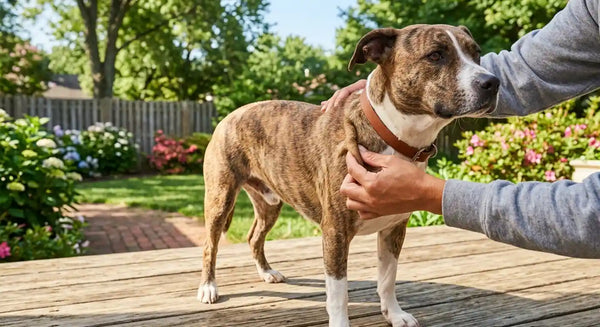
Dehydration affects all vital signs: heart rate rises, capillary refill slows, and gums become dry and tacky. The home pinch test (skin tenting) is simple: gently pull up the skin over your dog’s shoulder blades or between the shoulder blades. In a well‑hydrated dog, the skin snaps back into place immediately. If it stays tented (even for 1–2 seconds) or goes back slowly, your dog is dehydrated. More than 5 seconds indicates severe dehydration that needs IV fluids. Also check for sunken eyes, dry nose, and thick, ropey saliva. Offer small amounts of water or unflavored electrolyte solution (Pedialyte) and call your vet if the tent lasts more than 2 seconds or if your dog is also vomiting and unable to keep water down.
⚠ Important
The pinch test is less accurate in very young puppies, senior dogs, or breeds with loose skin (like Shar‑Peis or Basset Hounds). For those dogs, gum moisture and capillary refill time are better indicators.
How to Take a Dog’s Temperature Without a Thermometer
In a pinch – when you suspect fever but don’t have a thermometer – you can get strong clues by feeling your dog’s ears, paws, and groin. Feverish dogs often have very warm ears and armpits. Compare to your own hand (which is about 90°F) – if the ear feels noticeably hot and dry, that’s suspicious. Also check the nose: a warm, dry nose alone is not a reliable sign (dogs’ noses go dry from sleeping or low humidity), but a nose that is hot AND your dog is lethargic and has glassy eyes is worth a vet visit. None of these replace a real thermometer, but they help you decide whether to go to the vet now or wait until morning.
How to Feel Dog’s Lymph Nodes Step by Step
Lymph nodes are part of the immune system and can swell when there’s infection, inflammation, or cancer. Knowing how to feel them gives you an early warning system. Below is a step‑by‑step guide.
If you feel any node that is larger than a kidney bean, hard and fixed in place (doesn’t move under the skin), or clearly painful when touched, have your vet check it. Many dogs get mild lymph node swelling from routine vaccinations or minor infections – that usually resolves in 3–5 days. Swelling that persists or grows is the one that needs testing.

About Paw Vortex
Paw Vortex publishes evidence-based pet care guides for US pet owners. Our team researches every article using current veterinary literature and expert consultation. We also stock premium pet supplies — free shipping on US orders over $35+.
hello@pawvortex.com · www.pawvortex.com · Facebook · Instagram
Frequently Asked Questions About Dog Vital Signs
What is a normal heart rate for a dog by size?
How do I take my dog’s temperature at home?
What is a normal breathing rate for a dog?
How do I check my dog’s heart rate at home?
What color should my dog’s gums be?
My dog’s heart is racing – what does it mean?
How do I check if my dog is dehydrated at home using the pinch test?
How do I take a dog’s temperature without a thermometer?
References
- VCA Hospitals. “Heartworm Disease in Cats”. Retrieved 2026-04-27. https://vcahospitals.com/know-your-pet/heartworm-disease-in-cats
- VCA Animal Hospitals. (2026). Chocolate Poisoning in Dogs. Retrieved 2026-05-02, from https://vcahospitals.com/know-your-pet/poisoning-in-dogs
- VCA Animal Hospitals. (2026). First Aid for Dogs: Shock, Rescue Breathing, and CPR. Retrieved 2026-05-02, from https://vcahospitals.com/know-your-pet/first-aid-for-dogs
- VCA Hospitals. “Neutering in Dogs”. Retrieved 2026-04-28. https://vcahospitals.com/know-your-pet/neutering-in-dogs
- AKC. (2026). Why Does My Dog Eat Grass?. Retrieved 2026-05-02, from https://www.akc.org/expert-advice/lifestyle/why-does-my-dog-eat-grass/
- AKC. (2026). Your Complete Guide to First-Year Puppy Vaccinations. Retrieved 2026-05-02, from https://www.akc.org/expert-advice/health/puppy-shots-complete-guide/
- VCA Hospitals. “Heartworm Disease in Dogs”. Retrieved 2026-04-27. https://vcahospitals.com/know-your-pet/heartworm-disease-in-dogs
- VCA Animal Hospitals. (2026). Vomiting in Dogs. Retrieved 2026-05-02, from https://vcahospitals.com/know-your-pet/vomiting-in-dogs


