

You look at your dog resting in their bed and something feels off. They aren't hurt in a dramatic way — no yelp, no visible injury — but they just don't seem like themselves. How can you tell if a dog is in pain when they are hardwired to hide it? The short answer is that dogs show pain through a combination of body language, behavior changes, and subtle physical signs. Learning to spot these signs dog is in pain is the most important skill you can develop as a pet parent.
✔ Reviewed for veterinary accuracy by a licensed veterinarian.
Understanding Dog Pain Symptoms
Recognizing Signs Dog is in Pain: What to Look For
Dogs evolved to conceal pain. In the wild, showing weakness makes you a target. That instinct remains strong in your Labrador or Chihuahua. According to the PetMD, dogs often hide pain, but signs like limping, behavior changes, reduced activity, and unusual posture can indicate they are hurting and should be evaluated by a veterinarian. Here are seven of the most common outward signs.
1. Limping or favoring a limb. This is the most obvious sign dog is in pain, but it is not always dramatic. A dog with mild joint discomfort may just shift weight off a sore leg when standing still. You might notice them holding one paw up while eating or hesitating to put weight on it after lying down.
2. Whimpering, whining, or groaning. Vocalization is a direct way dogs communicate distress. A sudden whimper when getting up or lying down often points to musculoskeletal pain. Some dogs groan continuously when they cannot find a comfortable position.
3. Changes in activity level. The dog who used to greet you at the door but now stays on the couch is showing you something. Reduced interest in walks, playing fetch, or even climbing stairs are classic dog pain symptoms. The VCA Animal Hospitals notes that osteoarthritis affects at least 20% of dogs over one year old and 80% of dogs over eight years old, causing joint pain that interferes with daily activities.
4. Posture changes. A dog in pain often stands with a hunched back, a tucked abdomen, or a head held lower than normal. These positions protect sore areas. If your dog looks like they are bowing constantly (front legs down, rear end up) without stretching afterward, that "play bow" position may actually indicate abdominal pain.
5. Changes in sleeping patterns. Dogs in pain may sleep more than usual because moving hurts. But some dogs sleep less because they cannot get comfortable. Restlessness at night — getting up, circling, lying down, then repeating — is a red flag.
6. Decreased appetite or thirst. Pain suppresses appetite. If your dog skips two consecutive meals or shows less interest in water, pain is on the list of possible causes. Dental pain specifically makes dogs drop food or chew on only one side of the mouth.
7. Panting when not hot or exercised. Dogs pant to cool down, but they also pant from pain or stress. If the room is 70 degrees and your dog has been resting for an hour but is still panting heavily, pain is a real possibility — especially if the panting started after an injury or surgery.
Expert takeaway: The first sign is often subtle — a slight hesitation before jumping onto the bed or a longer pause at the top of the stairs. Trust your gut when something feels different.
How to Tell if Dog is Hurting: Silent Pain in Dogs
What scares most owners is the dog who acts normal but is silently suffering. How to tell if dog is hurting when they eat, play, and wag their tail? Silent pain in dogs exists, and it is more common than many realize. These next seven signs are easy to miss because they look like "personality" or "aging."
8. Hiding or withdrawing from family. A dog in pain may seek solitude. They might hide under the bed, go into a different room, or turn their head away when you approach. This is not rejection — it is self-preservation. Dogs know they are vulnerable when hurting, so they isolate.
9. Sudden aggression or irritability. The sweetest Golden Retriever can snap when touched on a sore spot. Growling, nipping, or even just a hard stare when you reach for their paw or back are warning signs. This is not a "bad dog" problem — it is a pain problem.
10. Excessive licking or grooming a specific area. Dogs lick wounds instinctively, but they will also lick joints affected by arthritis or a spot where internal pain radiates. If you see a bald patch from constant licking on a leg or paw, the underlying cause is often chronic pain.
11. Changes in facial expression. Dogs show pain in their faces. Look for: squinting eyes, flattened ears pinned back, a tense brow (furrowed forehead), and a "grimacing" look with lips pulled back slightly. In my experience with dogs, owners notice the face only after they know what to look for — then they cannot unsee it.
12. Restlessness and inability to settle. A dog in pain may circle excessively before lying down, stand up moments after lying down, or shift positions every minute. This is not normal fidgeting. It is the dog searching for a position that does not hurt.
13. Guarding behavior. Does your dog growl when you try to lift their hind end? Do they walk away when you reach for their belly? Protecting a painful area is instinct. What surprised me when I dug into the research is that many owners misread this as the dog being "cranky" or "spoiled" when it is actually a pain response.
14. Reduced tail wagging or different tail carriage. A dog in pain often carries their tail lower than usual, tucked between the legs, or held stiffly to one side. The tail that normally wags broadly becomes a slight twitch or stops moving entirely when you walk in the room.
Expert takeaway: Silent pain is real, and it is dangerous because owners delay vet visits. If your dog shows two or more of these subtle signs consistently for 24–48 hours, make the appointment.
Common Signs of Dog Pain
Dog Limping Pain Assessment: What it Means
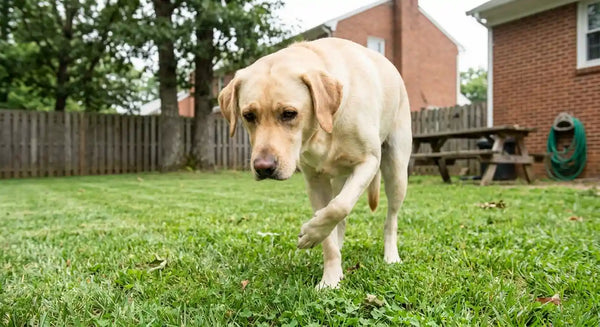
Dog limping pain assessment starts with observation. Limping is not a single condition — it is a sign that something hurts somewhere in the leg, paw, hip, or spine. A dog can limp for reasons ranging from a thorn in the pad to a torn cruciate ligament or bone cancer. The pattern of the limp tells you a lot.
Weight-bearing limp: The dog puts some weight on the leg but flinches or shortens the step. This often indicates arthritis, a sprain, or a foreign body in the paw. According to VCA Animal Hospitals, osteoarthritis causes progressive joint pain and inflammation that interferes with daily activities, and limping is often worse after rest (called "gelling") or after heavy exercise.
Non-weight-bearing limp: The dog holds the leg completely off the ground. This is more serious and suggests a fracture, a torn ligament (like the cranial cruciate), or a dislocated joint. These dogs need to see a vet within 24 hours, and often sooner.
Intermittent limp: The dog limps, then seems fine, then limps again. This pattern is classic for early arthritis, hip dysplasia, or a partially torn ligament that flares up with activity. Do not wait until the limp becomes constant — the condition is often more treatable in the intermittent stage.
How to tell if dog is in pain when resting? If your dog limps after lying down for a while and then "walks it off" after a few minutes, that is mechanical pain from stiff joints. If the limp does not improve with movement, that points to inflammation or structural damage.
Expert takeaway: Any limp lasting more than 24 hours deserves a veterinary exam. Even if it goes away, take a video of the limp to show your vet.
Dog Whimpering Pain: Is it a Sign of Distress?
Dog whimpering pain vocalizations are one of the most direct ways a dog can tell you something is wrong. But not every whimper means pain. Dogs also whimper from excitement, anxiety, or even boredom. The key is context and pattern.
Pain-related whimpering has specific features: It often occurs during movement (getting up, lying down, climbing stairs), when touched in a specific spot, or at night when the dog is trying to settle. The whimper may be accompanied by a flinch, a head turn toward the painful area, or a sudden withdrawal.
What about the dog who whines all the time? Chronic pain in dogs — from arthritis, dental disease, or back problems — can produce low-grade, frequent whimpering. Owners sometimes describe it as "moaning" or "sighing." A dog pain scale used by veterinarians often includes vocalization as a key metric, scoring from 0 (no vocalization) to 3 (crying or groaning even when not touched).
Dog whimpering pain that starts suddenly — especially in a dog who was normal an hour ago — can indicate an acute emergency. Bloat (gastric dilatation-volvulus), a ruptured disc, or a kidney stone can cause intense pain with sudden onset whimpering, pacing, and restlessness.
What whimpering is NOT: If your dog whimpers only when you leave the house or when they see you preparing food, that is likely anxiety or anticipation. If the whimpering stops completely when you offer a treat or start a walk, pain is less likely.
Expert takeaway: When in doubt, assume a new whimpering pattern is pain until proven otherwise. A vet visit costs far less than a night of watching your dog suffer.
Key Finding
According to VCA Animal Hospitals, osteoarthritis affects at least 20% of dogs over one year old and 80% of dogs over eight years old. That means most senior dogs are living with some level of chronic pain — and many are not receiving adequate pain management because owners miss the signs.
Assessing Dog Pain
Dog Pain Assessment Scale: How Vets Measure it
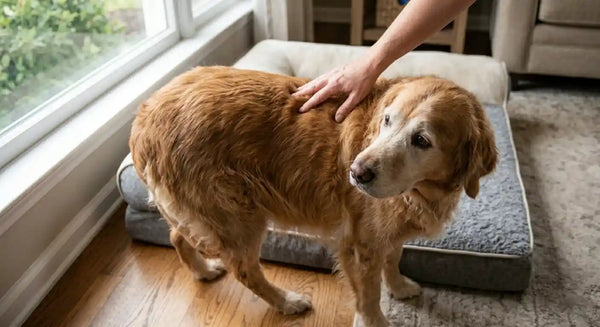
Veterinarians do not guess whether a dog is in pain. They use validated dog pain assessment scales that turn subjective observations into objective scores. These tools help vets decide when to give pain medication, whether a dose needs adjustment, and when a dog is comfortable enough to go home after surgery. You can use a simplified version at home to decide if a vet visit is urgent.
How to Perform a Home Dog Pain Assessment
This five-step procedure helps you systematically evaluate your dog's pain level using the same categories vets look for. Complete all steps and note any changes from your dog's normal behavior.
Step 1: Observe posture and movement at rest
Watch your dog for 2–3 minutes while they are standing still. Is their back hunched? Do they shift weight off one leg? Is their head held lower than normal? A normal dog stands with a level back, weight evenly distributed, and head in a neutral position. Score 0 for normal, 1 for mild change, 2 for obvious abnormal posture.
Step 2: Assess response to gentle palpation
Starting at the head, gently run your fingers along your dog's spine, ribs, and legs. Do they flinch, turn their head, tense up, or pull away? A pain-free dog may look at you but will not pull away or growl. Note any area that causes a clear reaction. Do not press hard — this is not a deep tissue exam.
Step 3: Evaluate mobility and gait
Encourage your dog to walk across a room. Watch for head bobbing (a sign of forelimb pain), hip drop (hindlimb pain), shortened stride, or reluctance to bear weight. Video the gait from the side and from behind. Compare to how your dog walked three months ago, not to other dogs.
Step 4: Check daily activity and behavior changes
Ask yourself: Did my dog greet me at the door today? Did they finish breakfast? Are they hiding or seeking isolation? Have they growled or snapped at being touched? Each "yes" to these questions increases the likelihood of significant pain.
Step 5: Score and decide next steps
If your dog scores 0–1 on the above (normal posture, no pain on palpation, normal gait, no behavior changes), monitor but no urgent vet needed. Score 2–4: schedule a vet visit within a week. Score 5 or higher or any single severe sign (non-weight-bearing limp, crying when touched, aggression): see a vet within 24 hours.
Veterinary pain scales like the Colorado State University Canine Acute Pain Scale or the Glasgow Composite Measure Pain Scale use more sophisticated metrics, but the principle is the same: pain is measurable. Signs my dog is in pain but not showing it become obvious once you start scoring systematically.
Expert takeaway: Do the assessment twice — once when your dog is resting and once after a short walk. Pain often shows up more clearly after movement.
What Does a Dog Look Like When in Severe Pain?
What does a dog look like when in severe pain is a question every owner should know the answer to because it signals a potential emergency. Severe pain changes a dog fundamentally. You will not wonder whether something is wrong — you will know something is terribly wrong.
Physical appearance in severe pain: The dog may lie in a rigid, unnatural position, often stretched out flat or curled into a tight ball. Their pupils may be dilated. Their gums may look pale or brick-red. Some dogs tremble or shake even in a warm room. Rapid, shallow breathing or panting is common, even when completely at rest.
Behavioral signs of severe pain: A dog in severe pain may cry out spontaneously without being touched. They may become aggressive when anyone approaches, even you. Some dogs go completely silent and still — a state often misread as "calm" when it is actually a fear response called "learned helplessness."
Changes in responsiveness: Severe pain can make a dog seem disoriented or "checked out." They may not respond to their name. They may stare blankly at a wall. On the other end, some dogs become frantic, pacing nonstop, unable to sit still for more than a few seconds.
What it is NOT: A dog in severe pain will not eat, even their favorite treat. They will not wag their tail. They will not play. If your dog is still eating and wagging, the pain is likely not severe — but that does not mean it is not significant enough to need treatment.
⚠ Emergency Warning
A dog showing signs of severe pain — especially if accompanied by a bloated or hard abdomen, non-productive retching, pale gums, or collapse — needs immediate veterinary care. Do not wait for an appointment. Go to the nearest emergency vet.
Expert takeaway: Severe pain is a medical emergency on its own. Even if the underlying cause is not immediately life-threatening, the pain itself causes stress, elevated heart rate, and can delay healing. Treat the pain while you diagnose the cause.
Comforting a Dog in Pain
How to Comfort a Dog in Pain at Home
Once you have identified signs dog is in pain and made a vet appointment, you need to keep your dog comfortable at home. Never give human pain medication to a dog — ibuprofen, acetaminophen, and naproxen are toxic to dogs and can cause kidney failure, liver damage, or death. Instead, use these vet-approved comfort measures.
Create a low-stress recovery space. Set up a quiet area away from children, other pets, and household traffic. Use an orthopedic bed with at least 4–6 inches of memory foam or egg-crate foam to relieve pressure points. If your dog has joint pain, raise food and water bowls to shoulder height so they do not have to bend down.
Manage mobility safely. For dogs with limping pain assessment scores indicating moderate to severe pain, restrict jumping. Block access to furniture or use ramps. Carry small dogs up and down stairs. Use a harness instead of a collar to avoid pulling on the neck. For large dogs, a sling or towel under the belly can help support hind end weakness.
Apply warm or cold therapy appropriately. For acute injuries (within 48 hours), apply a cold pack wrapped in a towel for 10–15 minutes to reduce inflammation. For chronic arthritis pain, a warm compress or heating pad on a low setting (always with a barrier) for 15–20 minutes can loosen stiff joints. Never apply heat to a swollen area — that increases inflammation.
Maintain gentle routines. A dog in pain still needs to eat, drink, and relieve themselves. Offer smaller, more frequent meals. Take them outside on a short leash — do not let them roam if they might overdo it. For dogs who struggle to stand, use a sling or a rolled towel under the belly for support.
What NOT to do: Do not force your dog to move or exercise. Do not massage an area that is swollen, hot, or causing a flinch reaction. Do not isolate your dog completely — check on them every 2–3 hours but let them rest undisturbed in between.
Expert takeaway: Comfort measures are supportive, not curative. If your dog is not noticeably more comfortable within 24 hours of starting these measures, call your vet to discuss moving up the appointment.
When Should I Take My Dog to the Vet for Pain?
When should I take my dog to vet for pain is one of the most common questions owners face. The answer depends on severity, duration, and other symptoms. Use this decision guide.
Take your dog to an emergency vet immediately if:
- The dog is crying, shaking, or panting severely without stopping
- The dog has a bloated, hard, or painful abdomen
- The dog has pale, blue, or brick-red gums
- The dog collapses or cannot stand up
- The dog has been hit by a car or had a significant fall
- The dog is straining to urinate or cannot urinate at all
Take your dog to your regular vet within 24 hours if:
- Your dog is limping and not putting weight on a leg
- Your dog has been whimpering for more than 12 hours
- Your dog refuses food for two full days
- Your dog has a sudden behavior change (aggression, hiding)
- Your dog is excessively licking a specific area
Schedule an appointment within the week if:
- Your dog has a mild, intermittent limp that comes and goes
- Your dog is slower getting up in the morning but seems fine after moving
- Your dog no longer jumps onto furniture they used to jump onto
- Your dog is sleeping more than usual but eating and drinking normally
Signs of internal pain in dogs — such as a hunched back, reluctance to be touched on the belly, vomiting, or diarrhea — should never wait more than 24 hours for evaluation. Internal pain can come from pancreatitis, kidney disease, or liver problems, all of which worsen without treatment.
Expert takeaway: When in doubt, call your vet. A 10-minute phone call can save you days of worry. Most vets will tell you to come in or to watch and wait. Trust their guidance over an internet search.

About Paw Vortex
Paw Vortex publishes evidence-based pet care guides for US pet owners. Our team researches every article using current veterinary literature and expert consultation. We also stock premium pet supplies — free shipping on US orders over $35.
hello@pawvortex.com · www.pawvortex.com · Facebook · Instagram
Frequently Asked Questions About Dog Pain
How to tell if dog is in pain when resting?
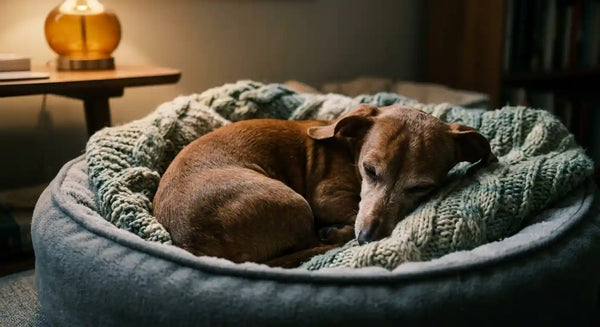
A dog in pain when resting shows specific signs: a hunched or rigid posture, trembling or shaking, rapid shallow breathing, reluctance to lie down (repeated circling or standing back up immediately after lying down), or vocalizing (whimpering, groaning) while at rest. Some dogs in pain sleep more than usual because moving hurts, while others sleep less because they cannot get comfortable. Check for changes in resting position — a dog who normally sleeps curled up who now lies stretched out rigidly may be experiencing abdominal or back pain.
Signs my dog is in pain but not showing it — what should I look for?
The most common hidden signs of pain in dogs are: subtle changes in facial expression (squinting eyes, flattened ears, tense brow), decreased tail wagging or low tail carriage, excessive licking of a specific body part, reluctance to jump onto furniture they previously used, sleeping in a different location (like a cold floor instead of a soft bed), and a slight decrease in appetite that you might dismiss as pickiness. These signs my dog is in pain but not showing it are easy to miss because the dog still eats, walks, and greets you — but the small changes add up over days or weeks.
Dog pain assessment scale: how do vets measure pain in dogs?
Veterinarians use validated pain scales that assign numerical scores to observed behaviors and physical findings. The Colorado State University Canine Acute Pain Scale scores 0–4 in four categories: posture/activity, response to palpation, vocalization, and mental status. The Glasgow Composite Measure Pain Scale uses a checklist of behaviors including attention to the painful area, mobility, and response to people. Neither scale requires the dog to speak — they rely entirely on what the vet sees and feels. A score above a threshold (typically 5 out of 24 on the Glasgow scale) indicates pain severe enough to need treatment.
What does a dog look like when in severe pain?
A dog in severe pain often looks physically distressed: dilated pupils, pale or brick-red gums, rapid shallow breathing or panting at rest, trembling, and a rigid or unnatural lying position. Behaviorally, they may cry out spontaneously (without being touched), become aggressive when anyone approaches, or go completely silent and still (a state called learned helplessness). Some dogs pace frantically and cannot settle for more than a few seconds. A dog in severe pain will not eat, even their favorite treat, and will not wag their tail. This is an emergency — go to a vet immediately.
How to comfort a dog in pain at home without medication?
Safe home comfort measures for a dog in pain include: providing an orthopedic bed with 4–6 inches of memory foam to relieve pressure points; raising food and water bowls to shoulder height so the dog does not have to bend down; restricting movement (no stairs, jumping, or long walks); using a harness instead of a collar; applying a warm compress wrapped in a towel for 15–20 minutes for chronic arthritis pain or a cold pack wrapped in a towel for 10–15 minutes for acute injuries; and maintaining a quiet, low-stress environment away from children and other pets. Never give human pain medication — ibuprofen, acetaminophen, and naproxen are toxic to dogs.
Dog acting normal but suddenly in pain — can that happen?
Yes, a dog can act completely normal one moment and suddenly show severe pain the next. This happens with acute conditions like a ruptured spinal disc, bloat (gastric dilatation-volvulus), kidney stone obstruction, or a broken bone from a fall you did not witness. The dog may be eating and playing normally, then suddenly yelp, refuse to move, or collapse. This sudden change is always a veterinary emergency. Do not wait to see if it improves — a dog acting normal but suddenly in pain needs immediate evaluation because the underlying condition may be life-threatening and time-sensitive.
Signs of internal pain in dogs that owners often miss
Signs of internal pain in dogs are often subtle and easily attributed to other causes. The most frequently missed signs include: a hunched back (which owners think is just "sitting weird"), reluctance to lie down fully (the dog sits or stands more than usual), a tense or hard abdomen when touched, vomiting undigested food hours after eating, straining to defecate with little or no production, changes in sleeping position (avoiding lying on one side), and a "praying position" (front legs down, rear end up) which indicates abdominal pain. These signs require a vet visit within 24 hours.
When should I take my dog to the vet for pain?
Take your dog to an emergency vet immediately if they show: non-stop crying or panting, a bloated or hard abdomen, pale or blue gums, collapse, or inability to urinate. Take your dog to your regular vet within 24 hours if they show: a non-weight-bearing limp, whimpering for more than 12 hours, refusing food for two days, sudden aggression or hiding, or non-stop licking of one area. Schedule an appointment within a week if they show: intermittent limp, slowness getting up in the morning, or sleeping more than usual with otherwise normal eating habits. When in doubt, call your vet — a 10-minute phone call can save days of worry.
References
- PetMD. (2026). How To Tell if a Dog Is in Pain and What You Can Do To Help. Retrieved 2026-05-02, from https://www.petmd.com/dog/general-health/how-to-tell-if-your-dog-is-in-pain
- VCA Animal Hospitals. (2026). Arthritis in Dogs. Retrieved 2026-05-02, from https://vcahospitals.com/know-your-pet/arthritis-in-dogs
- AKC. (2026). Your Complete Guide to First-Year Puppy Vaccinations. Retrieved 2026-05-02, from https://www.akc.org/expert-advice/health/puppy-shots-complete-guide/
- VCA Animal Hospitals. (2026). Pancreatitis in Dogs. Retrieved 2026-05-02, from https://vcahospitals.com/know-your-pet/pancreatitis-in-dogs
- VCA Hospitals. "Neutering in Dogs". Retrieved 2026-04-28. https://vcahospitals.com/know-your-pet/neutering-in-dogs
- AKC. (2026). Why Does My Dog Eat Grass?. Retrieved 2026-05-02, from https://www.akc.org/expert-advice/lifestyle/why-does-my-dog-eat-grass/
- PetMD. (2026). Gastroenteritis in Dogs: Symptoms, Recovery, and More. Retrieved 2026-05-02, from https://www.petmd.com/dog/conditions/digestive/c_dg_gastroenteritis
- VCA Animal Hospitals. (2026). Diarrhea in Dogs. Retrieved 2026-05-02, from https://vcahospitals.com/know-your-pet/diarrhea-in-dogs


