

Why do dogs eat grass — and should you be worried? The short answer is: it's usually normal. Most dogs eat grass occasionally, and the majority of those do so without vomiting or showing any sign of illness. That said, the reasons behind this behavior range from simple instinct to dietary gaps, and knowing the difference can matter. Here's what the science and veterinary research actually say.
✔ Reviewed for veterinary accuracy by a licensed veterinarian.
Understanding Dog Eating Grass Reasons
Dogs eat grass for several distinct reasons, and instinct is arguably the biggest one. Long before domestication, wild canids — the ancestors of your dog — ate whole prey animals including stomach contents that were full of plant matter. That evolutionary programming doesn't just disappear. Many dogs graze on grass the same way they might chew a stick or sniff everything on a walk: because it's in their nature, not because something is wrong.
Boredom is another driver that gets underestimated. A dog left in the backyard with nothing to do will often turn to whatever's available — and grass is always available. In my experience talking with dog owners, the ones whose dogs graze most obsessively are often the same ones whose dogs are home alone for long stretches. When mental stimulation increases, the grass-eating often drops off noticeably.
Some dogs also simply enjoy the taste or texture. Grass that has just been watered or has morning dew on it seems especially attractive to certain dogs. This is completely normal and not a red flag on its own. The key is understanding what your dog's specific pattern looks like, because the reasons change depending on when, how often, and how intensely they're eating it.
Expert takeaway: According to the AKC, grass-eating is common and often normal in dogs, driven by instinct, boredom, digestion, or simple taste preference — and occasional grazing is rarely a medical concern.
Is It Normal for Dogs to Eat Grass and Vomit Afterwards?
Yes, it is normal for dogs to eat grass and vomit occasionally, but it's less common than most owners assume. Research suggests that while many dogs eat grass regularly, fewer than 25% vomit after doing so. That means vomiting after grass-eating is the exception, not the rule. If your dog eats grass and throws up once in a while, that's generally not cause for alarm. If it's happening multiple times a week, that pattern warrants a vet conversation.
The mechanism matters here. Dogs who eat grass frantically — heads down, swallowing fast without chewing — are often doing it because they already feel nauseous, not the other way around. The grass irritates the stomach lining and the esophagus, which can trigger the vomiting reflex. Dogs who eat grass slowly and casually, as if just grazing, are far less likely to vomit. Pay attention to the eating style, not just the fact that they're eating grass at all.
What should worry you is repeated vomiting within a short window (30–60 minutes), vomiting that contains blood, or vomiting accompanied by lethargy, loss of appetite, or abdominal bloating. Any of those signs means it's time to call your vet rather than wait.
Why Do Dogs Eat Grass Every Day and How to Stop It
A dog that eats grass every day without vomiting or appearing ill is almost always doing it for behavioral or sensory reasons rather than medical ones. Daily grazing is most common in dogs who spend a lot of time in the yard and haven't been given enough enrichment activities. The yard is their world, and the grass is one of the few things in it they can interact with actively.
Should you stop your dog from eating grass every day? Not necessarily — but you should redirect the behavior toward something better. Increasing physical exercise, adding sniff-work activities, and giving your dog puzzle toys or snuffle mats are all effective ways to reduce habitual grass-eating without simply removing access to the outdoors. Dogs who are mentally tired don't tend to graze obsessively.
If the grass-eating is truly constant and seems compulsive — your dog can't pass a patch without stopping to eat it regardless of how much exercise they've had — that's a behavioral pattern worth discussing with your vet. Compulsive behaviors in dogs can sometimes indicate anxiety or an underlying health issue that deserves a proper evaluation.
Expert takeaway: Daily grass-eating is usually a behavioral habit, not a symptom — redirecting your dog's energy toward enrichment activities is the most effective first step before assuming a health cause.
The Science Behind Dog Eating Grass Behavior
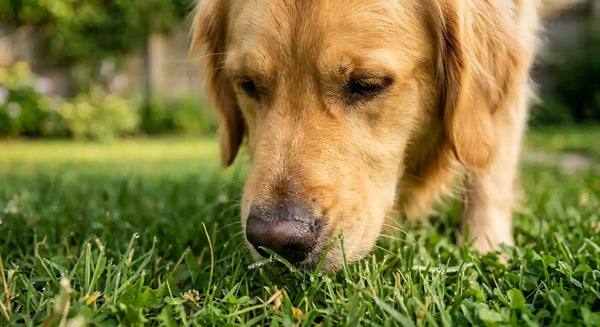
The science of why dogs eat grass is more interesting than most owners realize, and the "they eat grass to make themselves vomit" theory has largely been debunked by research. A study published in the journal Applied Animal Behaviour Science surveyed dog owners and found that most grass-eating dogs showed no signs of illness beforehand and that vomiting after grass consumption was uncommon. Dogs appear to eat grass because they want to, not because they're using it as a self-induced emetic.
One credible biological explanation is that grass eating may help with the passage of intestinal parasites. In wild canids, researchers have observed that animals with intestinal worm burdens eat grass more frequently — the fibrous plant material may help purge worms from the gut by increasing gut motility. Your domestic dog almost certainly doesn't have worms if they're on a regular parasite prevention schedule, but the evolutionary behavior persists anyway.
Key Finding
The AKC notes that grass-eating is one of the most frequently reported behaviors by dog owners, and that the vast majority of cases do not involve illness before or after eating. The behavior is classified as normal canine activity unless it becomes persistent, compulsive, or is accompanied by other clinical symptoms.
Is Grass Safe for Dogs to Eat and What Are the Risks?
Plain, untreated grass is generally safe for dogs to eat in small amounts. The real risks aren't from the grass itself but from what's on it or in it. Lawn treatments — herbicides, pesticides, and fertilizers — are the most common hazard. Many of these chemicals are toxic to dogs even at relatively low concentrations, and a dog who frequently eats treated grass is exposed to a meaningful cumulative dose over time.
Intestinal parasites are a secondary risk. Grass can harbor parasite eggs deposited by other animals, and a dog who grazes regularly in shared outdoor spaces — parks, dog runs, common areas — has a higher exposure risk. This is another good reason to keep your dog current on parasite prevention, because it protects them even when you can't control what they're sniffing and nibbling.
⚠ Important
If your dog has access to a lawn that has been treated with herbicides, pesticides, or chemical fertilizers, restrict their grass-grazing until at least 72 hours after application, and ideally longer. Always check product labels for pet re-entry guidelines.
Expert takeaway: Grass itself is low-risk; the danger lies in chemical lawn treatments and outdoor parasites — so the safety of grass-eating depends almost entirely on where your dog is grazing.
Dog Grazing Behavior and Nutritional Deficiency
The idea that dogs eat grass because they're missing something in their diet is one of the most persistent beliefs among pet owners — and it's partially true, but not in the way most people think. A genuine nutritional deficiency, particularly in fiber, can increase grass-seeking behavior. Dogs fed low-fiber diets may seek out plant matter to supplement their intake. When owners switch their dog to a higher-fiber food, the grass-eating often decreases or stops.
That said, a dog eating a complete and balanced diet that's appropriate for their life stage is unlikely to be nutritionally deficient. As VCA Hospitals explains, dogs evolved as members of the order Carnivora, but their nutritional needs are met by well-formulated commercial diets that account for all essential nutrients. If your dog eats a high-quality food in appropriate amounts, nutritional deficiency is an unlikely explanation for occasional grass-eating.
What you can do if you suspect diet is a factor: check the fiber content of your current food, and consider whether your dog is eating enough. Dogs underfed relative to their activity level sometimes seek supplemental calories or plant fiber in their environment. A vet nutritional consultation is the most reliable way to rule this out, especially if your dog's grass-grazing is frequent and compulsive.
Expert takeaway: Low dietary fiber is the most plausible nutritional reason for grass-grazing, but most dogs eating a complete balanced diet are not deficient — behavior and instinct are more common drivers than diet gaps.
Should I Let My Dog Eat Grass or Stop It?
For most dogs, occasional grass-eating doesn't need to be stopped — it just needs to be monitored. If the grass is untreated, your dog is otherwise healthy, and the behavior is calm and occasional, there's no compelling medical reason to intervene. The behavior becomes worth managing when the grass is chemically treated, when eating is frantic or compulsive, or when vomiting follows consistently.
Why Do Dogs Eat Grass but Cats Don't?
This is a genuinely interesting behavioral difference. Cats do sometimes eat grass — cat grass (usually oat or wheat grass) is even sold specifically for them — but they do it far less frequently than dogs and with much less variety in the type of plant they'll approach. The main reason comes down to evolutionary dietary history. Dogs are omnivores who evolved eating a wide variety of foods including plant material. Cats are obligate carnivores whose ancestors had little reason to seek out vegetation.
Dogs also have a much broader exploratory behavior repertoire. They investigate the world with their mouths in a way cats generally don't. A dog encountering an interesting patch of grass will taste it. A cat encountering the same patch is more likely to sniff it and walk away. This is a behavioral difference, not a physiological one — both species can safely consume small amounts of plain grass.
As for dogs that eat grass specifically at night: this can happen for the same reasons as daytime grass-eating, but it sometimes correlates with dogs who experience overnight gastric discomfort. An empty stomach at night can cause acid buildup, and some dogs respond to that nausea by seeking grass. If your dog consistently heads outside to graze in the evening or late night, it's worth discussing with a vet whether acid reflux or delayed gastric emptying might be a factor.
How to Stop a Dog from Eating Treated Lawn Grass Safely
How to Safely Stop Your Dog from Eating Treated Grass
Following these steps protects your dog from chemical exposure while managing the underlying behavior that drives grass-seeking.
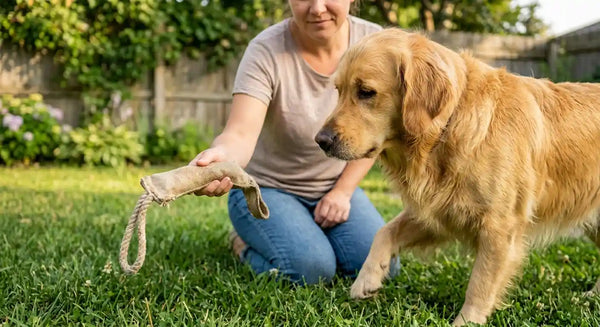
Step 1: Know Your Lawn's Treatment Status
Keep a record of the last date your lawn — or any outdoor space your dog accesses — was treated with fertilizer, herbicide, or pesticide. Most products require a 24–72 hour re-entry window for pets, but some residual herbicides remain active for up to two weeks. When in doubt, check the product label or call the manufacturer.
Step 2: Use Leash Supervision in Treated Areas
During the restricted window, keep your dog on leash during outdoor time so you can redirect them away from the grass immediately. This is more effective than verbal cues alone, because the grass-seeking behavior in an untreated area will resume anyway and you don't want to suppress the behavior entirely — just redirect it to safe grass.
Step 3: Offer a Safe Alternative
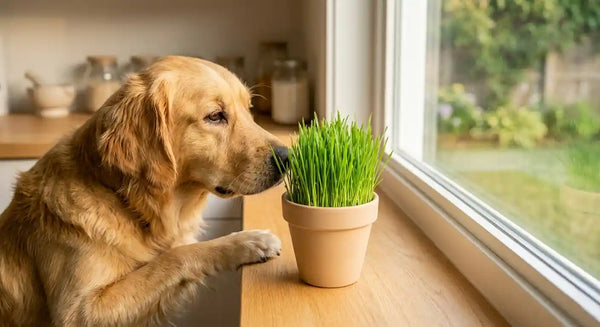
If your dog is a chronic grass-eater, grow a small container of wheatgrass or oat grass indoors or in an untreated corner of your yard. This satisfies the grazing urge without any chemical exposure. Pet stores sell ready-to-grow grass kits specifically designed for this purpose.
Step 4: Address the Underlying Drive
If boredom is feeding the behavior, increase daily enrichment — sniff walks, puzzle feeders, and interactive play sessions. A dog who comes in from the yard genuinely tired and mentally satisfied is far less likely to spend that outdoor time grazing compulsively.
Step 5: Consult Your Vet if the Behavior Is Compulsive
If your dog eats grass in a frantic, seemingly uncontrollable way — especially if it's accompanied by drooling, lip-smacking, or other signs of nausea — schedule a vet visit. Underlying GI conditions like gastritis or gastroenteritis can drive this behavior and require treatment rather than management alone.
Expert takeaway: Stopping grass-eating on a treated lawn is about access management and safe alternatives — trying to stop the behavior entirely without addressing the underlying drive is rarely effective long-term.
Conclusion and Next Steps
Is It OK for My Dog to Eat Grass Every Day? What to Do
For most dogs, daily grass-eating on untreated lawn is not a medical emergency — but it's worth taking seriously as a signal about your dog's overall wellbeing. Think of it this way: if your dog is healthy, active, well-fed, and mentally stimulated, and still grazes every day without any vomiting or distress, it's probably just part of their personality. Some dogs are simply grazers.
But if the grass-eating is new, sudden, or intense — especially if it came on suddenly over a few days — that change is worth noting. Sudden behavioral shifts are often the first signal that something physiological is changing. Contact your vet if the behavior escalates quickly, if it's always followed by vomiting, if your dog seems unwell in other ways, or if they're eating grass in a frenzied, compulsive manner.
The most practical checklist for any dog who eats grass regularly: make sure they're on a complete, balanced diet appropriate for their size and age; ensure they're getting adequate exercise and mental stimulation; keep them current on parasite prevention; and know whether any grass they access has been chemically treated. Those four things address the majority of the real risks associated with this behavior.
And if you're ever in doubt? Your vet is always the right first call. As the AKC notes, persistent or symptomatic grass-eating should always be evaluated by a veterinarian — not because it's usually serious, but because catching the cases where it is matters.

About PawVortex
Paw Vortex publishes evidence-based pet care guides for US pet owners. Our team researches every article using current veterinary literature and expert consultation. We also stock premium pet supplies — free shipping on US orders over $35.
hello@pawvortex.com · www.pawvortex.com · Facebook · Instagram
Frequently Asked Questions
Is it normal for dogs to eat grass?
Yes, grass-eating is completely normal in dogs and is one of the most commonly reported behaviors among dog owners. The behavior has been documented across virtually all breeds and ages, and the majority of grass-eating episodes do not involve vomiting or any sign of illness. According to the AKC, the behavior is driven by instinct, taste, boredom, or digestive comfort — and occasional grazing on clean, untreated grass is considered a normal part of canine behavior, not a symptom of a problem.
Why does my dog eat grass and then vomit afterwards?
Dogs who eat grass frantically and then vomit are usually already nauseous before they start eating — the frenzied grass-eating is a response to stomach upset, not the cause of the vomiting. The grass irritates the esophageal lining and can trigger the vomit reflex in a dog whose stomach is already unsettled. Dogs who graze slowly and calmly are much less likely to vomit. If your dog vomits after eating grass more than once or twice per week, or if the vomit contains blood, contact your vet.
Should I let my dog eat grass or stop it?
You can allow your dog to eat grass if the grass is untreated, your dog is healthy, and the behavior is calm and occasional. There is no compelling medical reason to completely prevent a healthy dog from grazing on clean grass. You should actively stop the behavior when the lawn has been chemically treated (fertilizers, herbicides, pesticides), when the eating is frantic or compulsive, or when vomiting consistently follows. Redirecting rather than forbidding — offering an untreated grass alternative or enrichment activity — is usually more effective than trying to eliminate the behavior entirely.
Dog eating grass frantically and suddenly — is it an emergency?
Sudden, frantic grass-eating can be a sign that your dog is experiencing significant nausea or GI distress and warrants prompt attention, especially if it's out of character. If the frantic grazing is accompanied by a swollen or hard abdomen, repeated unproductive retching, excessive drooling, lethargy, or pale gums, take your dog to an emergency vet immediately — these signs can indicate bloat (gastric dilatation-volvulus), which is a life-threatening emergency. Frantic grass-eating alone without these additional symptoms is less urgent but still worth a same-day vet call if it's completely new behavior.
Does eating grass mean my dog has a nutritional deficiency?
Not necessarily — most dogs who eat grass are not nutritionally deficient, and grass-eating is far more commonly driven by instinct or behavior than by diet gaps. That said, low dietary fiber can contribute to grass-seeking in some dogs, and switching to a higher-fiber food sometimes reduces the behavior. If your dog eats a complete and balanced commercial diet appropriate for their life stage and size, a nutritional deficiency is an unlikely explanation. A vet or veterinary nutritionist can assess whether diet is a factor if the behavior is frequent and unexplained.
Why do dogs eat grass but cats don't?
Dogs eat grass more frequently than cats because they evolved as omnivores with a much broader dietary range and a more exploratory, mouth-based approach to their environment, while cats are obligate carnivores who historically had little nutritional reason to seek out plant matter. Both species can safely consume small amounts of plain grass, but dogs are far more likely to seek it out as part of normal foraging behavior. Cats who do eat grass tend to do so more selectively and less frequently, often gravitating toward softer grasses like oat or wheat grass.
My dog eats grass only at night — is that normal?
Nighttime-only grass-eating is less common than general grazing and is worth discussing with your vet, as it can indicate overnight stomach acid buildup from an empty stomach. Dogs with acid reflux or gastric motility issues sometimes experience more discomfort late at night when their stomachs have been empty for hours, and may seek grass as a response to that nausea. Feeding a small late-evening snack sometimes resolves the behavior. If nighttime grass-eating is paired with lip-licking, swallowing frequently, or restlessness, a GI evaluation is warranted.
When should I call a vet about my dog eating grass?
Call your vet if your dog's grass-eating is new and sudden rather than an established habit, if it's always followed by vomiting (more than once or twice per week), if the grass-eating is frantic and compulsive, if it's accompanied by other symptoms like lethargy, appetite loss, blood in vomit or stool, or abdominal bloating, or if you suspect the dog has eaten treated lawn grass. Occasional calm grazing in a healthy dog does not require a vet call — but any significant change in the behavior or the addition of other symptoms does.
References
- AKC. (2026). Why Does My Dog Eat Grass?. Retrieved 2026-05-02, from https://www.akc.org/expert-advice/lifestyle/why-does-my-dog-eat-grass/
- VCA Animal Hospitals. (2026). First Aid for Dogs: Shock, Rescue Breathing, and CPR. Retrieved 2026-05-02, from https://vcahospitals.com/know-your-pet/first-aid-for-dogs
- VCA Hospitals. Nutrition: General Feeding Guidelines for Dogs. Retrieved 2026-04-27. https://vcahospitals.com/know-your-pet/nutrition-general-feeding-guidelines-for-dogs
- AKC. (2026). Dog Allergies: What You Need to Know. Retrieved 2026-05-02, from https://www.akc.org/expert-advice/health/dog-allergies/


