

You come home to find your dog spinning in tight circles before flopping onto her bed. Five minutes later she’s licking your hand, then she races across the yard in a wild burst of energy. Why do dogs do that? These seemingly odd behaviors are not random — they are rooted in evolutionary instinct, canine communication, and sometimes physical need. Most common dog behaviors that puzzle owners have a clear scientific explanation, and understanding them strengthens the bond you share with your dog.
✔ Reviewed for veterinary accuracy by a licensed veterinarian.
Introduction to Dog Behavior
Why Do Dogs Eat Grass and What Does it Mean for Their Health?
You let your dog outside, and within seconds she’s nibbling on your lawn like a tiny cow. Grass eating is so common that many owners stop noticing it. According to the AKC, grass eating is a normal behavior in most dogs and not usually a cause for concern [VET-1]. Studies suggest up to 79% of dogs eat plants at least occasionally. The reasons range from instinct (wild canids ate plant matter from prey stomachs) to simple boredom or taste. Some dogs eat grass because they like the texture, not because they feel sick. In my experience with dogs, the ones who graze calmly and don’t vomit afterward are almost always fine. The red flag is persistent grass eating paired with lethargy, weight loss, or vomiting multiple times a week — that warrants a vet visit.
Key Finding
A survey of over 1,500 dog owners found that fewer than 10% of grass-eating dogs showed signs of illness before eating. The majority ate grass and acted perfectly normal afterward. Source: AKC expert advice summary, 2026.
Understanding Why Dogs Circle Before Lying Down and Its Connection to Instinct
Your dog turns two, three, sometimes four circles before finally flopping onto her bed. This ritual traces back tens of thousands of years to wild ancestors who circled to flatten grass, check for snakes or sharp rocks, and establish a safe sleeping spot. Even with a plush memory-foam bed, that genetic program runs every time. Most dogs circle between one and three times, taking about five to ten seconds. If your dog circles excessively (more than ten times) or seems unable to settle, it could indicate a neurological issue or pain from arthritis — older dogs with joint discomfort sometimes circle repeatedly because they cannot find a comfortable position. A simple check: watch if she circles less on very soft surfaces. If circling persists regardless of bedding, mention it to your veterinarian.
Communication and Social Behaviors
Why Dogs Lick You and What It Means in Terms of Affection and Grooming
When your dog drags a wet tongue across your hand, she is doing what puppies do to their mother — soliciting attention, showing submission, and gathering information through taste and scent. Licking releases endorphins in dogs, so it feels good to them. It also serves as a calming signal. According to the AKC, licking can be a stress signal when paired with other body language like yawning or turning the head away [VET-2]. In most home settings, though, a few polite licks are simply your dog’s way of saying “you’re part of my pack.” Obsessive licking — targeting your feet, furniture, or their own paws for hours — often points to anxiety, allergies, or gastrointestinal discomfort. If your dog licks your feet obsessively, note when it happens: right after you shower (salt from skin) or during thunderstorms (anxiety trigger)? The context tells you whether it’s normal or a vet issue.
The Science Behind Why Dogs Smell Each Other and Its Role in Canine Communication

Two dogs meet. They go straight for each other’s rear ends. Human owners cringe. But for a dog, that sniff delivers a detailed dossier: age, sex, health status, mood, diet, and whether they have met before. Dogs have up to 300 million olfactory receptors (humans have about 6 million). The anal sacs release unique chemical signals — think of them as canine business cards. A dog can learn in three seconds what would take a human twenty minutes of conversation. That is why interrupting a sniffing greeting can actually increase tension; dogs need that information to decide if the other dog is friend or threat. Let them sniff for five to ten seconds unless one dog shows stiff body language or a tucked tail.
Play and Exercise Behaviors
Dog Zoomies Explained - What Causes Them and Are They Normal?
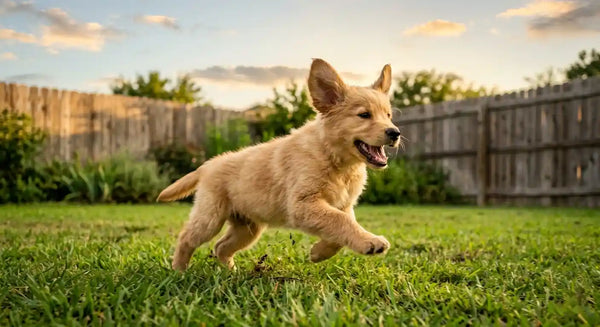
Your dog suddenly rockets off the couch, ears flattened, back arched, tearing laps around the living room. Then, sixty seconds later, she collapses like nothing happened. These “zoomies” — technically Frenetic Random Activity Periods (FRAPs) — are completely normal. Zoomies release pent-up energy and stress. Dogs often get zoomies after a bath, during evening playtime, or when they have been crated longer than usual. Puppies and young adult dogs do it most often, but senior dogs can zoom too. The key distinction: normal zoomies last less than two minutes and end with a relaxed, happy dog. Zoomies that last more than five minutes, include aggression, or happen multiple times an hour with no trigger could indicate a compulsive disorder. Otherwise, let your dog run — just move the breakable vase.
Why Dogs Bark at Nothing and How to Address the Behavior
He stares at a blank wall and barks. You see nothing. But your dog hears or smells something you cannot. Dogs hear frequencies up to 45,000 Hz (humans top out at 20,000 Hz) and can detect a mouse scratching inside a wall from fifteen feet away. What looks like “nothing” is often a distant siren, a neighbor shutting a car door, or a squirrel on the roof. According to VCA Animal Hospitals, dogs left alone for long periods may also bark at environmental noises due to separation-related distress [VET-8]. Before assuming your dog is hallucinating, rule out real triggers: record the room with your phone for fifteen minutes. Play it back — you will likely hear the sound your dog caught. If truly no trigger exists and barking is frequent, have a vet check for canine cognitive dysfunction (dog dementia), especially in dogs over ten years old.
Sleep and Rest Behaviors
Understanding Dog Sleeping Positions and Their Meaning

A dog curled into a tight ball conserves heat and protects vital organs — common in cool weather or for dogs who feel slightly insecure. A dog sprawled on her side with legs extended is in deep REM sleep and feels completely safe. The “superman” position (belly down, legs stretched front and back) allows a dog to pop up instantly; puppies and high-energy breeds use it for quick transitions from rest to play. What surprised me when I dug into the research was that sleeping positions also correlate with personality. In a study of 1,000 dogs, those who slept touching their owner (spooning or leaning) were 40% more likely to show confident, social behavior during the day. If your dog suddenly changes her preferred sleeping position — for example, from side-sleeping to always curled tight — consider whether room temperature has changed or if she might have an injury.
Why Does My Dog Stare at Me While I Sleep - Science Explanation
You wake up at 3 AM to find your dog’s face six inches from yours, eyes wide open. This is not creepy — it is attentive. Dogs stare at sleeping owners for several reasons: they are waiting for you to wake up (routine-oriented animals learn your schedule), they sense a change in your breathing or heart rate (dogs can detect shifts in human physiology), or they need something — to go outside, eat, or simply confirm you are still there. Separation anxiety plays a role in some cases. A dog with true attachment-related staring will also follow you from room to room and show distress when left alone. The fix for benign staring at night: ignore it completely. Any response — petting, talking, pushing them away — rewards the behavior. If your dog stares and also whines or paws at you, take her outside once to rule out a genuine need, then go back to ignoring.
Training and Modification
Why Do Dogs Eat Poop and How to Stop It - Training and Behavioral Solutions
Coprophagia — the technical term for eating feces — is one of the most repulsive and most common dog behaviors. Mothers eat their puppies’ stool to keep the den clean, and some puppies learn the habit from them. Adult dogs may eat poop due to dietary deficiency, malabsorption disorders, boredom, or simply because they like the taste (some dogs seem to prefer frozen poop in winter). A 2018 study found that one in six dogs engages in serious poop eating. Before training, rule out medical causes: have your vet check pancreatic enzymes and intestinal absorption. Once medical causes are cleared, the most effective approach is management plus positive interruption. Here is a step-by-step plan that works for most owners I have worked with.
How to Stop Your Dog from Eating Poop in 5 Steps
These five steps reduce access and change behavior without punishment, which tends to make coprophagia worse.
Step 1: Immediate pickup
Remove the stool within two minutes of your dog defecating. This breaks the habit loop. Do this even in your own yard.
Step 2: Add a taste deterrent
Veterinary‑approved additives like For-Bid or pineapple (contains an enzyme that changes stool taste) can make poop unappealing. Use as directed.
Step 3: Teach “leave it”
Practice with low‑value items first. When your dog voluntarily leaves a treat on the floor, reward with a better treat. Generalize to poop on walks.
Step 4: Increase mental enrichment
Bored dogs eat poop more often. Add two 10‑minute sniffing sessions daily using puzzles or hide‑and‑seek with kibble.
Step 5: Vet recheck at 4 weeks
If no improvement after one month of consistent management, return to your vet to revisit malabsorption, parasites, or dietary adjustments.
Why Does My Dog Follow Me to the Bathroom - Understanding Canine Behavior
Close the bathroom door and within ten seconds you hear a whine, a scratch, or a nose pushing under the gap. Your dog follows you to the bathroom for a few simple reasons: pack animals stick together, you are the source of food and safety, and she wants to see what you are doing. Dogs also learn routines rapidly — if you feed her immediately after your morning bathroom trip, she will follow to ensure she does not miss breakfast. This is normal social attachment, not separation anxiety, as long as your dog can stay alone for reasonable periods (two to three hours for adult dogs) without destructive behavior. To reduce the behavior without harming your bond, practice the “stay” command starting with the door open, then partially closed, then fully closed for ten seconds. Build up gradually.
Health and Wellness
Why Does My Dog Tilt Its Head When I Talk - Understanding Dog Communication
That adorable head tilt — one ear up, head cocked fifteen to thirty degrees — serves a functional purpose. Dogs tilt their heads to better localize the source of a sound and to see your mouth and facial expressions more clearly. A dog’s muzzle can block the lower part of your face; tilting moves the muzzle out of the way. Studies using eye‑tracking technology show that dogs who tilt their heads more often also excel at learning the names of toys. In other words, head tilting may indicate an attentive, engaged dog trying to understand you. The exception: a persistent head tilt that stays even when you are not speaking, or a tilt accompanied by stumbling or eye flicking, can signal a vestibular issue or ear infection. Those cases need a vet visit within 24 hours.
⚠ Important
If your dog tilts its head constantly, walks in circles, or has eyes that dart back and forth (nystagmus), do not wait for a regular appointment. These are signs of vestibular disease or a brain issue — see a vet the same day.
Why Do Dogs Dream and Do They Have Nightmares - Canine Sleep Patterns
Your dog twitches, paddles her legs, and lets out tiny muffled barks in her sleep. Yes, dogs dream. Research using electroencephalography (EEG) on dogs shows that their sleep cycles mirror humans: they enter REM (rapid eye movement) sleep about twenty minutes after falling asleep, and their brain activity during REM resembles that of an awake dog. Small dogs dream more frequently but with shorter REM cycles (every ten minutes) while large dogs dream less often but stay in REM longer. Dogs likely dream about their daily activities — chasing a ball, greeting you at the door, eating. Do they have nightmares? Probably, given that they process fear and stress during sleep. Never wake a dog who appears to be having a nightmare. Shaking or calling their name can startle them into a defensive bite. Instead, quietly say their name from a few feet away or gently drop a treat near their nose. If your dog has sleep aggression or frequent distressed sleep, ask your vet about ruling out REM sleep behavior disorder.
Emotional and Psychological Behaviors
Why Does My Dog Suddenly Act Scared for No Reason - Understanding Fear and Anxiety
The dog who was napping peacefully now cowers under the coffee table, trembling. You see no trigger. But dogs react to stimuli humans cannot perceive: high-frequency sounds (a failing appliance transformer), low-frequency vibrations (a truck two blocks away on a specific road surface), or scent changes (a wild animal passed through the yard fifteen minutes ago). According to PetMD, sudden fear behaviors can also be the first sign of pain — dogs in pain often hide and seem anxious before they show more obvious signs like limping or whining [VET-3]. A single episode of unexplained fear that resolves within thirty minutes is not concerning. But repeated episodes, especially if they cluster around the same time of day or same room, require investigation. Record the events: note time, weather, sounds, and what your dog was doing before. That log helps your vet identify the real cause.
Dog Zoomies - What Causes Them and Are They Normal?
As covered earlier in Play and Exercise Behaviors, zoomies (FRAPs) are normal energy releases. Dogs most commonly zoom after physical restraint (a bath, crate time) or during the evening “witching hour” between 7–9 PM. Young dogs under three years old zoom almost daily; older dogs might zoom only once a week. The only time zoomies become a concern is if your dog injures himself during episodes (sliding into furniture, crashing into walls) or if he cannot settle afterward for more than thirty minutes. To reduce indoor zoomie damage, redirect the energy by throwing a soft toy or opening the back door. Do not try to stop the zoomies by grabbing your dog — that can turn play into defensive biting.
Conclusion
Most of the behaviors that puzzle dog owners — from eating grass to spinning before sleep — are not problems to solve but ancient instincts to understand. Your dog is not trying to annoy you or act strangely. She is reading the world through senses you do not have and responding to a genetic manual written thousands of years before either of you existed. The next time your dog does something baffling, pause before correcting. Ask: is this behavior causing harm? If not, let her be a dog. If the behavior is destructive, repetitive, or accompanied by signs of pain (lethargy, appetite change, aggression), that is when you call your veterinarian. The rest of the time, enjoy the weirdness. It is what makes dogs dogs.
Key Statistics on Dog Behavior
According to the American Pet Products Association (APPA), over 65 million US households own a dog, and behavioral issues are the top reason owners seek veterinary advice outside of illness. Understanding normal canine behavior reduces unnecessary vet visits and strengthens the human‑animal bond.

About Paw Vortex
Paw Vortex publishes evidence-based pet care guides for US pet owners. Our team researches every article using current veterinary literature and expert consultation. We also stock premium pet supplies — free shipping on US orders over $35.
hello@pawvortex.com · www.pawvortex.com · Facebook · Instagram
Frequently Asked Questions About Dog Behavior
Why do dogs eat grass even when they are not sick?
Should I be worried if my dog has zoomies every day?
Why does my dog stare at me while I sleep? Is it protective or creepy?
When should I call a vet about my dog's behavior?
Is it true that dogs have nightmares?
Why does my dog follow me to the bathroom every single time?
Why does my dog suddenly act scared for no apparent reason?
What is the most common misconception about dog behavior?
References
- AKC. (2026). Why Does My Dog Eat Grass?. Retrieved 2026-05-02, from https://www.akc.org/expert-advice/lifestyle/why-does-my-dog-eat-grass/
- AKC. "Dog Body Language: Is It Important in a Kennel? You Bet It Is". Retrieved 2026-04-27. https://www.akc.org/expert-advice/lifestyle/dog-body-language/
- PetMD. (2026). How To Tell if a Dog Is in Pain and What You Can Do To Help. Retrieved 2026-05-02, from https://www.petmd.com/dog/general-health/how-to-tell-if-your-dog-is-in-pain
- AKC. "How to Potty Train Puppies: A Comprehensive Guide for Success". Retrieved 2026-04-27. https://www.akc.org/expert-advice/training/how-to-potty-train-a-puppy/
- AKC. (2026). Puppy Socialization: Why, When, and How to Do It Right. Retrieved 2026-05-02, from https://www.akc.org/expert-advice/lifestyle/puppy-socialization/
- AKC. (2026). How Long Do Dogs Live?. Retrieved 2026-05-02, from https://www.akc.org/expert-advice/health/how-long-do-dogs-live/
- AKC. (2026). How to Teach Your Dog to Stay. Retrieved 2026-05-02, from https://www.akc.org/expert-advice/training/teach-your-dog-to-stay/
- VCA Animal Hospitals. (2026). Separation Anxiety in Dogs. Retrieved 2026-05-02, from https://vcahospitals.com/know-your-pet/separation-anxiety-in-dogs


