

Cats are masters of mystery, but their anxiety is often anything but subtle—if you know where to look. From relentless over-grooming to hiding under the bed for hours, a stressed cat signals their distress in ways that can worry any pet parent. While traditional solutions have their place, a new, non-invasive therapeutic tool is making waves: species-specific sound therapy. This article explores how the right auditory environment, created by the PawVortex app, can help your anxious feline find their inner calm.
Recognizing the Signs of a Stressed-Out Cat

Unlike dogs, who often wear their hearts on their sleeves, feline anxiety can be quiet and cryptic. Key signs to watch for include:
-
Hiding: Consistently retreating under furniture or into closets.
-
Over-Grooming: Creating bald patches, especially on the belly, legs, or tail base.
-
Changes in Litter Box Habits: Urinating or defecating outside the box, often in hidden, "safe" places.
-
Excessive Vocalization: Unusual meowing, yowling, or crying.
-
Aggression: Hissing, swatting, or attacking other pets or people.
-
Loss of Appetite: A sudden disinterest in food or treats.
-
Tense Body Language: Crouched posture, flattened ears, dilated pupils, and a twitching tail.
Common Feline Anxiety Triggers (and How Sound Can Help)
Understanding what stresses your cat is the first step toward a solution. Common triggers include:
-
Veterinary Visits: The carrier, car ride, and unfamiliar smells are a perfect storm of stress.
-
Loud Noises: Thunderstorms, fireworks, construction, and even loud household appliances.
-
Changes in the Home: New people, new pets, or even rearranged furniture can be unsettling.
-
Multi-Cat Household Dynamics: Tension between cats over resources (food, territory, litter boxes) is a major, chronic stressor.
-
Boredom or Lack of Stimulation: An under-stimulated cat can become an anxious cat.
Sound therapy helps by masking these unpredictable, frightening noises with a consistent, predictable, and calming auditory blanket. It provides a stable element in an otherwise chaotic environment.
What Kind of Music Do Cats Like? It's Not What You Think!

Forget the classical station you might put on for your dog. A cat's auditory world is entirely different, and their musical preferences are highly specific.
The Importance of High Frequencies and Purr-like Sounds
Cats communicate and perceive their world in a higher frequency range than humans or dogs. Research from the University of Wisconsin-Madison, led by psychologist Charles Snowdon, found that cats are most responsive to music that incorporates frequencies and tempos similar to their own vocalizations.
This means:
-
High-Pitched Tones: Melodies that mimic the frequency of a bird's chirp or a mouse's squeak (around 1-2 kHz) are naturally intriguing and engaging for cats.
-
Purr-like Rhythms: Tempos that match the frequency of a feline purr (around 25-50 BPM)—a sound intrinsically linked to contentment and healing—are profoundly calming.
-
Smooth, Gliding Notes: Sounds that resemble friendly meowing or nursing are more effective than deep, resonant bass notes.
Why Species-Specific Compositions Matter
Just as you wouldn't feed your cat dog food, you shouldn't offer them music designed for a human or canine brain. Generic music may do very little. Species-specific compositions, like those in the PawVortex app, are scientifically crafted to fit the unique acoustic and emotional "niche" of the feline auditory system, ensuring the sound is biologically relevant and genuinely effective.
Using the PawVortex App for Common Cat Stressors
Integrating therapeutic soundscapes into your cat's routine can proactively manage their anxiety. Here’s how to use it for specific situations:
Vet Visit Prep
Begin playing a calming PawVortex soundscape (like "Calm Carrier" or "Gentle Harp") 30 minutes before taking out the carrier. Place the carrier in the room with the music, allowing your cat to form a positive association. Continue the soundscape during the car ride and in the vet's exam room to provide a thread of familiarity.
Introducing a New Pet
When bringing a new animal home, sound is a powerful tool to reduce tension. Play a consistent, calming track in a shared space to create a neutral, relaxed atmosphere. This gives both pets a common, non-threatening focal point. For a deeper dive, see our guide on introducing a new dog to your cat.
During Home Renovations or Parties
Predictable sound is the enemy of unpredictable noise. Mask the stress of loud drills, vacuum cleaners, or guest chatter by playing a PawVortex soundscape with ambient nature sounds (like a babbling brook or gentle rain) at a volume that covers the disturbance. Provide a cozy retreat in a quiet room with their favorite cat bed and the app playing to create a safe haven.
Success Story: How Luna's Separation Anxiety Improved
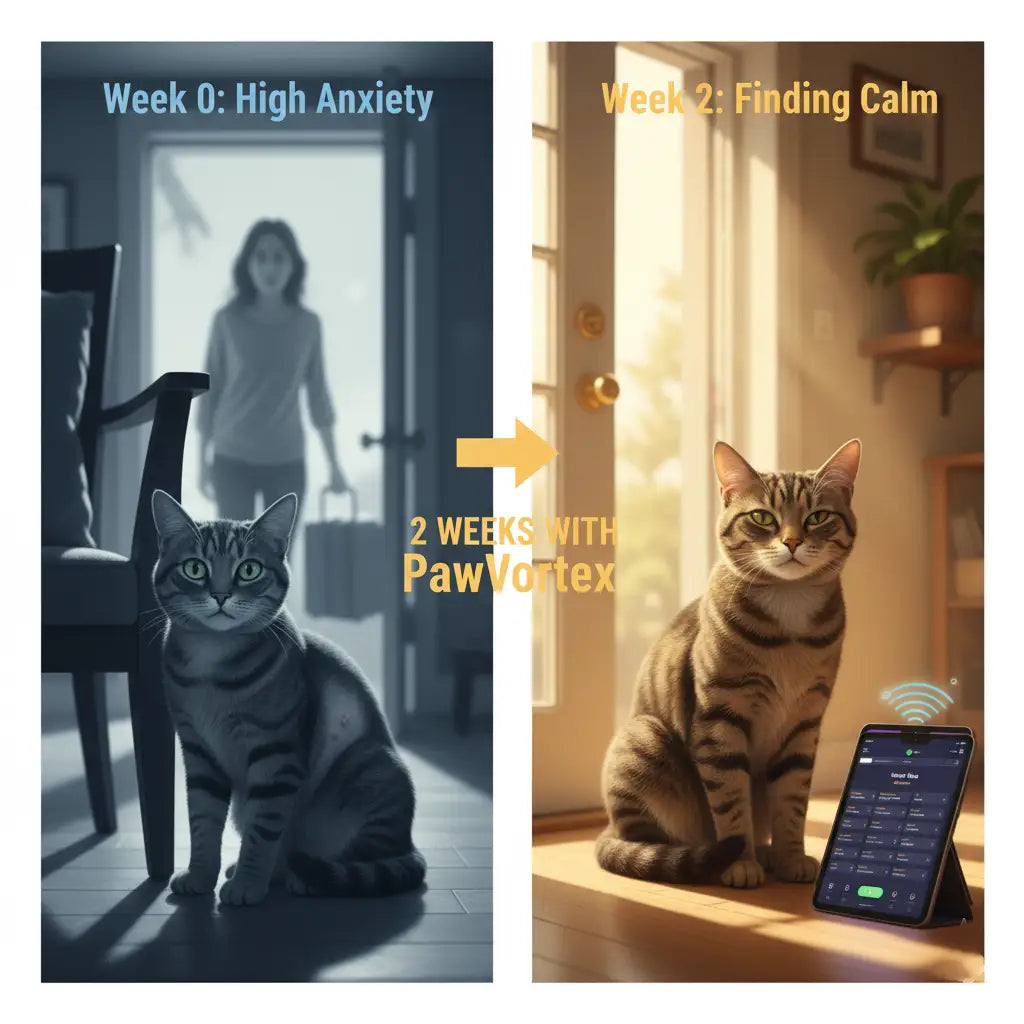
Luna, a 3-year-old tabby, would yowl incessantly and groom her belly raw every time her owner left for work. Her owner tried everything—interactive cat toys, pheromone diffusers, and even medication from the vet.
As a last resort, she started playing a custom PawVortex mix of purr-like rhythms and high-frequency harp melodies 15 minutes before leaving and throughout the day. Within two weeks, the change was remarkable. The yowling stopped. Luna was found waiting calmly by the door, not hiding in a stressed state. Most importantly, her over-grooming significantly reduced, allowing her fur to grow back. The consistent, calming soundscape provided the security she needed to feel safe alone.
Creating a Feline-Friendly Sound Environment
Transforming your home into an auditory sanctuary for your cat is simple:
-
Consistency is Key: Use the same one or two soundscapes for specific anxiety-inducing events to build a positive and predictable association.
-
Volume Matters: The sound should be at a comfortable, background level—loud enough to mask disturbing noises but soft enough to not be intrusive.
-
Pair with Positive Resources: Place the speaker or tablet near your cat's core territories: their favorite elevated cat feeder, a premium cat scratching post, or a cozy sleeping nook.
-
Make it a Routine: Incorporate calming soundscapes into your cat's daily wind-down period, just like you might for yourself.
By understanding the science of what soothes the feline ear, you can move beyond simply managing your cat's anxiety and start helping them overcome it. Explore the full range of cat accessories at PawVortex to build the ultimate stress-free environment for your feline friend.


