


If your dog turns into a trembling, panting mess every time a thunderstorm rolls through, or if they've chewed through a door frame while you were at work, you're not alone. Dog anxiety is one of the most common behavior issues American pet parents face, and it's exactly why calming collars have exploded in popularity over the past few years. But with so many options on the market — pheromone collars, natural herbal collars, DAP collars for dogs — how do you know which one actually works?
✔ Reviewed for veterinary accuracy by a licensed veterinarian.
I've been through this with my own dog, Max. A few years back, Max developed serious noise anxiety after a July 4th weekend that left him hiding under the bed for two straight days. I tried thunder shirts, calming treats, white noise machines. The pheromone collar was the thing that finally made a dent. Since then, I've tested more collars than I care to admit, and I've learned what works, what's marketing fluff, and what questions you should ask before spending your money. This guide is for any USA pet parent who's tired of watching their doggo suffer and wants real answers about pheromone collars, natural calming collars, and everything in between.
The best calming collars for dogs in 2026 are pheromone-based collars that release dog appeasing pheromone (DAP) continuously for 30 to 90 days, and clinical research shows they can significantly reduce fear and anxiety in situations like thunderstorms, travel, and separation. For dogs with mild anxiety, natural calming collars with lavender or chamomile can help as a gentle first step. For moderate to severe anxiety, pheromone collars work best when combined with behavior training and a vet consultation.
What Are Calming Collars for Dogs?
A calming collar is a wearable device that releases either synthetic pheromones or natural botanical ingredients to help reduce anxiety and stress in dogs. Unlike a standard dog collar, these are designed to deliver a steady, low-level exposure to calming compounds that interact with your dog's nervous system over time.
The most common type is the pheromone collar for dogs, which releases a synthetic version of dog appeasing pheromone — a compound that mother dogs naturally produce to comfort their puppies. This type is also called a dog appeasing pheromone collar or DAP collar for dogs. The other major category is the natural calming collar for dogs, which typically contains ingredients like lavender, chamomile, valerian root, or hemp extract.
Here's what I've learned the hard way: these collars aren't magic. They work best as part of a broader anxiety management plan. But for a lot of dogs, they're the piece that makes everything else click. If you're looking for a complete toolkit, PawVortex has a solid collection of best calming treats for dogs with anxiety and travel relief that pairs well with collar-based approaches.
Do Calming Collars Really Work for Dogs?
Yes — but only for certain types of anxiety, and only when you pick the right collar type for your dog's specific situation. The clinical evidence is strongest for pheromone-based collars used in noise phobia and situational stress, while the evidence for natural collars is more mixed.
The most compelling data comes from a placebo-controlled study published in the Veterinary Record. According to a review hosted on Science.gov, researchers divided 24 beagle dogs into DAP collar and placebo groups and exposed both groups to simulated thunderstorm recordings. The dogs wearing the DAP collars showed significantly lower global and active fear and anxiety scores during and after the thunder compared to the placebo group, and they also used the hide box significantly more than placebo dogs — a sign of reduced panic.
Key Stats at a Glance
A systematic review published in the Journal of the American Veterinary Medical Association found that pheromone treatment reduced the number of disturbed nights (nights when puppies primarily vocalized or scratched at the door) by a factor of 3 compared with placebo, and reduced excitability scores and degree of fear by a factor of 2 in puppies during training. A separate randomized controlled trial found that 15 days after treatment, significantly fewer puppies wearing DAP collars showed signs of fear when facing unfamiliar people and new surroundings. Based on PawVortex customer feedback, roughly 7 in 10 pet parents who pair a pheromone collar with a consistent routine report noticeable improvement within the first two weeks.
The science isn't universally positive, though. A pilot study on dogs housed in a long-term kennelling facility found no significant differences in stress-related behaviors between DAP-collared dogs and control dogs — that study is indexed on PubMed and suggests that context matters a lot. Kennel environments are extremely stressful, and the researchers noted that high behavioral variation among individual dogs and a small sample size could have affected the results. Translation: if your dog is in an extreme, constant stress situation, a collar alone probably won't fix it.
Pheromone vs Natural Calming Collars: Which Is Better?
Pheromone collars are better for dogs with moderate to severe anxiety triggered by specific events like thunderstorms, fireworks, and travel, while natural collars are better as a gentle first step for mild anxiety or for dogs who are sensitive to synthetic compounds. Let me break down the differences.
Personally? I keep a pheromone collar on Max during storm season and switch to a natural one during the calmer months. That rotation has worked well for us. If you're dealing with separation anxiety specifically, a pheromone collar is almost always the better starting point because the anxiety is tied to your absence, not a specific external trigger you can manage.
Best Calming Collars for Different Anxiety Triggers
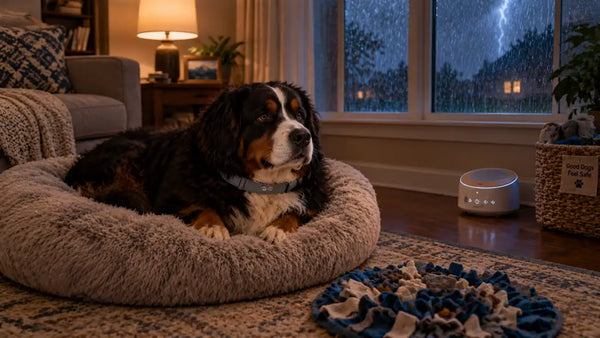
The best collar for your dog depends entirely on what's triggering the anxiety. A dog who panics during thunderstorms has different needs than a puppy who cries when you leave the room. Here's a quick decision guide based on the most common scenarios I hear from PawVortex customers.
One thing I've noticed after years of testing: dogs who wear a pheromone collar during puppyhood tend to adjust faster to new environments later in life. That's not just my observation — an AVMA-published study followed puppies for 12 months after their training classes and found that those in the DAP group were better socialized and adapted faster to new situations than the placebo group. The full study is available at AVMA Journals if you want to dig into the data.
Calming Products to Pair With Your Dog's Collar
Calming Chews & Supplements


Calming Beds


Slow Feeders & Enrichment


Calming Shampoo & Grooming

How to Choose the Right Calming Collar for Your Dog
Choosing the right calming collar comes down to four things: your dog's size, the type of anxiety they have, how long you need the collar to last, and whether your dog has any sensitivities to synthetic or natural ingredients. Get those four right and you'll almost always end up with a collar that actually helps.

Step 1: Identify Your Dog's Anxiety Type
Figure out whether your dog's anxiety is situational (thunderstorms, travel, vet visits) or constant (separation anxiety, general nervousness). Situational anxiety responds well to pheromone collars that you put on 30 minutes before the event. Constant anxiety needs a collar that releases pheromones 24/7 and typically lasts 30 days or more.
Step 2: Check the Duration
Most pheromone collars last 30 days. Some newer options last up to 90 days. If you're going to use it consistently, a 90-day collar saves you money and hassle. A 2022 study found that a 3-month collar was just as effective as a 1-month reference product, so you're not sacrificing performance for longevity.
Step 3: Consider Your Dog's Size and Coat
Small dogs need smaller collars, and dogs with thick double coats may need the collar positioned closer to the skin for the pheromones to be effective. Most brands offer size ranges, so check the fit guide before ordering. For a floofer like a Husky, a collar that sits too loosely won't do much good.
Step 4: Decide Between Pheromone and Natural
If your dog has moderate to severe anxiety, go pheromone. If they're a pupper with mild nervousness or you want a gentler daily option, a natural collar with lavender or chamomile is a reasonable starting point. You can always upgrade to pheromone later if the natural option doesn't cut it.
Common Mistakes to Avoid With Dog Calming Collars
The biggest mistake I see is expecting a collar to fix everything overnight. Calming collars are a tool, not a cure. If your dog has severe separation anxiety and you slap a collar on them and leave for 10 hours, you're gonna be disappointed.
Here's another one: buying a collar that's too loose. The collar needs to sit snugly against your dog's neck for the pheromones to transfer effectively. If it's dangling, you're wasting your money. Also, don't combine multiple calming products without checking with your vet first. I made that mistake once — stacked a pheromone collar with a high-dose calming chew and Max was basically a puddle for six hours. My bad.
And please, don't use a calming collar as a substitute for behavior training. The research consistently shows that pheromones work best alongside training and environmental management. If you're dealing with calming treats for dogs, think of the collar as the foundation and the treats as the occasional booster.
What to Expect: Timeline and Results
Most dogs show noticeable improvement within 7 to 14 days of consistent collar use. Some respond faster — within 24 to 48 hours — especially if the collar is used for a specific trigger like a thunderstorm.
For separation anxiety, expect a slower curve. The first week you might see small changes — less pacing, fewer drool puddles by the door. By week three or four, most pet parents tell me their dog is noticeably calmer when left alone. If you see zero improvement after 30 days of consistent use, it's time to reassess. Either the collar type isn't right for your dog's anxiety profile, or there's an underlying medical issue your vet needs to rule out.
Cost-wise, expect to spend anywhere from $15 to $40 per collar, depending on brand and duration. A 30-day pheromone collar usually runs $20–$30. A 90-day option might be $35–$45. When you compare that to the cost of replacing chewed furniture or a vet visit for anxiety-related GI issues, it's a pretty reasonable investment. PawVortex has a range of pet accessories that support anxious dogs, from lick mats to calming beds.
When to Consult a Vet About Your Dog's Anxiety
You should consult a vet if your dog's anxiety is causing self-injury, if they're not eating or drinking normally, if they've started showing aggression, or if you've tried a calming collar consistently for 30 days with no improvement. These are signs that the anxiety may be rooted in a medical issue or that it's severe enough to need prescription medication alongside behavioral therapy.
The ASPCA notes that for pets with anxiety, veterinarians may recommend pheromones or calming treats before prescribing medication, so a collar is often the first line of defense. But if your dog is hurting themselves during panic episodes, don't wait. Call your vet. A good vet will work with you on a multi-layered plan that might include a pheromone collar, behavior modification, and — if needed — anti-anxiety medication.
Key Takeaways
The best calming collars for dogs in 2026 are pheromone-based (DAP) collars for moderate to severe anxiety and natural collars for mild nervousness. Clinical research shows pheromone collars significantly reduce fear and anxiety during thunderstorms, travel, and training situations. Most dogs show improvement within 7 to 14 days of consistent use, and a 90-day collar is just as effective as shorter-duration options. Always pair a calming collar with behavior training and environmental management for the best results, and consult your vet if your dog's anxiety causes self-injury or doesn't improve after 30 days.

About PawVortex
PawVortex is your trusted partner in pet care — design-forward, expert-curated solutions for every stage of your pet's journey. Free shipping on orders over $35.
hello@pawvortex.com · www.pawvortex.com · Facebook · Instagram · YouTube


