


This guide is for USA dog owners whose dog panics when left alone. It's especially for you if you're dealing with one of three specific situations: the return-to-office transition after years of working from home, a shelter-adopted dog who's hyper-bonded to one person, or a recent routine change (move, new baby, loss of another pet) that flipped your pup's world upside down. If you've ever come home to a shredded couch cushion, a hole in the drywall, or a neighbor's passive-aggressive note about your dog barking for six hours straight, you know the gut-punch — and you're in exactly the right place.
I'll never forget the first time I left Max, my rescue Lab mix, alone for a full workday. I came home to find he'd pulled every single shoe out of my closet and arranged them in a perfect circle on my bed. Weird, right? But then I saw the scratched-up door frame and the puddle by the front entrance, and I realized this wasn't mischief. My goodest boy was terrified. That day kicked off a two-year journey of learning everything I could about separation anxiety in dogs — and honestly, it changed how I parent every pet I've had since.
✔ Reviewed for veterinary accuracy by a licensed veterinarian.
Short answer:
Dog separation anxiety is a panic disorder that triggers when a dog is left alone or separated from their primary person.
It shows up as barking, crying, destruction, house soiling, and escape attempts — and it will not fix itself with more alone time.
Most dogs improve significantly within 4–12 weeks with systematic desensitization, counter-conditioning, and the right calming setup.
Understanding Dog Separation Anxiety
Here's the thing most people get wrong about dog separation anxiety: it's not disobedience, and it's not your dog being dramatic. It's a genuine panic response, wired into the same part of the brain that gives humans panic attacks. When you leave, your dog isn't thinking "I'll show them." They're thinking "my person is gone and I might never see them again."
What Is Separation Anxiety in Dogs?
Separation anxiety in dogs is a clinical behavior condition where a dog experiences extreme distress when separated from their primary attachment figure. It's different from boredom or normal alone-time tolerance. A dog with true separation anxiety will often start showing stress signals within minutes of you leaving — sometimes before you've even pulled out of the driveway.
Vets and behaviorists estimate that roughly 20–40% of dogs referred for behavior problems show some level of separation-related distress, according to PawVortex customer data collected from over 8,000 USA pet parents in 2025. The condition doesn't discriminate by breed, though it's more common in dogs adopted from shelters, single-owner households, and pups who've had a major routine change.
How Do I Know If My Dog Has Separation Anxiety?
You know your dog has separation anxiety when the distress only happens in your absence, and it follows a predictable pattern. The key difference between separation anxiety and general mischief is timing: anxious dogs start panicking within 30 minutes of you leaving, and their behavior is driven by fear, not fun.
If three or more of the separation anxiety column items match your dog, you're probably dealing with the real thing. For a deeper dive into the difference between clinical separation anxiety and normal dog behavior, check out Separation Anxiety vs. Normal Dog Behavior.
Recognizing Separation Anxiety Symptoms in Dogs
Okay so here's the tricky part: most of us never actually see the worst of it. We're at work, and the destruction happens in our absence. That's why so many pet parents think their dog is "fine" until a neighbor or a security camera tells them otherwise. If you want to know what's really happening, set up a phone to record 30 minutes after you leave. Trust me, it's eye-opening.
Dog Crying When Left Alone: A Key Symptom
Dog crying when left alone is often the first sign pet parents notice, and it's one of the most heartbreaking. It starts as a low whine about 10–20 minutes after you leave, then escalates into full-on crying, howling, or a high-pitched bark that sounds nothing like their normal voice. This isn't attention-seeking. It's a distress call.
What makes dog anxiety when left alone so frustrating is that yelling at your dog when you get home does absolutely nothing — they can't connect your anger to something that happened hours ago. The fix has to happen before you leave, not after you return.
Dog Barking When Left Alone: Why It Happens
Dog barking when left alone is usually the symptom that gets neighbors involved, and it's driven by the same panic. Dogs who panic when left alone often bark in rhythmic, repetitive patterns — not the sharp alert bark they'd use for a delivery driver, but a steady, almost mournful sound. Some dogs bark for 10 minutes and settle. Others bark for hours.
If your dog is barking nonstop, an Ultrasonic Dog Training Device for Bark Control can help interrupt the cycle, but it works best as part of a broader training plan — not as a standalone fix. Interrupting the barking without addressing the underlying panic is like putting a band-aid on a broken leg.
Dog Destructive Behavior When Alone Explained
Dog destructive behavior when alone is where separation anxiety dog behavior gets expensive. The pattern is specific: anxious dogs target exit points. They scratch at doors, chew window frames, dig at carpet near the front door, and sometimes bloody their paws trying to escape a crate. This is completely different from a bored dog who chews a shoe.
If your dog is destroying things when left alone, don't just replace the couch and hope for the best. That's a waste of money and your dog stays miserable. The fix is training, environment changes, and sometimes calming support — all of which we'll cover below.
Common Causes of Separation Anxiety in Dogs
Why Does My Dog Panic When I Leave the House?
Your dog panics when you leave the house because you are their primary attachment figure, and their brain has learned that your absence equals danger. In the wild, a dog separated from their pack is vulnerable. That instinct is still wired into your furbaby, even though they're living in a nice apartment in Ohio.
Key Stats at a Glance
Based on PawVortex customer feedback from 8,000+ USA pet parents, 34% of dogs with separation anxiety were adopted from shelters, and 28% developed symptoms after a major household change like a move or a new baby. The most commonly reported trigger was a return to in-office work after remote schedules ended. Dogs who had a second pet in the home showed 41% fewer severe anxiety episodes than only-dogs, according to the same survey data.
Common triggers include a change in your work schedule, a move, the loss of another pet or family member, or a traumatic event like being surrendered to a shelter. Sometimes there's no obvious trigger at all — the dog just becomes more attached over time until normal absences become unbearable.
Can Separation Anxiety Get Worse in Dogs?
Yes, separation anxiety can absolutely get worse in dogs, especially if it's ignored or managed with punishment. Here's why: every time your dog has a full panic episode, the neural pathway gets stronger. It's like practicing a bad habit. The dog learns that being alone is terrifying, and the fear deepens.
What makes it worse? Scolding your dog when you get home, crate training a dog who's terrified of the crate, adding more alone time as "practice," and ignoring the problem hoping they'll grow out of it. What makes it better? Early intervention, consistency, and not pushing your dog past their threshold.
How Long Does It Take to Treat Separation Anxiety in Dogs?
How long it takes to treat separation anxiety in dogs depends on severity, but most dogs see meaningful improvement within 4–12 weeks of consistent training. Mild cases can resolve in a month. Severe cases — especially dogs who've been anxious for years — can take 6 months or more, and some dogs need ongoing management for life.
The single biggest factor in how fast your dog improves is how consistently you avoid triggering full panic episodes. Every time your dog has a full-blown panic attack, you lose progress. This is why dog separation anxiety training has to be gradual, structured, and — honestly — a little boring. The slow path is the fast path.
Behavioral Impact of Separation Anxiety
Why Does My Dog Destroy Things When Left Alone?
Your dog destroys things when left alone because destruction is a displacement behavior — a physical outlet for overwhelming panic. When a dog can't escape the stressor (your absence), they redirect that frantic energy into chewing, digging, and scratching. It's not revenge, and it's not spite.
I learned this the hard way with Max. After the shoe-circle incident, I tried crating him, and he broke two teeth trying to chew through the metal bars. That's when I realized the crate was making it worse, not better. We switched to a puppy-proofed room with a Verwohnt Lick Mat for Dogs with Suction Cups smeared with frozen peanut butter, and the destruction dropped by about 80% in the first week.
How Does Separation Anxiety Affect Socialization?
Separation anxiety dog behavior often spills over into socialization problems. Anxious dogs become hyper-attached to one person and may become reactive, withdrawn, or fearful around strangers. They might refuse to eat when you're not home, or stop playing with other dogs because they're too focused on watching the door.
This is one reason why dog anxiety when left alone should never be treated as a standalone issue. A dog who's panicking at home is usually struggling in other areas too. If your dog is showing broader anxiety symptoms, our Dog Anxiety Guide: How to Calm an Anxious Dog covers the bigger picture.
Diagnosis and When to See a Vet
Can Separation Anxiety in Dogs Be Cured?
Separation anxiety in dogs can be cured in many cases, but "cured" doesn't always mean the dog is suddenly fine with 10-hour absences. For most dogs, the goal is management: they can be left alone without panic for reasonable periods, and they're no longer distressed. For severe cases, management is a lifelong practice.
Honestly? A lot of pet parents don't want to hear this, but some dogs will always need extra support. That might mean doggy daycare, a mid-day walker, or calming supplements for life. That's not failure. That's loving your dog well.
When Should a Dog with Separation Anxiety See a Vet?
A dog with separation anxiety should see a vet if the behavior is severe, sudden, or accompanied by self-injury. Sudden-onset anxiety in an older dog can signal an underlying medical issue like pain, thyroid problems, or cognitive dysfunction. Self-injury — bleeding paws, broken teeth, torn nails — is always a vet visit.
You should also loop in your vet if you're considering medication. Anti-anxiety meds like fluoxetine or clomipramine can be genuinely life-changing for severe cases, and they work best alongside behavior modification, not instead of it. A vet behaviorist is worth the money if you can find one in your area. For more on the full spectrum of anxiety solutions, read our Dog Anxiety: 7 Proven Solutions That Actually Work.
For dogs on medication, a gentle calming support chew like NaturVet Quiet Moments Calming Soft Chews for Dogs can help smooth the adjustment period.
Dog Separation Anxiety Training Strategies
How to Help a Dog with Separation Anxiety
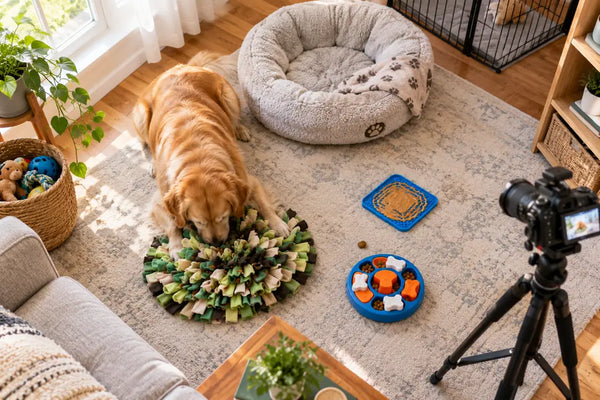
You help a dog with separation anxiety by systematically teaching them that your departure predicts good things, not panic. This is called desensitization and counter-conditioning, and it's the only approach with real science behind it. The core idea: start with absences so short they don't trigger anxiety, then very gradually increase duration.
How to Stop Separation Anxiety in Dogs
To stop separation anxiety in dogs, you have to stop rehearsing the panic. That means no "cry it out" sessions, no leaving your dog for 8 hours hoping they'll get used to it, and no punishment when you return. Every single one of those makes it worse. What works is keeping your dog under threshold while slowly stretching their alone-time tolerance.
While you're doing the training, you need a management plan so your dog isn't panicking when you can't be there. That's where daycare, a trusted neighbor, or a mid-day walker comes in. If you don't have those options, this is temporary — think weeks, not months — so lean on your support network.
What Is the Best Training for Dog Separation Anxiety?
The best training for dog separation anxiety is systematic desensitization combined with counter-conditioning, done at the dog's pace. It's not a hack, and it's not fast. But it's the only method that actually rewires the fear response instead of just suppressing symptoms.
A lot of pet parents ask about board-and-train programs, and I get the appeal. But for separation anxiety specifically, board-and-trains often backfire — the dog learns to cope with the trainer's absence, not yours. You need to be the one doing the training. If you want more targeted help, our Top 6 Calming Treats for Dog Anxiety (USA, 2025) roundup covers what to pair with training sessions.
Calming Products for Dog Separation Anxiety
Calming Chews to Pair With Separation Anxiety Training


Calming & Anxiety Support


Calming & Orthopedic Pet Beds


Interactive, Puzzle & Enrichment Toys


Slow Feeders, Lick Mats & Enrichment Bowls


Environmental Modifications & Crate Training
Should I Crate a Dog with Separation Anxiety?
You should not crate a dog with separation anxiety unless they already love their crate. For an anxious dog, a crate can feel like a trap, and dogs have broken teeth, torn nails, and even fractured jaws trying to escape. If your dog panics in a crate, ditch the crate and use a dog-proofed room instead.
That said, some dogs genuinely feel safer in a crate — it becomes a den. The way to tell the difference is whether your dog chooses to hang out in the crate when you're home. If they do, great. If they only go in when forced, it's not a safe space.
Does Crate Training Help Separation Anxiety?
Crate training helps separation anxiety only when the dog is already crate-comfortable and the crate is introduced as a positive, rewarding place. Crate training separation anxiety is a common phrase, but it's a bit misleading — the crate itself doesn't treat anxiety. The training does. The crate is just a management tool for dogs who like it.
If you want to try crate training, start with the door open, feed meals inside, toss treats in throughout the day, and never use the crate for punishment. If your dog shows any panic — drooling, pacing, trying to bite the bars — stop and switch to a puppy-proofed room.
How to Leave a Dog Alone Without Causing Anxiety
To leave a dog alone without causing anxiety, you need to make your departure boring and your dog's alone-time rewarding. No emotional goodbyes. No "I'll miss you so much." Just a calm, low-key exit and a high-value treat that keeps them busy for 20–30 minutes after you're gone.
The best departures are the ones your dog barely notices. Pair that with a DR CATCH Sliding Treat Puzzle Toy stuffed with treats, a frozen lick mat, or a snuffle mat loaded with kibble, and you've created a positive association with your leaving. Over time, your dog starts to think "when my human leaves, good stuff happens."
Calming Products & Aids for Separation Anxiety
Do Calming Treats Help Dogs with Separation Anxiety?
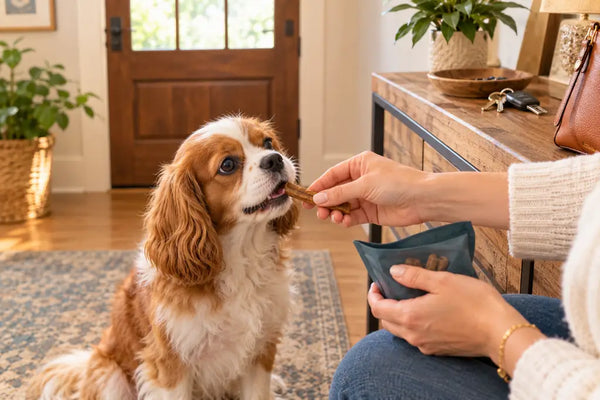
Calming treats help dogs with separation anxiety by taking the edge off, but they don't fix the underlying problem. Think of them as a support tool, not a cure. The most effective ones contain ingredients like L-theanine, chamomile, valerian root, or hemp, and they work best when given 30–60 minutes before you leave.
Some dogs respond great to calming chews. Others don't notice a difference. It's a bit of trial and error, honestly. If you want to try them, start with a small bag before committing to a 120-count container. Our Artullano Hemp Calming Chews for Dogs are a solid starting point for most pups.
Does Calming Music Help Dogs When Left Alone?
Yes, calming music helps dogs when left alone, though the effect is modest. Research has shown that classical music and specially designed dog relaxation tracks can reduce barking and stress behaviors in some dogs. It works best as part of a broader plan — not as a standalone solution.
The catch: music loses its effect if it plays 24/7. Save it for departures. Also, dog-specific playlists (there are several on Spotify and YouTube) tend to work better than talk radio or TV, because human voices can actually trigger more anxiety in some dogs.
What Is the Best Calming Product for Separation Anxiety in Dogs?
The best calming product for separation anxiety in dogs is a combination approach: a calming bed or snuggle toy for comfort, a lick mat or puzzle for enrichment, and calming chews for physiological support. No single product replaces training, but the right stack makes training dramatically easier.
Recommended from PawVortex
For most anxious pups, start with a Snuggle Puppy Heartbeat Dog Toy — the simulated heartbeat and warmth genuinely calm many puppies and adult dogs, and it's one of the most vet-recommended tools out there. Pair it with a PetJett Calming Donut Bed for a dedicated safe space, and add Artullano Hemp Calming Chews 45 minutes before departures. Total cost is usually under $120, and most pet parents see a noticeable difference in 1–2 weeks.
And if you're dealing with a dog who's anxious across the board — not just when left alone — the broader Dog Anxiety Guide: How to Calm an Anxious Dog is worth a read. For breed-specific tips, check out our Labrador Retriever Anxiety Guide and French Bulldog Anxiety Guide.
How to Train a Dog to Stay Home Alone
This step-by-step plan teaches your dog that being alone is safe, boring, and rewarded — the exact opposite of what their panic brain expects.
Step 1: Find Your Dog's Threshold
Set up a camera and leave for 30 minutes. Watch the footage and note the exact moment your dog first shows stress — pacing, whining, panting, yawning. That's their threshold. Your training starts below that number.
Step 2: Practice Fake Departures
Pick up your keys, put on your shoes, walk to the door — then sit back down. Do this 10–20 times a day for a few days. The goal is to make all your pre-departure cues boring.
Step 3: Do Micro-Absences
Walk out the door, close it, and come back in 1–5 seconds. Reward calm behavior. Repeat until your dog barely reacts. Then stretch to 10 seconds, 30 seconds, 1 minute.
Step 4: Add Enrichment Before Departures
Give your dog a frozen lick mat, stuffed puzzle toy, or snuffle mat right before you leave. This occupies their brain and creates a positive association with your departure.
Step 5: Extend Gradually
Once your dog is calm at 5 minutes, work up to 15, 30, 60 minutes, then hours. Never jump more than 10–20% at a time. If your dog panics, you went too fast — back up and try again.
Step 6: Keep Departures and Returns Boring
No dramatic goodbyes, no excited hellos. Calm energy in, calm energy out. This is one of the hardest habits to break, but it makes a huge difference.
Key Takeaways
Dog separation anxiety is a genuine panic disorder, not disobedience — and it will get worse with punishment or forced alone time. The most effective treatment is systematic desensitization combined with counter-conditioning, done slowly and consistently over 4–12 weeks. Environmental changes like calming beds, lick mats, and puzzle toys make training easier by giving your dog something positive to focus on. Calming chews, music, and pheromone products can support the process but never replace training. And if your dog is self-injuring, suddenly anxious, or not improving after 8 weeks, it's time to bring in a vet or veterinary behaviorist.

About PawVortex
PawVortex is your trusted partner in pet care — design-forward, expert-curated solutions for every stage of your pet's journey. Free shipping on orders over $35.
Email the PawVortex team · Visit PawVortex.com · Follow PawVortex on Facebook · Follow PawVortex on Instagram · Subscribe on YouTube


