

This guide explains how to feed your Maine Coon. These cats are gentle giants. They have special diet needs. A standard diet won't work for them. It could even be harmful. We will break down calorie counts for you. We will explain food labels simply. You will get clear plans for portions and meal times. This covers kittens, adults, and seniors. This guide is over 4,000 words. It gives you practical tips. You can master your Maine Coon's diet with ease.
Quick Answers to Your Top Questions
How much should a Maine Coon eat?
Most adults need 270–350 calories each day. That is about ¾ to 1 cup of dry food. Kittens need 280–400 calories. Seniors need 220–300 calories. Check the chart below for exact amounts.
How much to feed a Maine Coon kitten?
Kittens aged 3–6 months need 280–400 calories daily. Give them 3–4 meals a day. They grow until they are 3–4 years old. So, keep them on kitten food until they are at least 12 months old.
My Maine Coon is always hungry – why?
This could happen for several reasons. You might be feeding too little. The food might be low in protein. Or, there could be a health issue. Jump to our special section for help.
What is the best food for a Maine Coon?
Look for a named meat as the first item. For example, chicken or salmon. The food should have 30–40% protein. A mix of wet and dry food is often best. See our top picks below.
Table of Contents
- Maine Coon Diet Basics
- How to Read Food Labels
- Wet Food vs. Dry Food
- Portions by Age & Weight
- Best Feeding Schedule
- Special Diet Needs
- Treats and Supplements
- Switching Foods Safely
- Health Check Signs
- Common Feeding Mistakes
- Facts and Figures
- 5 Easy Solutions
- Paw Vortex Picks
- Final Takeaways
Jump to any section by clicking the links above.
Maine Coon Diet Basics
Maine Coons are big cats. They grow slowly. Their diet must support their bones and muscles. They are obligate carnivores. This means they must eat meat. Protein should be the main part of their meal. Look for 30–40% protein in their food. Fat gives them energy. But too much fat leads to weight gain. They also need joint support. Glucosamine is good for them. Calcium and phosphorus are vital for strong bones. They keep growing until they are 4 years old. A good base food is a solid start. However, some owners may want more special formulas.
Why a Generic Diet Fails
Most cat food bags give tips for average cats. An average cat weighs 8–10 pounds. Your Maine Coon is much larger. Following those tips can cause problems. You might feed too much or too little. Their body works differently. For example, free‑feeding works for small cats. But free‑feeding often makes Maine Coons overweight. They are laid‑back. They eat out of boredom. You must measure their meals. Adjust the amount based on your cat's ideal weight. Not their current weight if they are heavy. First, figure out your cat's needs. Then, find the right food in our Cat Food & Treats collection.
Key point: Your Maine Coon is a large breed. It needs more quality protein and exact portions. A basic plan will not work.
How to Read Food Labels
Choosing the right food starts with labels. Pet food marketing can be confusing. But you can learn a few key rules. This will help you pick the best food for Maine Coon cats.
What to Look For: Protein, Fat, and More
Ingredients are listed by weight. The first item should be a named meat. For example, "deboned chicken" or "salmon". Avoid vague terms like "meat by‑products". Whole meats and meat meals are better. Healthy fats like chicken fat or salmon oil are good for the coat. Carbs like peas or potatoes should appear lower on the list. Maine Coons do not need many carbs. However, carbs are not always bad. They are fine in small amounts. For weight control, a formula like our Active Cat Weight Control Formula is a balanced choice.
What "Complete & Balanced" Really Means
Look for the phrase "complete and balanced nutrition". This is a legal term. It means the food meets AAFCO nutrient levels. For your Maine Coon, check the life stage. Choose "all life stages" for kittens and adults. Or pick "maintenance" for adults. Or pick "growth" for kittens. This small print is your guarantee. It proves the food has what your cat needs. You can explore many AAFCO‑approved options in our Pet Food collection.
| Label Claim | What It Usually Means | What to Think About |
|---|---|---|
| "Grain-Free" | Uses potatoes, peas, or lentils instead of grains. | Not needed unless your cat has a grain allergy. Focus on the protein source first. |
| "Natural" | No artificial colors or flavors. Minimally processed. | It is a good standard. But it does not guarantee the right protein or fat levels. |
| "With Real Chicken" | Contains some chicken. It may not be the main ingredient. | Check if chicken is the *first* item. "Chicken dinner" or "flavor" means less chicken. |
| "Weight Control" | Lower in calories and fat than the regular recipe. | A good pick for less active or older Maine Coons. It helps stop weight gain. |
Key point: Choose foods with a named meat as the first item. Also, make sure the label has a clear AAFCO statement for your cat's life stage.
Wet Food vs. Dry Food
The choice between wet and dry food is important. Both have good points and bad points. Many owners choose a mix of both. This is often the best approach for Maine Coons.
Water and Teeth
Wet food has about 70–80% water. This is a big plus for cats. Cats do not drink much water on their own. Wet food helps their kidneys and bladder. Dry food has only about 10% water. Some people think kibble cleans teeth. But most cats do not chew it enough. It does not scrub their teeth well. Special dental treats or brushing are better for their teeth. So, how much water should a Maine Coon drink daily? With wet food, they get a lot of water from their meals. You can find water‑boosting options in our cat food collection.
Can You Feed Both? Yes – Here's How
Many experts suggest a mixed diet. It gives you the best of both worlds. Kibble is cheap and easy for portion control. Wet food adds water and tastes great. A good plan uses a Maine Coon feeding schedule. For example, give wet food at morning and evening meals. Then, leave a measured amount of dry food for grazing. Or use an auto‑feeder for a midday snack. This way, your cat gets water from wet food. They also get the crunch of kibble. A tool like the Double Meal Smart Pet Feeder helps you give exact dry portions on time.
| Food Type | Good Points | Bad Points |
|---|---|---|
| Wet Food | High water content. Helps kidneys. Usually higher in protein. Very tasty. | Costs more per calorie. Spoils if left out. Less convenient for portion control. |
| Dry Food | Easy and cheap. Good for portion control. Can be used in auto‑feeders. Lasts a long time. | Low in water. Often higher in carbs. Easy to overfeed, which leads to weight gain. |
| Mixed Diet | Balances water and convenience. Adds variety. Gives you a flexible schedule. | Requires careful calorie counting. Takes more planning. |
Key point: A mixed diet is often the best choice. It gives you the water of wet food and the ease of dry kibble.
Portions by Age & Weight
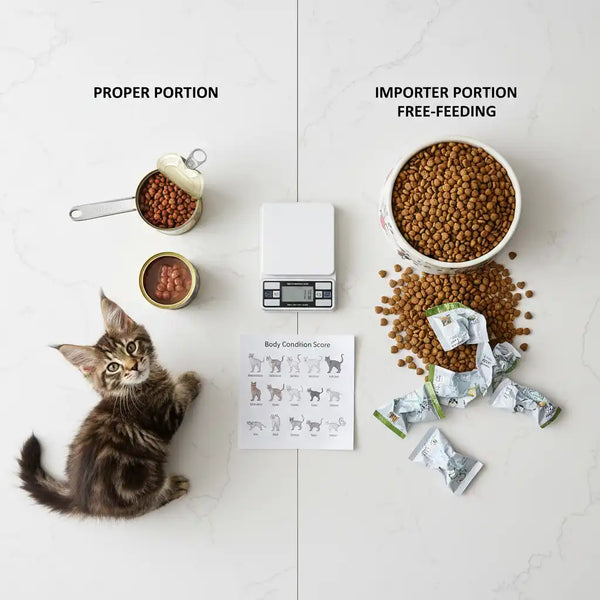
Knowing how much to feed a Maine Coon cat is the key to their health. Portions change as your cat grows. They also change based on weight, exercise, and age. Let's break it down.
Calories for Kittens, Adults, and Seniors
A Maine Coon kitten grows fast. They need 2–3 times more calories per pound than adults. From weaning to 6 months, give them unlimited kitten food. This supports their rapid growth. From 6 months to maturity (3–4 years), switch to 3–4 meals a day. Use "all life stages" or "growth" formulas. An average adult (12–18 lbs) needs 250–350 calories daily. A large, active male (20+ lbs) might need 400+ calories. Senior cats (8+ years) need 20–30% fewer calories. Their body slows down. A tool like the 4 to 6 L Auto Feeder gives exact portions every time.
Use Body Condition to Adjust Portions
The bag's guide is just a start. Your cat's Body Condition Score (BCS) is the real guide. On a scale of 1–9, 5 is ideal. You should feel their ribs easily. But you should not see them. You should see a waist from above. Also, look for a belly tuck from the side. If you cannot feel ribs (BCS 6–9), cut daily food by 10–20%. If ribs stick out (BCS 1–4), give more food. This hands‑on check is better than a scale. For cats that need to lose weight, try a weight control formula. It helps them feel full with fewer calories.
| Life Stage | Ideal Weight | Daily Calories* | Dry Food (cups)** | Meals per Day |
|---|---|---|---|---|
| Kitten (3–6 mo) | 5–10 lbs | 280–400 | ¾ – 1¼ | 3–4 |
| Young Adult (1–3 yr) | 12–16 lbs | 300–380 | 1 – 1¼ | 2–3 |
| Adult (4–7 yr) | 13–18 lbs | 270–350 | ¾ – 1 | 2 |
| Senior (8+ yr) | 12–16 lbs | 220–300 | ⅔ – 1 | 2–3 |
*Calorie needs change with activity and body type. **Cup amounts depend on kibble density. Always check your food's kcal/cup.
Key point: Portions are not fixed. Start with the guide. Then fine‑tune using your cat's Body Condition Score. This keeps them at a healthy weight.
Best Feeding Schedule
Routine is very important for Maine Coons. It helps their stomach and controls their weight. A steady Maine Coon feeding schedule stops stress‑based overeating. It also helps their body work better.
How Many Meals Per Day?
How many meals a day for a Maine Coon cat is best? For kittens under 6 months, give 4–5 small meals daily. From 6 months to 1 year, give 3 meals. Most healthy adults do well with two measured meals. Give one in the morning and one in the evening. This mimics their natural hunting rhythm. It also helps prevent bloating. Bloating can be a problem for deep‑chested breeds. Seniors may benefit from 3–4 smaller meals. These are gentler on their stomach. A schedule is much better than free‑feeding. Free‑feeding hides changes in appetite. Appetite changes are often the first sign of illness.
Timed Feeders Help a Lot
Auto‑feeders are a big help. They keep your cat on a strict schedule. This is great for busy homes. They remove human error. Your cat gets fed on time, even if you are late. This is key for how to prevent obesity in Maine Coon cats. It stops you from giving extra "treat" meals. A feeder like our Double Meal Smart Pet Feeder can give two perfect portions each day. It builds a healthy routine. Explore more options in our "Never Miss Your Cat's Meal Again" collection or visit our complete cat accessories.
| Life Stage | Meals per Day | Sample Times | Feeding Tips |
|---|---|---|---|
| Kitten (2–6 mo) | 4–5 | 7am, 11am, 3pm, 7pm, 11pm* | Free‑feed kitten kibble. Add wet food at set times. |
| Young Adult (1–3 yr) | 2–3 | 7am (wet), 1pm (dry‑auto), 7pm (wet) | Use an auto‑feeder for the midday meal. It keeps things consistent. |
| Adult (4–7 yr) | 2 | 7am, 7pm | Give two equal meals. Use wet, dry, or a mix. |
| Senior (8+ yr) | 3–4 | 7am, 12pm, 5pm, 10pm | Smaller meals are gentler on their stomach. They also keep energy steady. |
*The late‑night meal can stop as the kitten gets older.
Key point: A steady schedule with 2–4 meals per day supports good health. It also stops overeating. Timed feeders make this easy.
Special Diet Needs
Maine Coons can have certain health issues. A good diet can help prevent them. Your Maine Coon cat diet should be about prevention too.
Weight Control Protects Joints
Weight gain is the top diet problem in cats. It is very dangerous for Maine Coons. Extra weight puts stress on their joints. It can worsen genetic issues like hip dysplasia. How to prevent obesity in Maine Coon cats has two parts. First, measure their food carefully. Second, keep them active. Swap some regular kibble for a weight control formula. It has more protein and fiber. But it has less fat and fewer calories. It helps them feel full. Also, play with them every day to keep them moving.
Food Allergies and Sensitive Stomachs
Some Maine Coons have food allergies. They may react to beef, dairy, or certain grains. Signs include soft stool, vomiting, itchy skin, or too much grooming. How to feed a Maine Coon with sensitive stomach starts with an elimination diet. Try a new protein like duck or rabbit. Or use a hydrolyzed protein diet. Always change foods slowly over 7–10 days. For treats, choose simple options. Single‑protein treats are best. Check out our Premium Cat Treats collection for safe choices.
| Issue | Diet Plan | Good Foods | Foods to Limit |
|---|---|---|---|
| Weight Gain | Control portions. Use high‑protein/fiber foods. Stick to meal times. | Weight management kibble, lean wet food, green beans (as a treat). | High‑carb dry food, fatty treats, endless food bowls. |
| Sensitive Stomach | Try a new protein. Use limited ingredients. Pick easy‑to‑digest carbs. | Duck & pea formula, hydrolyzed protein, plain pumpkin puree. | Beef, dairy, wheat, corn, soy, artificial additives. |
| Hairballs | Add more fiber. Keep them hydrated. Brush them often. | Hairball formula food, wet food, malt paste, pumpkin. | Low‑fiber foods. Not brushing their coat. |
| Joint Health | Keep weight lean. Add omega‑3s and joint supplements. | Foods with glucosamine/chondroitin, fish oil, lean protein. | Too many calories that lead to weight gain. |
Key point: Be proactive. Adjust your Maine Coon's diet to manage weight and allergies. Use special formulas when needed.
Treats and Supplements
Treats and supplements can help your cat. But you must use them wisely. Giving too many treats leads to weight gain.
Healthy Treats and Calorie Limits
Treats should be less than 10% of daily calories. For a 16‑lb Maine Coon eating 300 calories, that is only 30 calories. That is about 2–3 small treats per day. Pick low‑calorie treats with simple ingredients. Our Dr. Becker's Organic Cat Snack is a good example. It is rich in protein. You can also give bits of cooked chicken or fish. Avoid treats with sugar, artificial colors, or vague "meat by‑products".
Do You Need Supplements?
If you feed a high‑quality commercial diet, your cat gets all the nutrients it needs. Do not give supplements without asking your vet. Too much can be harmful. However, your vet may suggest some supplements for certain issues:
- Omega‑3 Fatty Acids (Fish Oil): Good for the coat and skin. It also reduces swelling in joints.
- Glucosamine/Chondroitin: Often added to large‑breed or senior foods. It supports joint cartilage.
- Probiotics: Help with stomach health. Good during diet changes or after antibiotics.
- Fiber (Pumpkin, Psyllium): Helps with occasional constipation or hairballs.
Always talk to your vet before adding anything new. For a range of vet‑approved options, browse our Cat Food & Treats collection.
| Treat Type | Calories per Treat | Max per Day (10% rule) | Notes |
|---|---|---|---|
| Commercial Soft Treat (e.g., Dr. Becker's) | 2–4 kcal | 7–15 treats | Check the label. Some are higher in calories. |
| 1" cube of cooked chicken breast | ~15 kcal | 2 cubes | High in protein, low in fat. No seasoning. |
| 1 tsp of plain canned pumpkin | ~5 kcal | 6 tsp | Good for fiber. Not really a treat, but a food add‑in. |
| 1 small piece of dried fish | ~10–20 kcal | 1–3 pieces | High in omega‑3s, but also higher in fat and calories. |
Key point: Use treats sparingly. Choose healthy, low‑calorie options. Only give supplements if your vet says so.
Switching Foods Safely
Sometimes you need to switch foods. For example, moving from kitten to adult food. Or trying a new brand. A slow change is a must. It prevents stomach upset. Some Maine Coons are also picky eaters. You need patience and a good plan.
The Safe Way to Change Diets
A sudden change can cause vomiting or diarrhea. It can also make your cat refuse the new food. Follow a 7–10 day plan. Mix the old and new food. Start with 75% old and 25% new for days 1–3. Then 50/50 for days 4–6. Then 25% old and 75% new for days 7–9. Finally, give 100% new food on day 10. This is extra important for when to switch Maine Coon kitten to adult food. Most kittens switch around 12 months. But some benefit from staying on kitten food until 18–24 months. A steady base food like Meow Mix Original Choice can help keep things stable during other changes.
Tips for Picky Eaters
If your cat refuses the new food, do not panic. First, make sure the change is slow. Warm wet food slightly. This makes the smell stronger. Offer the new food at the start of a meal. They are hungriest then. Sometimes, a small "topper" helps. Try a favourite wet food or a sprinkle of treats from our Premium Cat Treats collection. Do not leave rejected food out for more than 30 minutes. Offer a fresh portion at the next meal. Be consistent. Do not offer many different foods right away. That teaches them to wait for something better.
| Day | Old Food % | New Food % | What to Do |
|---|---|---|---|
| 1–3 | 75% | 25% | Mix well. Watch their stool and appetite. |
| 4–6 | 50% | 50% | If all is well, keep going. Slow down if stool is soft. |
| 7–9 | 25% | 75% | Most cats adjust well at this stage. |
| 10+ | 0% | 100% | Fully switched. Watch for long‑term acceptance. |
Key point: Always switch food over 7–10 days. This prevents stomach issues. Be patient with picky cats. Use tasty toppers to encourage them.
Health Check Signs
The best test of your feeding plan is your cat's health. Check their body and behaviour often. These signs tell you if your diet is working.
What a Healthy Maine Coon Looks Like
A well‑fed Maine Coon has:
- Ideal Body: You can feel ribs lightly. You see a waist from above. You see a belly tuck from the side.
- Good Energy: They play and are alert. They are not lazy or tired.
- Shiny Coat and Skin: The coat is thick and glossy. No dandruff. Skin is soft, not oily or flaky.
- Normal Stool: Stool is firm and regular. No straining.
- Good Muscle Tone: They feel solid. Not bony or flabby.
Red Flags to Watch For
Some signs mean there is a problem. These include:
- Sudden Weight Change: A change of more than 10% of body weight is a concern.
- Appetite or Thirst Changes: Eating or drinking much more or less can signal diabetes or kidney issues.
- Dull Coat, Bad Shedding, or Skin Sores: This may mean a lack of nutrients or allergies.
- Ongoing Vomiting or Diarrhea: Apart from a hairball now and then, this suggests a food issue or illness.
- Lethargy or Mood Changes: A cat that stops playing might be in pain or unwell.
| Indicator | Good Sign | Warning Sign | What to Do |
|---|---|---|---|
| Weight | Stable. Ideal BCS (4–5/9). | Unexpected loss or gain. | Weigh them monthly. See vet if change is over 10%. |
| Coat & Skin | Shiny. Smooth. Little dander. | Dull. Greasy. Flaky. Bald spots. | Check diet for omega‑3s. See vet to rule out allergies. |
| Energy & Mood | Alert. Engaged. Playful. | Lazy. Hiding. Grumpy. | Could mean pain or illness. Vet check is needed. |
| Digestion | Regular, firm stool. | Ongoing soft stool, constipation, or vomiting. | Try a food trial for sensitivities. See vet to rule out disease. |
Key point: Your cat's body, energy, and waste are the best feedback on their diet. Learn the good signs and act on the bad ones.
Common Feeding Mistakes
Even with good intentions, it is easy to make errors. Knowing these pitfalls helps you avoid them.
Relying Too Much on Dry Food and Free‑Feeding
Dry food is easy. But feeding only dry food can lead to a lack of water and weight gain. Free‑feeding makes this worse. That means leaving a full bowl out all day. Maine Coons often eat out of boredom. They do not always control themselves. This makes it hard to track appetite or control Maine Coon portion size. The fix is to give scheduled, measured meals. An auto‑feeder like the Double Meal Smart Pet Feeder gives exact portions on a timer. It stops the temptation to free‑feed. It also supports a healthy Maine Coon feeding schedule.
Blindly Following Bag Guides and Using Inconsistent Measures
The feeding chart on the bag is a start. But it is not a rule. It often guesses too high for indoor, less active cats. Your 18‑lb Maine Coon might need calories for a 14‑lb cat. Also, using a random cup to measure leads to daily calorie changes. Always use a standard 8‑oz measuring cup. Level it off. For the best accuracy in how much to feed a Maine Coon cat, use a feeder with precise controls. Our 4 to 6 L Auto Feeder can give exact amounts.
| Common Mistake | Why It's Bad | Better Practice | Helpful Tool |
|---|---|---|---|
| Free‑Feeding Dry Kibble | Leads to overeating, weight gain, lack of water. Hides appetite changes. | Give measured meals 2–3 times a day. | Auto‑feeder with timer and portion control. |
| Ignoring Body Condition | You might feed too much or too little based on weight alone. | Check BCS monthly. Adjust food by 10% as needed. | BCS chart; kitchen scale for weight. |
| Inconsistent Measuring | Eyeballing or using random cups causes calorie shifts. | Use a dedicated, level measuring cup for every meal. | Standard 8‑oz cup; gram scale for perfect accuracy. |
| Giving Too Many Treats | Treats can add 20%+ extra calories. This ruins weight control. | Limit treats to less than 10% of daily calories. Pick healthy ones. | Pre‑measured treat containers; low‑calorie treats like Dr. Becker's. |
Key point: Never free‑feed. Measure portions with proper tools. Use bag guides as a start. Let your cat's Body Condition Score be your real guide.
Facts and Figures
Looking at data helps us see why a special diet is so important for this breed.
Key Stats for Maine Coon Owners
- Growth Period: Maine Coons grow for 3 to 4 years. This is one of the longest growth periods of any cat breed. They need growth‑phase nutrition for much longer than other cats.
- Weight Issues: About 60% of U.S. cats are overweight or obese. Large breeds like Maine Coons are at higher risk. They are big and often less active.
- Weight Range: Males are usually 13–18 lbs (some up to 25+). Females are 8–12 lbs. This big range shows why a custom portion is so important.
- Water Intake: Cats on dry food only drink about half the water of cats on wet food. This raises their risk of kidney and bladder issues.
- Calorie Density: Dry food has 300–400 calories per cup. Wet food has 150–250 calories per 5.5‑oz can. Mixing them up can lead to big errors in feeding.
These numbers show that guessing with your Maine Coon's diet is a risk to their health. A precise, informed feeding plan is a must.
5 Easy Solutions
If your current routine is not working, try these vet‑approved tips.
- Use a Measured Auto‑Feeder: This removes guesswork. It keeps meals steady, even on busy days. It is the best tool for how to prevent obesity in Maine Coon cats. See our Smart Cat Feeder collection.
- Feed a Mix of Wet and Dry Food: Give wet food for water and taste. Use an auto‑feeder for dry portions. This balances the good points of both and controls Maine Coon portion size.
- Switch to a Weight Control or Large Breed Diet: If your cat is heavy or lazy, a food like Active Cat Weight Control Formula helps them feel full with fewer calories. It also supports joints.
- Stick to a Strict Meal Schedule: Feed adult Maine Coons twice a day at the same times. This helps their body, improves digestion, and makes appetite changes easy to spot.
- Use Puzzle Feeders for Dry Food: These slow down fast eaters. They also give mental fun. They can stop throwing up and boredom.
Each tip fixes a common problem. They help you move from a reactive to a proactive feeding plan.
Paw Vortex Picks
Based on our testing, here are top products that support the feeding plans in this guide.
For Precision & Routine
- Double Meal Smart Pet Feeder: Set two perfect portions each day. A must for a reliable Maine Coon feeding schedule.
- 4 to 6 L Auto Feeder: Bigger size for multi‑cat homes or when you are away. Never miss a meal.
For Weight & Health
- Active Cat Weight Control Formula: Made to help large cats feel full while cutting calories. A core part of any Maine Coon cat diet.
- Meow Mix Original Choice Dry Cat Food: A trusted, balanced food for cats without special diet needs.
For Healthy Rewards
- Dr. Becker's Organic Cat Snack: A high‑protein, low‑calorie treat. Great for training and bonding without hurting your Maine Coon portion size goals.
- See All Premium Cat Treats: Discover more healthy, tasty ways to reward your gentle giant.
Final Takeaways
Feeding your Maine Coon well is one of the best things you can do for them. It helps them live a long, healthy, and happy life. By knowing their special needs as a large, slow‑growing breed, you can give them truly custom nutrition.
Key Takeaways:
- Quality over Quantity: Pick foods with a named meat as the first item. Make sure it has an AAFCO statement for your cat's life stage.
- Control Portions: Use a measuring cup. Use the calorie guide as a start. Then adjust based on your cat's Body Condition Score. Do not just use the scale.
- Schedule Beats Free‑Feeding: Give 2–3 measured meals per day. This stops weight gain and helps you spot health changes. Auto‑feeders are great for this.
- Water is Key: Add wet food to their diet. It helps their kidneys and bladder, especially if they eat dry kibble.
- Be Proactive: Adjust food for age, activity, and health. Do not wait for weight problems to show up.
- Treats are a Side Dish: Limit treats to less than 10% of daily calories. Pick healthy, simple options.
- Your Vet is a Partner: Get regular check‑ups. Talk openly about diet. This is very important for weight and allergy issues.
By using the tips in this Maine Coon feeding guide, you are investing in a future of health and happiness with your amazing cat. For all the tools and quality food to make it happen, explore Paw Vortex's expert‑picked collections.
The Complete Maine Coon Care Guide
A balanced diet is just one piece of the puzzle. For a truly happy and healthy gentle giant, explore our full library of expert Maine Coon care guides.
- 🐾 The Complete Maine Coon Cat Care Guide 2026 – Your all-in-one resource for raising a thriving Maine Coon.
- 🩺 Maine Coon Health Guide: Common Issues & Prevention
- ✂️ Maine Coon Grooming Guide: Brushing, Bathing & Shedding Control
- 🧸 Best Toys for Maine Coon Cats: Durable, Interactive Picks
- 🛏️ Best Beds for Maine Coon Cats: Large & Orthopedic Options
Looking for more? Read the full care guide here.

About Paw Vortex
Paw Vortex is your trusted partner in pet care. We offer modern, expert‑picked solutions for every stage of your pet's life.
Why Choose Paw Vortex?
- Expert‑Picked Items: Every product is checked by pet care experts.
- Premium Quality: We find only the best pet care solutions.
- Made for Pet Parents: Designed for real‑life use.
- Eco‑Friendly Options: Sustainable choices for mindful owners.
Connect With Us:
Email: hello@pawvortex.com
Website: www.pawvortex.com
Follow: Facebook | Instagram | YouTube
Frequently Asked Questions (Maine Coon Feeding)
How much should a Maine Coon kitten eat?
Maine Coon kittens need 250–400+ calories daily during rapid growth. From weaning to 6 months, give them unlimited high‑quality kitten food. Offer 3–4 meals per day. They may eat ¼ to ½ cup of dry food plus wet food. Always follow your food's guidelines and check their body condition.
Is grain‑free food necessary for Maine Coons?
No, it is not needed unless your cat has a diagnosed grain allergy. That is rare. Focus on high animal protein instead. Some grain‑free diets use potatoes or legumes. These are not automatically better. Talk to your vet before choosing grain‑free, especially with recent FDA studies on some diets and heart health.
How many times a day should I feed my adult Maine Coon?
Most healthy adults do best with two measured meals per day. Give one in the morning and one in the evening. This helps their body, stops bloating, and makes it easy to track appetite. Some cats prefer three smaller meals. The key is steady portions and a set schedule.
What human foods are dangerous for Maine Coons?
Many common foods are toxic. These include onions, garlic, chives, chocolate, caffeine, alcohol, grapes, raisins, xylitol (a sweetener), raw dough, and too much salt or fat. Bones can splinter and hurt them. Stick to cat‑specific food and treats. Only give vet‑approved human foods like plain cooked chicken or fish as rare treats.
How do I know if I'm feeding my Maine Coon enough?
Use the Body Condition Score (BCS) system. At an ideal weight (BCS 5/9), you should feel their ribs with light pressure. You should see a waist from above and a belly tuck from the side. They should keep a stable weight, have good energy, and a shiny coat. If ribs stick out, feed more. If you cannot feel ribs, feed less. Adjust by 10–20% and check again in two weeks.
Are raw diets safe for Maine Coon cats?
Raw diets carry big risks. They can have bacteria like Salmonella or E. coli. They may have parasites. They can also lack proper nutrition if not made carefully. The AVMA and FDA advise against raw diets. If you want to try raw, speak to a veterinary nutritionist. They can help you make a balanced and safe plan. For most owners, high‑quality commercial cooked food is a safer and easier choice.


