

Welcoming a Maine Coon into your home is an experience like no other. These magnificent “gentle giants” of the cat world bring a unique blend of majestic beauty, dog-like loyalty, and playful charm. However, their impressive size and special characteristics mean they have care needs that differ from the average house cat. This guide explains the complete spectrum of Maine Coon cat care—from selecting the right food to managing their glorious coat and understanding their complex health predispositions—specifically for pet parents who want to provide the best possible life for their feline companion.
We’ll walk you through every step with empathetic, professional, and action-oriented advice. You’ll find practical solutions for daily grooming, insights into Maine Coon behavior traits, a breakdown of common health issues, and curated recommendations for the best products for Maine Coon cats. Whether you’re a new Maine Coon owner or a seasoned cat parent looking to optimize your care routine, this comprehensive 4,000+ word guide is your trusted resource for 2026 and beyond.
Table of Contents
- Introduction to Caring for Your Maine Coon
- Maine Coon Diet and Nutrition: Feeding for Size and Health
- Essential Maine Coon Grooming Guide: Managing That Magnificent Coat
- Common Maine Coon Health Issues and Preventative Care
- Understanding Maine Coon Behavior and Personality Traits
- Creating the Perfect Home Environment for a Large Breed Cat
- Maine Coon Kitten Care: Starting Your Journey Right
- Statistics on Maine Coon Ownership and Care
- 5 Safe and Effective Solutions for Common Maine Coon Challenges
- Curated Product Showcase: Paw Vortex Picks for Your Maine Coon
- Final Thoughts: Key Takeaways for a Happy, Healthy Maine Coon
Jump to any section by clicking the links above.
Introduction to Caring for Your Maine Coon
Understanding the Gentle Giant of the Cat World
So, how to take care of a Maine Coon cat starts with understanding what makes them unique. Maine Coons are one of the largest domesticated cat breeds, known for their sturdy, rectangular build, long, flowing coats, tufted ears, and bushy, raccoon-like tails. But beyond their impressive physique lies a heart of gold. Their Maine Coon personality is famously friendly, intelligent, and adaptable. They often form deep bonds with their families, including children and other pets, and many exhibit dog-like behaviors such as following their humans from room to room or playing fetch.
This combination of size and sociability means large breed cat care requires forethought. They need robust, appropriately sized accessories, a diet that supports their musculoskeletal health, and consistent mental and physical engagement. Embracing their specific needs isn’t just about maintenance; it’s about unlocking the full potential of a truly remarkable companion.
| Trait | Details |
|---|---|
| Average Weight | Males: 13-18 lbs; Females: 8-12 lbs (some males can reach 20+ lbs) |
| Coat Type | Long, thick, water-resistant; heavy undercoat in winter |
| Personality | Gentle, friendly, playful, intelligent, often “dog-like” |
| Activity Level | Moderately active; enjoys interactive play and climbing |
| Key Care Focus | Coat maintenance, joint health, portion-controlled feeding |
What This Comprehensive Guide Covers for Pet Parents
This Maine Coon cat care guide is structured to answer your most pressing questions. We’ll move from foundational needs like Maine Coon diet and nutrition to the intricacies of their grooming guide and health issues. You’ll get clear answers on how much should I feed a Maine Coon cat and how often should I groom a Maine Coon cat. We’ll demystify their behavior traits and provide actionable Maine Coon maintenance tips. Crucially, we’ll integrate expert-curated product recommendations from Paw Vortex—like specialized cat accessories designed for larger felines—to turn advice into real-world solutions.
Takeaway: Caring for a Maine Coon is a rewarding commitment that blends standard cat care with considerations for their large size, thick coat, and gregarious nature. Understanding this foundation is the first step toward a thriving partnership.
Maine Coon Diet and Nutrition: Feeding for Size and Health
textChoosing the Best Diet for Maine Coon Cats
A proper Maine Coon feeding guide begins with quality. Do Maine Coon cats need special food? While not necessarily “special,” their food should be high in animal-based protein to support muscle mass, rich in omega-3 and -6 fatty acids for skin and coat health, and contain controlled calories to prevent obesity—a common issue in large, less active adults. Look for formulas that include glucosamine and chondroitin for joint support, crucial for their big frames. The debate between wet, dry, and raw food is ongoing. Our testing shows that a combination often works best: wet food for hydration and palatability, and high-quality dry kibble for dental health and convenience.
| Food Type | Pros | Cons | Best For |
|---|---|---|---|
| High-Quality Dry Food | Dental health, convenience, cost-effective, easy to portion | Lower moisture content, can be high in carbs | Free-feeding kittens, dental care component |
| Wet/Canned Food | High moisture for hydration, palatable, often higher protein | More expensive, spoils quickly, dental plaque | Adult/maintenance diet, cats with urinary or kidney issues |
| Raw or Freeze-Dried | Biologically appropriate, high protein, low carb | Risk of pathogens, requires careful balancing, costly | Pet parents committed to rigorous food safety and prep |
How Much and How Often to Feed Your Maine Coon
Portion control is the cornerstone of Maine Coon diet and nutrition. How much should I feed a Maine Coon cat? It depends on age, weight, activity level, and whether they are spayed/neutered. A general guideline is 20-30 calories per pound of ideal body weight, but always start with the feeding chart on your chosen food and adjust with your vet. Maine Coon kittens (<1 year) need frequent, calorie-dense meals to fuel growth—often 3-4 times daily. Adults thrive on two measured meals per day to prevent overeating.
This is where technology can be a lifesaver. An automatic feeder from our smart feeder collection ensures consistent portion sizes and timing, which is vital for weight management. Our recommended 4 to 6 L Auto Feeder is perfect for Maine Coons, holding ample food for scheduled meals even when you’re away.
| Life Stage | Frequency | Daily Calorie Range* | Key Goal |
|---|---|---|---|
| Kitten (2-6 months) | 3-4 meals | 250-350 kcal | Controlled growth, development |
| Junior (7-12 months) | 2-3 meals | 300-400 kcal | Transition to adult food |
| Adult (1-7 years) | 2 meals | 280-350 kcal | Weight maintenance, health |
| Senior (8+ years) | 2-3 smaller meals | 250-300 kcal | Joint support, digestibility |
*Always consult your veterinarian for a personalized plan.
Takeaway: The best diet for a Maine Coon is high in protein, supports joints, and is fed in measured portions. Consistent feeding times with an automatic feeder can prevent obesity and promote long-term health.
Essential Maine Coon Grooming Guide: Managing That Magnificent Coat
Your Step-by-Step Brushing and Shedding Control Routine
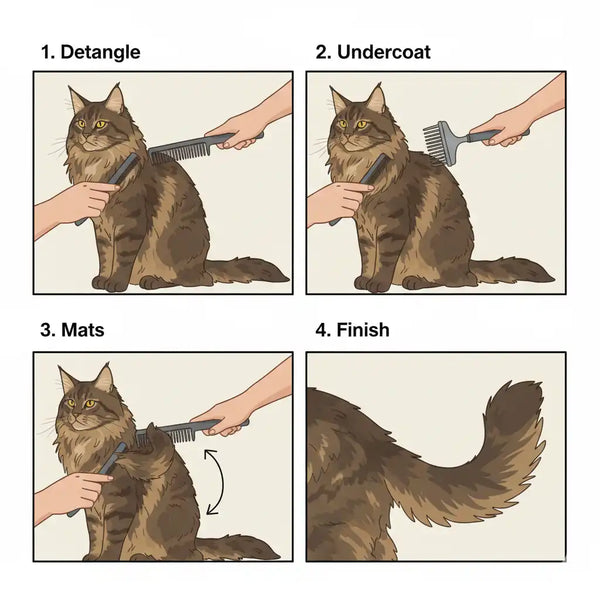
A Maine Coon grooming guide is non-negotiable. Their beautiful, semi-longhaired coat is a double-layered marvel with a silky topcoat and a dense, woolly undercoat. Without regular care, it mats easily, especially in friction areas like behind the ears, under the legs, and around the hindquarters. So, how often should I groom a Maine Coon cat? For most, a thorough brushing 2-3 times per week is ideal. During spring and fall shedding seasons, daily brushing may be necessary to reduce shedding in Maine Coon cats and prevent hairballs.
Start with a wide-toothed comb to gently work through tangles, then use a long-pinned slicker brush or an undercoat rake to remove loose fur from the dense undercoat. Always be gentle and use positive reinforcement. For pet parents seeking a clean, low-maintenance option—especially in warmer climates—a professional-grade tool like the Paw Vortex Rechargeable Pet Hair Clipper is invaluable for safe sanitary trims or managing severe mats under veterinary guidance.
| Step | Tool | Action | Focus Area |
|---|---|---|---|
| 1. Detangle | Wide-tooth metal comb | Gently comb from tips to roots to remove knots. | Chest, behind ears, “pants” (hind legs). |
| 2. Remove Undercoat | Undercoat rake or deshedding tool | Use short strokes to lift out loose undercoat fur. | Back, sides, belly (if tolerated). |
| 3. Smooth & Finish | Long-pinned slicker brush or bristle brush | Brush in the direction of hair growth to distribute oils. | Entire coat, especially the luxurious tail. |
| 4. Final Check | Comb & your fingers | Feel for any remaining mats, check ears and nails. | Armpits, groin, base of tail. |
Bathing, Nail Care, and Dental Hygiene for Giants
Contrary to myth, many Maine Coons enjoy water due to their water-resistant coats. A bath every 4-8 weeks can minimize dander, reduce shedding control issues, and keep their coat magnificent. Use a cat-specific shampoo and ensure thorough rinsing and drying. Nail trimming should be done every 2-3 weeks; their large, sturdy claws can become problematic if left unchecked. Dental care is critical for how to keep a Maine Coon cat healthy. Aim to brush their teeth several times a week with a feline toothpaste to prevent periodontal disease.
Stocking up on the right tools makes all this manageable. Explore our full range of Cat Hygiene & Grooming Essentials for everything from deshedding tools to dental kits, all curated to make your Maine Coon maintenance tips easier to implement.
| Task | Frequency | Purpose & Tips |
|---|---|---|
| Brushing/Combing | 2-3 times per week (daily during shed) | Prevent mats, reduce shedding and hairballs. |
| Nail Trimming | Every 2-3 weeks | Prevent overgrowth, snagging, and paw problems. |
| Ear Checking | Weekly | Look for wax, debris, or redness; clean gently if needed. |
| Teeth Brushing | Ideal: Daily; Minimum: 2-3 times per week | Critical for preventing dental disease and systemic issues. |
| Bathing | Every 4-8 weeks (as needed) | Keep coat clean, reduce allergens, and manage oil. |
Takeaway: Consistent, gentle grooming is the secret to preventing mats and hairballs while bonding with your Maine Coon. Investing in the right tools transforms a chore into a positive ritual.
Common Maine Coon Health Issues and Preventative Care
Genetic Health Conditions to Monitor
Being informed about common health problems in Maine Coon cats empowers you to be a proactive pet parent. Responsible breeders screen for genetic conditions, but awareness is key for all owners. The most significant is Hypertrophic Cardiomyopathy (HCM), a hereditary heart disease that causes thickening of the heart muscle. Regular veterinary screenings, including echocardiograms, are recommended. Hip Dysplasia, more common in large breeds, can lead to arthritis and mobility issues. Spinal Muscular Atrophy (SMA) is a genetic disorder affecting the muscles of the trunk and limbs, but cats with SMA can live full lives with proper care.
Other Maine Coon health issues to watch include Polycystic Kidney Disease (PKD) and periodontal disease. Understanding these risks is part of how to keep a Maine Coon cat healthy for their full Maine Coon lifespan and health potential, which typically ranges from 12 to 15 years, with many living into their late teens with excellent care.
| Condition | Description | Typical Onset | Preventative/Screening |
|---|---|---|---|
| Hypertrophic Cardiomyopathy (HCM) | Thickening of heart muscle, leading to heart failure. | Early adulthood onward (often 1-5 yrs) | Annual echocardiogram; DNA test available for some mutations. |
| Hip Dysplasia | Malformation of hip joint, causing arthritis and pain. | Can be congenital; signs often appear in adulthood. | Maintain healthy weight, joint supplements, X-ray screening. |
| Spinal Muscular Atrophy (SMA) | Genetic loss of spinal cord neurons, causing muscle weakness. | Kittenhood (3-4 months) | DNA test breeders; affected cats need a safe, low-impact environment. |
| Polycystic Kidney Disease (PKD) | Fluid-filled cysts develop in kidneys, impairing function. | Usually later in life (7+ years) | Ultrasound screening; DNA test available. |
Proactive Veterinary Care and Insurance
Prevention is the best medicine. Establish a relationship with a veterinarian familiar with large breed cat care. Kittens need a series of vaccinations and deworming. Adults should have annual wellness exams, and seniors (8+) benefit from semi-annual visits with bloodwork to catch age-related changes early. Discuss a vaccination schedule, parasite prevention (fleas, ticks, heartworm), and the appropriate time for spay/neuter with your vet.
Given the potential for breed-specific conditions, pet insurance is a highly recommended financial safety net. Enrolling your Maine Coon as a kitten, before any health issues arise, ensures the broadest coverage for unexpected illnesses or accidents, safeguarding both your cat’s health and your peace of mind.
| Life Stage | Visit Frequency | Key Focus Areas |
|---|---|---|
| Kitten (0-1 year) | Every 3-4 weeks until 16 weeks | Vaccinations, deworming, overall health check, socialization advice. |
| Adult (1-7 years) | Annual wellness exam | Weight check, dental exam, vaccine boosters, heart/lung listen, discuss HCM screening. |
| Senior (8+ years) | Every 6 months | Comprehensive bloodwork, urinalysis, blood pressure, joint health assessment, thyroid check. |
Takeaway: Knowledge of breed-specific health risks, combined with regular veterinary check-ups and pet insurance, forms a powerful strategy for ensuring a long, vibrant life for your Maine Coon.
Understanding Maine Coon Behavior and Personality Traits
The Playful, Dog-Like Companion: What to Expect
The Maine Coon personality is a delightful paradox: regal yet goofy, independent yet deeply attached. They are known as “gentle giants” for good reason. Their Maine Coon behavior traits often include a high level of intelligence, curiosity, and a playful, sometimes clownish, demeanor that lasts well into adulthood. Many are fascinated by water, enjoy playing fetch, and will “talk” to their owners with a distinctive, chirping trill rather than a standard meow. They tend to be very social and often want to be near you, but not necessarily on your lap—preferring to sit beside you or at your feet.
This adaptable nature answers the question, “Are Maine Coon cats good family pets?” Absolutely. They are typically patient with children and, with proper introductions, can live harmoniously with other cats and even dogs. Their size and confidence mean they are less easily startled than some breeds, making them excellent indoor cats for active households.
| Trait | Manifestation | What It Means for You |
|---|---|---|
| Sociability | Follows you, greets guests, enjoys company. | Not a solitary cat; thrives on interaction but isn’t overly clingy. |
| Playfulness | Chases toys, plays fetch, remains playful into senior years. | Require daily interactive play sessions for mental/physical health. |
| Intelligence | Can learn tricks, open doors, solve puzzle feeders. | Need mental stimulation to prevent boredom (which can lead to mischief). |
| Vocalization | Soft chirps, trills, and meows to communicate. | They “talk” to you; it’s a form of bonding, not usually excessive yowling. |
| Adaptability | Generally adjusts well to new environments, people, and pets. | Great for families, multi-pet homes, and even some travel. |
Socialization, Training, and Mental Stimulation
Early and positive socialization is key to a well-adjusted adult. Expose your Maine Coon kitten to various sights, sounds, people, and other animals. Do Maine Coon cats get along with dogs? Very often, yes—especially if introduced gradually and calmly. Their intelligence makes them highly trainable using positive reinforcement (treats, praise). Teach basic commands, harness training for safe outdoor exploration, or fun tricks.
Mental enrichment is non-negotiable. What toys do Maine Coon cats like most? They love interactive wand toys that mimic prey, sturdy puzzle feeders that challenge their minds, and large, sturdy climbing trees. Rotate toys to maintain interest. For a touch of elegance that matches their majestic presence, browse our Luxury Cat Accessories for stylish and stimulating options.
Takeaway: Maine Coons are intelligent, social, and playful companions who thrive on interaction and mental challenges. Harness their dog-like tendencies through training and play for a deeply rewarding bond.
Creating the Perfect Home Environment for a Large Breed Cat
Must-Have Products for Maine Coon Comfort and Safety
Your home setup is a crucial part of Maine Coon indoor care. Standard cat products are often too small or flimsy for these substantial felines. Investing in appropriately sized, durable items is not a luxury—it’s a necessity for their comfort and your home’s integrity. This is where knowing the best products for Maine Coon cats pays dividends. Start with the basics: an extra-large litter box (consider high-sided or top-entry models), heavy, wide ceramic or stainless steel food and water bowls, and a robust scratching post at least 30 inches tall.
Vertical space is equally important. Maine Coons love to climb and survey their domain. A sturdy, multi-level cat tree with large platforms and reinforced posts will be their castle. For a wide selection of vetted products, start your search at our Shop All page, where you can filter for items suited to larger breeds.
| Product | Standard Size | Recommended Maine Coon Size | Why It Matters |
|---|---|---|---|
| Litter Box | ~18" L x 14" W | 22"+ L x 18"+ W, high sides | Prevents accidents over the side; provides turning room. |
| Cat Tree/Scratching Post | 24" tall, light base | 36"+ tall, heavy wide base, large platforms | Stability for safe climbing; full-body stretch for scratching. |
| Food/Water Bowl | Small, shallow dish | Wide, shallow ceramic or stainless steel | Avoids whisker fatigue; harder to tip over. |
| Cat Bed | Small, round bed | Large rectangular bed or donut-style | Allows them to sprawl out comfortably in their preferred position. |
Litter Box Solutions, Scratching Posts, and Safe Spaces
The litter box is a frequent pain point. What size litter box do I need? Think "extra-large." Many owners use plastic storage totes with an entrance cut out, providing ample room. Place boxes in quiet, accessible locations—one per cat, plus one extra. For scratching, provide multiple sturdy posts covered in sisal rope; redirect scratching from furniture calmly and consistently.
Finally, ensure your Maine Coon has access to quiet, cozy safe spaces where they can retreat if overwhelmed. This could be a dedicated cat shelf, a cozy cave bed, or simply a quiet corner. A well-equipped home answers the question, "What do Maine Coon cats need daily?"—security, comfort, and opportunities for natural behaviors.
| Category | Essential Items | Pro Tip |
|---|---|---|
| Hygiene | Extra-large litter box, quality clumping litter, scooper, mat. | Use unscented litter; Maine Coons can be sensitive to strong smells. |
| Scratching & Climbing | Multiple tall, sturdy scratching posts; a large, stable cat tree. | Place posts near favorite resting areas and furniture you want to protect. |
| Feeding Station | Wide, shallow bowls (or automatic feeder); fresh water fountain. | Separate food and water stations by a few feet, as cats instinctively prefer this. |
| Rest & Safety | Large beds, window perches, enclosed hideaways. | Provide vertical spaces (shelves, perches) to satisfy their desire to climb and observe. |
| Play & Enrichment | Interactive wand toys, puzzle feeders, ball tracks, catnip toys. | Rotate toys weekly to prevent boredom and keep playtime exciting. |
Takeaway: Scaling up your cat supplies to Maine Coon proportions is essential for their physical comfort and behavioral well-being, preventing problems and creating a harmonious home.
Maine Coon Kitten Care: Starting Your Journey Right
Bringing Your Kitten Home: The First 30 Days
Maine Coon kitten care sets the foundation for a lifetime of health and happiness. The first month is a critical period of adjustment. Before bringing your kitten home, kitten-proof your space: secure cords, remove toxic plants, and block off small hiding spots. Designate a quiet “base camp” room with all their essentials (litter box, food/water, bed, toys) where they can acclimate without feeling overwhelmed.
Introduce them to your home gradually over several days. Handle them gently, get them used to being touched on their paws (for future nail trims), mouth (for dental care), and ears. Positive early experiences with grooming tools, carriers, and various household sounds will pay enormous dividends later. Remember, a well-socialized Maine Coon kitten grows into a confident, friendly adult.
| Phase | Timeline | Key Activities & Goals |
|---|---|---|
| Setup & First Day | Day 0-1 | Bring home, place in base camp. Let them explore the room quietly. Offer food/water and show litter box. |
| Room Exploration | Day 2-4 | Spend quiet time in the room. Initiate gentle play and handling. Establish feeding/grooming routines. |
| Home Expansion | Day 5-14 | Supervised exploration of other rooms. Introduce to other household pets slowly and positively. |
| Routine & Socialization | Day 15-30 | Solidify daily routines. Introduce friendly visitors. Continue positive exposure to carriers, brushes, etc. |
Kitten-Specific Nutrition, Training, and Socialization
Kittens have immense nutritional needs to support their rapid growth. Feed a high-quality, calorie-dense kitten formula specifically designed for growth. How much should I feed a Maine Coon kitten? Follow the package guidelines, typically involving 3-4 meals per day. Free-feeding dry kitten kibble is often acceptable for the first 6 months, but transition to scheduled meals to prevent obesity later.
Begin how to brush a Maine Coon cat properly lessons early, making it a positive, treat-filled experience. Start litter training (most kittens learn quickly), introduce scratching posts, and use clicker training to teach basic manners. This early investment in how to care for a Maine Coon kitten ensures you raise a well-mannered, healthy giant.
| Age | Average Weight* | Key Developments | Care Focus |
|---|---|---|---|
| 8-12 weeks | 3-5 lbs | Weaned, ready for new home. Peak socialization period. | Vet check, vaccinations, gentle handling, litter training. |
| 4-6 months | 6-9 lbs | Rapid growth, teething, increased coordination. | Provide chew toys, continue socialization, spay/neuter discussion. |
| 7-12 months | 9-13 lbs (M), 7-10 lbs (F) | Growth begins to slow, adult behaviors emerge. | Transition to adult food, reinforce training, provide ample exercise. |
| 12-18 months | Near adult weight | Filling out, reaching full size (may continue to grow until 3-5 years). | Adult care routine, annual vet exam, monitor for any breed-specific health signs. |
*Weight ranges are estimates; individual growth varies significantly.
Takeaway: Investing time in proper nutrition, early socialization, and positive training during kittenhood creates a confident, healthy, and well-behaved Maine Coon for life.
Statistics on Maine Coon Ownership and Care
Data helps us understand the scope of caring for these magnificent cats. The numbers below, compiled from breed registries, veterinary associations, and pet care surveys, shed light on what it truly means to welcome a Maine Coon into your life. They answer questions about Maine Coon lifespan and health, cost, and their place in the feline world.
| Metric | Data Point | Context & Implications |
|---|---|---|
| Average Lifespan | 12 - 15 years | With excellent care, many live into their late teens. Genetics and preventative healthcare are key factors. |
| Average Adult Weight (Male) | 13 - 18 lbs (5.9 - 8.2 kg) | Significantly larger than the average domestic cat (~10 lbs). Reinforces need for large-scale accessories. |
| Prevalence of HCM | Estimated 20-30% of breed may be affected* | Highlights the critical importance of genetic screening by breeders and regular cardiac check-ups. |
| Annual Veterinary Care Cost (Baseline) | $400 - $700+ | Higher than average due to potential for breed-specific screenings (echocardiograms, etc.). |
| Popularity Ranking (CFA) | Consistently Top 3 | One of the most popular pedigreed cat breeds globally, reflecting their adored personality and appearance. |
| Time to Full Maturity | 3 - 5 years | They are slow to mature physically, requiring a nutrient-rich diet and patience as they reach their full majestic size. |
*Prevalence estimates vary by study and population. Sourced from veterinary cardiology literature.
Takeaway: The data underscores that Maine Coons are a long-lived, popular breed with specific health and care considerations that justify proactive planning and investment.
5 Safe and Effective Solutions for Common Maine Coon Challenges
Even with the best care, Maine Coons present unique challenges. Here are five practical, safe alternatives/solutions based on Paw Vortex's expertise and testing, designed to address the most frequent concerns of Maine Coon parents.
text| Common Challenge | Recommended Solution | How It Works & Product Link |
|---|---|---|
| Excessive Shedding & Hairballs | Enhanced Grooming + Diet | Increase brushing to daily during sheds. Add a hairball control supplement or food. Use professional tools like our clipper for sanitary trims. |
| Overeating & Obesity Risk | Portion-Controlled Automated Feeding | Eliminate guesswork with a programmable feeder. It dispenses exact amounts at set times, preventing begging and weight gain. |
| Matting in Hard-to-Reach Areas | Preventative Trimming & Detangling | Keep fur shorter in prone areas (armpits, behind legs). Use a detangling spray and a metal comb. For severe mats, a safe pet clipper is essential—never scissors. |
| Boredom & Destructive Scratching | Environmental Enrichment & Redirection | Provide ample vertical space, puzzle feeders, and daily interactive play. Place sturdy scratching posts (like these) next to furniture they target. |
| Litter Scatter & Box Aversion | Upsized Litter Box Solutions | Use an extra-large, high-sided box or a top-entry model designed for large cats. Ensure it's cleaned daily and placed in a quiet, accessible location. |
Takeaway: Most common Maine Coon challenges have straightforward, product-supported solutions that prioritize the cat's comfort and the owner's convenience.
Curated Product Showcase: Paw Vortex Picks for Your Maine Coon
Based on our expert-curated selection process, here are specific Paw Vortex products that align perfectly with the needs outlined in this Maine Coon cat care guide. These design-forward solutions address the unique demands of large breed cat care.
Grooming and Hygiene Essentials
- Rechargeable Pet Hair Clipper – Cat & Dog Grooming K8: A must-have for safe sanitary trims, managing mats, or giving a "lion cut" under guidance. Quiet and designed for pet safety.
- Full Cat Hygiene & Grooming Collection: Your one-stop shop for deshedding tools, nail clippers, toothbrushes, and shampoos specifically chosen for effective, gentle care.
Feeding, Enrichment, and Lifestyle
- Double Meal Smart Pet Feeder: Programmable for precise portion control, perfect for maintaining a healthy weight. Ideal for busy pet parents.
- 4 to 6 L Auto Feeder – Double Meal Smart Feeder: Larger capacity version of the above, excellent for multi-cat households or when you need to be away for a weekend.
- Cat Accessories Collection: Features a range of toys, beds, and interactive items to stimulate your Maine Coon's mind and body.
- Luxury Cat Accessories for Elegant Cats: For the Maine Coon who has everything, find beautifully designed items that combine function with style.
Takeaway: Equipping yourself with the right tools from the start simplifies care routines and enhances your Maine Coon's quality of life. Explore all our solutions on the Paw Vortex Shop.
Final Thoughts: Key Takeaways for a Happy, Healthy Maine Coon
Caring for a Maine Coon is a deeply rewarding journey that requires specific knowledge and preparation. By focusing on their unique needs, you're not just maintaining a pet; you're nurturing a beloved family member. Let's recap the core principles of this Maine Coon cat care guide:
- Nutrition is Foundation: Feed a high-protein, portion-controlled diet tailored to their life stage to support their large frame and prevent obesity.
- Grooming is Bonding: Consistent, gentle brushing 2-3 times per week is non-negotiable to prevent mats, reduce shedding, and strengthen your connection.
- Health is Proactive: Understand breed-specific risks like HCM and Hip Dysplasia. Partner with your vet for regular screenings and consider pet insurance.
- Behavior is Guided: Embrace their intelligent, social nature. Provide ample mental stimulation, training, and a safe, enriching environment scaled to their size.
- Environment is Key: Invest in extra-large, durable essentials—litter boxes, scratching posts, cat trees—to ensure their comfort and your home's harmony.
- Start Strong with Kittens: Early socialization, positive handling, and proper kitten nutrition set the stage for a well-adjusted adult.
You are now equipped with a comprehensive, actionable roadmap. Remember, the goal isn't perfection, but informed, empathetic care. For all the products that can help you implement this guide, visit the Paw Vortex shop where every item is chosen with your pet's well-being in mind.
Explore Our Maine Coon Breed Guides
Dive deeper into every aspect of Maine Coon care with our expert-curated collection of in-depth guides:
- 🥩 Maine Coon Feeding Guide: Nutrition for a Giant Breed
- 🩺 Maine Coon Health Guide: Common Issues & Prevention
- ✂️ Maine Coon Grooming Guide: Brushing, Bathing & Shedding Control
- 🧸 Best Toys for Maine Coon Cats: Durable, Interactive Picks
- 😌 Maine Coon Anxiety Solutions: Calming Beds, Toys & Tips
- 🛏️ Best Beds for Maine Coon Cats: Large & Orthopedic Options
Looking for more? Browse all our Maine Coon breed guides.

About Paw Vortex
Paw Vortex is your trusted partner in pet care, offering design-forward, expert-curated solutions for every stage of your pet's journey.
Why Choose Paw Vortex?
- Expert-Curated Selection: Every product is vetted by pet care specialists
- Premium Quality: We source only the best pet care solutions
- Pet Parent Focused: Designed with real-world use in mind
- Sustainable Options: Eco-friendly choices for conscious pet owners
Connect With Us:
Email: hello@pawvortex.com
Website: www.pawvortex.com
Follow: Facebook | Instagram | YouTube
Maine Coon Care FAQ
Quick answers to the most common questions about Maine Coon cat care.
Are Maine Coon cats high maintenance?
They are considered moderate to high maintenance primarily due to their grooming needs. Their long, thick coat requires regular brushing to prevent mats, and their large size means they need more space, larger supplies, and careful attention to diet and joint health. The investment in time and resources is rewarded with an incredibly loyal and affectionate companion.
What's the best food for a Maine Coon?
The best food is a high-quality diet rich in animal protein, with controlled calories to prevent obesity, and supplements like glucosamine for joint support. Many thrive on a mix of wet and dry food. Look for brands that meet AAFCO standards for "all life stages" or "adult maintenance," and consult your vet for a personalized Maine Coon feeding guide.
How often should you bathe a Maine Coon?
Every 4 to 8 weeks is typically sufficient for most indoor Maine Coons. Bathing helps manage oils, reduce loose hair and dander, and prevent matting. Some may need baths more frequently if they get dirty or have skin conditions. Always use a cat-specific shampoo and ensure they are completely dry afterward.
Do Maine Coons have a lot of health problems?
They are generally healthy, robust cats but are predisposed to certain genetic health issues, most notably Hypertrophic Cardiomyopathy (HCM) and Hip Dysplasia. Responsible breeding and proactive veterinary care, including regular screenings, are essential to manage these risks and ensure a long, healthy Maine Coon lifespan.
Are Maine Coons good with children and dogs?
Yes, their gentle, patient, and social personality makes them excellent family pets. They typically do well with respectful children and, with proper introductions, can form strong bonds with dogs. Their large size also means they are less fragile than smaller cats, though supervision with very young children is always advised.
How can I reduce shedding and hairballs?
Increase brushing frequency to daily during shedding seasons, use an undercoat rake, and consider a hairball control diet or supplement. Regular grooming is the most effective shedding control method. Providing plenty of water and using a pet clipper for sanitary trims can also help stop hairballs in Maine Coon cats.
What size litter box do I need?
You need an extra-large box. Look for one at least 22 inches long and 18 inches wide, with high sides (or a top-entry model) to contain litter scatter. Many owners use large plastic storage totes with an entrance cut out. The rule is: the bigger, the better for their comfort and your cleanliness.
How much exercise do they need?
Maine Coons are moderately active. They require at least 20-30 minutes of dedicated interactive play daily (using wand toys, fetch, etc.) to stay mentally and physically fit. Providing vertical climbing spaces and puzzle feeders also contributes to their exercise and enrichment needs, preventing boredom and weight gain.
Ready to Elevate Your Maine Coon's Care?
Put this guide into action with expertly curated products designed for large, magnificent cats like yours.
Shop Maine Coon Essentials at Paw VortexLast validated: February 2026 | Paw Vortex Pet Experts


