

If you own an automatic pet feeder, there's a decent chance you haven't cleaned it as recently as you should have. No judgment — I've been there. I remember lifting the hopper off my feeder one afternoon and genuinely being shocked by what was hiding underneath: a faint layer of oily kibble dust packed into the corners, a suspicious dark spot that I did not want to look at too closely, and a smell that I can only describe as "stale dog food meets science experiment." That was my wake-up call. If you've ever wondered how to clean an automatic pet feeder the right way, you're in exactly the right place, because this pet feeder cleaning guide covers everything from quick daily rinses to full deep-clean sessions.
Introduction to Automatic Pet Feeder Cleaning
Understanding the Importance of a Pet Feeder Cleaning Guide
Here's what I've learned the hard way: an automatic pet feeder is not a "set it and forget it" appliance. It's more like a slow cooker — incredibly useful, but you absolutely have to clean the thing or it becomes a biohazard. Pet feeder bacteria buildup is a real problem. Every time your pet eats from the bowl, they leave behind saliva, moisture, and tiny food particles. Those particles settle into the dispensing mechanism, the hopper walls, and the feeding tray. At room temperature, bacteria can double in number every 20 minutes. So a feeder that hasn't been cleaned in two weeks isn't just dirty — it's actively hosting a colony.
My cat Zoey is pretty picky about her food bowl situation. The first time I switched her to an automatic feeder, she stopped eating for almost a full day — not because she hated the feeder, but because I hadn't rinsed the tray after unboxing it and it still smelled like plastic and packaging. That's when I realized that automatic feeder maintenance has to start before the first meal, not after the first visible mess. Good feeder hygiene is genuinely part of responsible pet ownership, not a bonus extra step.
According to the American Veterinary Medical Association, keeping pet feeding equipment clean is a foundational part of safe pet nutrition management. Food residue left in feeders can harbor harmful bacteria like Salmonella and E. coli, which pose a risk not just to your pet but to the humans in your household too. That's especially true in homes with young kids or immunocompromised family members. If you've got a Smart Pet Feeder with a hopper and multiple mechanical parts, the cleaning stakes are even higher because there are more nooks and crannies for residue to hide in.
And look — even the cleanest-looking feeder can surprise you. VCA Hospitals notes that a well-balanced diet requires the correct proportion of nutrients [VET-1], and none of those nutritional benefits matter if the food is being contaminated at the delivery point. A clean feeder is basically the last line of defense between a healthy meal and a potentially harmful one.
How Often Should You Clean Your Automatic Pet Feeder
The food bowl itself — the tray where your pet actually eats — should be washed with warm soapy water every single day, or at minimum every other day. That's not optional. The hopper (the reservoir that holds the dry food) needs a full wash-out at least once a week for dry kibble feeders, and every 2 to 3 days if your feeder is used for wet food or has any moisture exposure. The full mechanical deep clean — motor housing wipe-down, feed tube brush-out, sensor cleaning — should happen every two to four weeks depending on how often your pet uses the feeder.
Honestly, I follow a Sunday routine. Every Sunday I pull apart Zoey's feeder, run the tray and hopper lid through a quick hand wash, wipe down the base unit with a damp microfiber cloth, and check the dispensing tube for any clogs or stuck kibble bits. Takes maybe twelve minutes total. The 6-Meal Smart Pet Feeder we stock at Paw Vortex actually has a design that makes this weekly routine pretty painless, because the tray detaches in one smooth pull. If you're using a Frienhund Automatic Cat Feeder, the app even lets you pause scheduled feedings during cleaning so your cat doesn't get a surprise dispense while you've got everything taken apart.
For pet feeder mold prevention specifically, the key variable is moisture. Dry feeders in dry climates can sometimes stretch to a 10-day cleaning cycle without visible issues. But if you live somewhere humid, if you've ever added water to your pet's kibble, or if your pet is a slobbery drinker who tracks water back to their feeder tray, you need to clean more frequently. Mold can begin forming on damp food residue in as little as 24 to 48 hours in warm, humid conditions.
Step-by-Step Guide to Cleaning Your Automatic Pet Feeder
How to Clean Automatic Pet Feeder Hopper Without Disassembling
Sometimes you just need to freshen up the hopper without doing a full teardown — here's how to do it effectively without voiding your warranty or getting water into the motor.
Step 1: Power Down and Empty the Feeder
Before you touch anything, unplug the feeder from the wall (or remove batteries if it's battery-powered). Never clean an active unit. Then manually dispense or scoop out as much remaining kibble as possible. Don't just leave the food in there and try to clean around it — you'll trap moisture and make things worse. A small silicone spatula or a dry pastry brush works really well for sweeping kibble dust out of the hopper corners.
Step 2: Brush Out the Hopper Interior
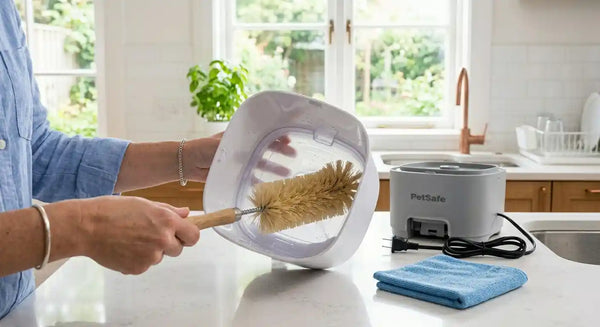
This is the pet feeder deep clean move that most people skip. Grab a clean, dry bottle brush or a long-handled kitchen cleaning brush and sweep the inside walls of the hopper. You're looking for clumped kibble dust, oily residue along the sides, and any dark spots that might indicate early mold. For cleaning a smart pet feeder hopper without disassembling, keep the brush dry at this stage — you don't want moisture in an area you can't fully dry out later.
Step 3: Wipe Down with a Barely-Damp Cloth
Dampen a microfiber cloth with clean water — not soaking, just barely moist — and wipe down the inner walls of the hopper. Follow immediately with a completely dry cloth. The goal here is to pick up fine dust and residue without introducing standing moisture. If there's stubborn buildup, a second pass with a cloth that has a tiny drop of dish soap is fine, but you must do a final dry-cloth wipe after.
Step 4: Check and Clean the Dispensing Tube or Auger
The dispensing tube is where pet feeder filter replacement and clog-clearing becomes relevant. Most feeders have a rotating auger or paddle that pushes kibble through a chute. Use a dry bottle brush or a pipe cleaner to push through the chute opening and clear out any stuck pieces. If your model has a removable tube (check your manual — most do), pull it out, wash it separately under warm water, and let it air dry completely before reattaching. The Wi-Fi App Control Dog Feeder at Paw Vortex has a particularly accessible chute design that makes this step quick.
Step 5: Wash the Food Tray and Lid Separately
Remove the food tray completely and wash it with warm water and dish soap. Rinse thoroughly. This part is genuinely the most important piece of the whole cleaning routine, because it's the surface your pet contacts directly at every single meal. Let it air dry or dry it with a clean towel before snapping it back in. Same goes for any lid, cover, or splash guard — wash, rinse, dry. The 3.5L Smart Scheduled Feeder has a tray that goes from feeder to sink and back in about 90 seconds.
Step 6: Wipe the Exterior and Sensor Areas
The exterior of the unit, the control panel, and any infrared sensors need a quick wipe with a lightly damp cloth. Avoid spraying anything directly onto the unit. Pay special attention to the sensor window (usually a small dark lens near the bowl area) — kibble dust on the sensor can cause missed feeding events or false jam detections.
Step 7: Reassemble and Test
Once everything is completely dry, reassemble your feeder, plug it back in, and run a manual dispense cycle to confirm everything is working correctly before refilling the hopper with fresh food. Never refill over old kibble — always start with an empty, clean hopper.
Can Automatic Pet Feeder Parts Go in the Dishwasher
This is honestly one of the most common questions I see from pet parents and the answer is: it depends entirely on the specific model, and you need to check your manual before assuming anything. Most automatic cat feeder cleaning guides will tell you that the food tray and hopper lid are typically dishwasher safe — but only on the top rack, cold or low-heat cycle. High heat warps plastic components in ways that aren't always immediately visible but can compromise the fit and seal over time.
The motor housing, base unit, and anything with electronics is obviously never going in the dishwasher. That part should go without saying. But here's what people get wrong: the hopper itself — even if it's labeled dishwasher safe — can develop microfractures from repeated dishwasher cycles that make it harder to sanitize because bacteria find their way into those tiny cracks. For pet feeder sanitizing purposes, hand washing with hot water and a good rinse is usually more reliable long-term anyway.
If you're looking for accessories that are genuinely easy to clean alongside your feeder, the Puzzle Raider Slow Feeder Bowl is fully hand-washable and pairs well with timed feeders for dogs who eat too fast. And if you want a supplemental feeding option that's even easier to clean, the Verwohnt Lick Mat rinses clean in about ten seconds under the tap. Automatic cat feeder cleaning is a lot less stressful when you have a simple daily-use backup option ready to go during deep-clean sessions.
Tips for Preventing Bacteria Buildup in Your Automatic Pet Feeder
Key Stats at a Glance
The majority of U.S. households own at least one pet, and automated feeding devices are among the fastest-growing segments of the pet products market. VCA Hospitals confirms that a dog's diet must deliver the right balance of amino acids, fatty acids, vitamins, and minerals to maintain healthy tissue function [VET-1] — none of which matters if contaminated feeding equipment is undermining those nutrients at delivery. VCA also notes that portion-controlled feeding is among the most effective tools for managing cat and dog obesity [VET-2][VET-3], which means a malfunctioning or clogged feeder that dispenses incorrect amounts could have real health consequences over time. Based on Paw Vortex customer feedback, pet parents who clean their feeder trays daily report significantly fewer instances of their pets refusing meals or showing signs of digestive upset.
How to Remove Mold from Automatic Pet Feeder
Finding mold in your pet's feeder is alarming, but it's also more common than most people want to admit. Mold in a pet feeder almost always traces back to one of two things: moisture getting into a hopper that wasn't completely dry after cleaning, or wet food residue that wasn't fully cleared between meals. Either way, here's how you handle it. First — and I cannot stress this enough — remove all remaining food and throw it out. Do not try to salvage kibble that's been near visible mold. Toss it.
For pet feeder mold prevention and removal, white distilled vinegar is your friend. Fill the affected removable components with a 1:1 solution of white vinegar and warm water and let them soak for 15 to 20 minutes. Vinegar is a natural antifungal that breaks down mold at the cellular level without leaving harmful chemical residues that could affect your pet. After soaking, scrub with a bottle brush, rinse thoroughly with hot water, and allow everything to air dry completely — and I mean completely, like two full hours in open air — before reassembling. For any non-removable surfaces where you spot mold, use a vinegar-dampened cloth to scrub, then wipe with a clean dry cloth.
Pet feeder bacteria buildup is related but distinct from mold. Bacteria thrive in the thin layer of fat and protein residue left behind by dry kibble, even when there's no visible moisture. This is why pet feeder sanitizing needs to happen on a schedule, not just when something looks dirty. A feeder can harbor significant bacterial loads without any visible sign — no smell, no discoloration — particularly in the dispensing mechanism. Pair your feeder with a Smart Stainless Steel Water Fountain that's equally easy to disassemble and clean — stainless steel surfaces resist bacterial adhesion far better than plastic, and keeping water fresh reduces the chance your pet carries moisture from their water bowl back to the feeder tray.
The ChefAide Lick Mat is another useful tool here — during deep-clean days when your feeder is drying out, these mats let you offer a meal without having to rush the drying process and risk reassembling a damp feeder.
Best Way to Sanitize Automatic Cat Feeder Bowl
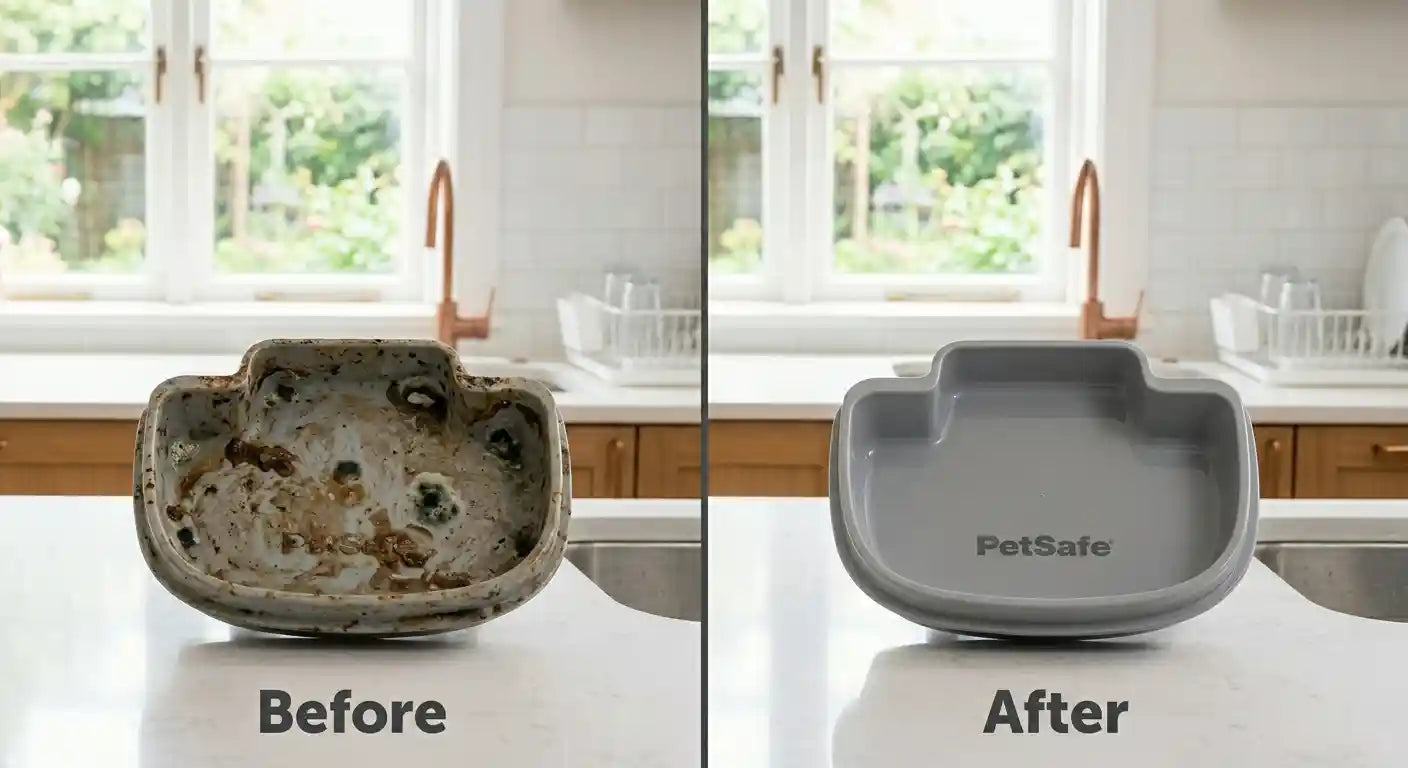
The most effective method for sanitizing an automatic cat feeder bowl is a hot-water wash with unscented dish soap followed by a 5-minute soak in a diluted white vinegar solution (one part vinegar to three parts water), then a thorough rinse and complete air dry. Cats are particularly sensitive to strong cleaning product residues — their sense of smell is roughly 14 times more powerful than ours, and a bowl that smells like bleach or citrus cleaner will get flat-out rejected at mealtime. I learned this firsthand with Zoey. I once used a lavender-scented dish soap on her feeder tray and she sniffed it, looked at me with pure betrayal, and walked away. The whole evening was a disaster.
For automatic cat feeder cleaning, stick to fragrance-free dish soap only. No bleach, no antibacterial sprays with added scent, no citrus-based cleaners. Veterinary guidance consistently emphasizes that cats are highly sensitive to many common household chemicals, and VCA notes that even dietary changes need to be handled carefully to avoid triggering stress-related refusal behaviors [VET-2]. A smelly bowl is, in its own small way, a dietary change from your cat's perspective.
If you want a feeder bowl option that's genuinely low-maintenance to sanitize, the Frienhund Cat Feeder has a removable stainless tray that takes maybe 30 seconds to wash. And the 6-Meal Dog Feeder with Music Reminder is designed for dogs who eat enthusiastically — which usually means messier trays — and its wide, shallow bowl is much easier to scrub clean than deep-dish designs.
Common Mistakes to Avoid When Cleaning Your Automatic Pet Feeder
Signs Automatic Pet Feeder Needs Cleaning Urgently
Your pet will usually tell you before the visible signs appear — if your dog or cat suddenly hesitates at their feeder, sniffs the bowl and walks away, or starts eating noticeably less than usual, a dirty feeder is often the first thing to investigate. These behavioral signals can precede visible contamination by days. A feeder that smells fine to you can smell absolutely rancid to a dog, whose nose is somewhere between 10,000 and 100,000 times more sensitive than ours, no cap.
More obvious urgent signs include visible dark spots or fuzzy growth inside the hopper (that's mold, clean it immediately), a sour or musty smell coming from the dispenser area, kibble coming out clumped or discolored, and any visible slime or film inside the food tray. If you spot any of those, don't wait for your cleaning schedule day — do a full deep clean right then. VCA Hospitals notes that changes in how pets drink or eat are often the first indicators something is wrong and warrant prompt attention [VET-1]. A pet suddenly refusing their automatic feeder falls squarely in that category.'
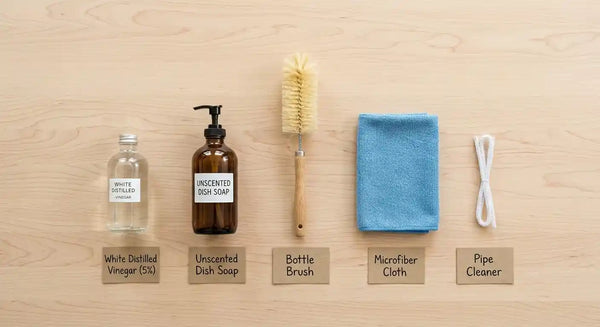
From an automatic feeder maintenance standpoint, the biggest mistake people make is cleaning only what they can see and skipping the dispensing mechanism entirely. The inside of the chute is dark, hard to see, and exactly where old kibble accumulates. A large-capacity feeder like the 4-to-6L Auto Feeder has a bigger hopper volume, which is great for convenience but also means more surface area where residue can hide — so bigger hoppers need that weekly brush-out just as much as smaller ones, if not more. And if your feeder is also doubling as a slow-feed solution, the stainless steel slow feeder bowls at Paw Vortex are a great backup option precisely because stainless is so easy to sanitize completely.
Another common mistake is reassembling a feeder that isn't completely dry. Even a little residual moisture in the hopper creates the exact conditions mold needs. If you're in a hurry, use a clean dry cloth to pat everything down and then give it another 30 minutes open to air before reassembling. Patience here saves you from a full mold-removal session later.
Can You Use Vinegar to Clean Automatic Pet Feeder
Yes, white distilled vinegar is one of the best and safest cleaning agents you can use on an automatic pet feeder, and it's genuinely underrated for this purpose. It's non-toxic to pets once rinsed, it has natural antifungal and antibacterial properties, and it breaks down the fatty kibble residue that dish soap alone sometimes struggles with. The key word is "rinsed" — don't just wipe the vinegar off, actually rinse with clean water until the vinegar smell is gone, then dry completely.
For automatic feeder maintenance, a monthly vinegar soak of all removable plastic and stainless parts is a solid preventative measure even when there's no visible mold or bacteria concern. Think of it as a reset — you're not just removing what you can see, you're neutralizing the microbial load that you can't. This is especially relevant for pet feeder sanitizing in multi-pet households, where feeders see higher throughput and more saliva exposure.
What you should not use: bleach (toxic residue risk), alcohol-based sprays (can damage plastic and electronics), citrus-based cleaners (cats in particular find the scent aversive and may refuse to eat near them), and anything with artificial fragrance. The goal of pet feeder sanitizing is a clean, odor-neutral surface that your pet will comfortably approach at mealtime. Keep it simple. And if you're also managing a litter box setup — the Paws & Suds Paw Cleaning Cup is a handy companion product for overall pet hygiene, designed to keep your pet's paws clean between the litter box and the feeding area. Less mess carried to the bowl means a cleaner feeding environment overall. If litter box odor is a related concern, the OMCPET Self-Cleaning Litter Box handles the heavy lifting on that front automatically.
Conclusion
Final Tips for Cleaning and Maintaining Your Automatic Pet Feeder
Here's the honest summary of everything I've learned from years of owning automatic feeders, cleaning them, and occasionally neglecting them long enough to learn a lesson: the cleaning part is genuinely not that hard once it's a habit. The daily tray wash takes maybe two minutes. The weekly hopper brush-out takes another ten. The monthly deep clean, done right, takes about 30 minutes including drying time. That's it. That's the entire time investment.
What makes the difference is treating your feeder the same way you'd treat any other food prep surface in your home. You wouldn't let your own cereal bowl go unwashed for a week. Your pet's feeding equipment deserves the same standard. If you're in the market for a feeder that makes this whole process easier, the smart self-cleaning ecosystem is genuinely where pet tech is heading — even litter box maintenance has gotten hands-off with options like the TAKOYI Smart Automatic Litter Box and the 65L Self-Cleaning Litter Box with Health Tracker, which frees up mental bandwidth to focus on the parts of pet care that actually need your attention — like making sure the feeder is clean.
Recommended from Paw Vortex
For cat owners looking for a feeder that's both easy to clean and reliable for scheduled feeding, the Smart Pet Feeder 3L with App Control is a top pick — the removable stainless tray wipes clean in seconds and the hopper design minimizes residue buildup. For households with both dogs and cats, the 6-Meal Smart Feeder handles multiple meal schedules and has a disassembly process simple enough that cleaning stays genuinely low-effort. Browse the full range of Pet Feeders at Paw Vortex to find the right fit for your furbaby's routine — every model we carry is selected with cleanability as one of the core criteria. You can also explore our full Pet Cleaning collection for accessories that make the whole hygiene routine easier. For everything else your pet needs, Premium Pet Supplies is what we do.
How to Prevent Bacteria Buildup in Automatic Pet Feeder
Long-term pet feeder bacteria buildup prevention comes down to three habits used consistently: daily tray washing, weekly hopper cleaning, and monthly deep sanitizing. Beyond the schedule, there are a few environmental factors worth managing. Store your feeder away from direct sunlight — UV exposure degrades plastic over time and creates micro-surface changes that bacteria adhere to more easily. Keep the feeding area dry and well-ventilated, because humidity is bacteria's best friend. And if you live somewhere particularly warm and humid, consider bumping your weekly clean to every five days rather than every seven.
For wet or semi-moist food feeders specifically, the bacteria math changes significantly. Wet food at room temperature enters the "danger zone" (40°F to 140°F) within two hours, meaning any portion not consumed in that window is a bacteria risk. If you're using an automatic feeder for wet food, your cleaning schedule needs to be daily at minimum — full wash after every meal cycle, every time. The PawVortex Smart Pet Feeders collection includes models with ice-pack-compatible bases specifically designed for wet food portioning with reduced spoilage risk.
Pet feeder mold prevention and pet feeder sanitizing aren't just about the feeder in isolation — they're about the whole feeding environment. A clean feeder sitting next to a damp water mat, surrounded by tracked litter and kibble crumbs, is going to get dirty faster. The cleaner the entire feeding station, the longer each individual cleaning holds. Keep the floor area around the feeder swept, keep the water bowl fresh, and if you're not already using a water fountain with a filter, that's genuinely worth considering — stagnant water bowls introduce their own contamination risk that can cycle back to the feeding area. That's the full picture of automatic feeder maintenance done right.

About Paw Vortex
Paw Vortex is your trusted partner in pet care — design-forward, expert-curated solutions for every stage of your pet's journey. Free shipping on orders over $50.
hello@pawvortex.com · www.pawvortex.com · Facebook · Instagram · YouTube
Frequently Asked Questions
How often should you clean an automatic pet feeder?
You should wash the food tray of an automatic pet feeder every day, clean the hopper and dispensing mechanism weekly, and perform a full deep clean every two to four weeks. For wet food feeders, the tray must be washed after every single meal cycle because wet food enters bacterial danger zones within two hours at room temperature. Dry kibble feeders have more flexibility, but weekly hopper cleaning is still non-negotiable for preventing mold and bacteria from building up in the residue left behind by oily kibble dust.
How do you clean an automatic pet feeder hopper without disassembling it?
To clean an automatic pet feeder hopper without full disassembly, unplug the unit, empty all remaining kibble, sweep the interior walls with a dry bottle brush to remove dust and residue, then wipe with a barely-damp microfiber cloth followed immediately by a completely dry cloth. This method removes kibble dust, oil residue, and early bacterial film without introducing moisture that could cause mold. Avoid any wet cleaning inside the hopper unless you can guarantee the interior will dry completely before you refill it — this usually means leaving it open to air for at least two hours.
Can automatic pet feeder parts go in the dishwasher?
Most automatic pet feeder food trays and hopper lids are dishwasher safe on the top rack using a cold or low-heat cycle only, but the motor base and any electronic components must never go in the dishwasher under any circumstances. High-heat drying cycles can warp plastic components even on parts labeled dishwasher safe, so the top-rack, no-heat setting is the only safe dishwasher option. When in doubt, hand washing in hot water with unscented dish soap and then air drying is more reliable for long-term component integrity and more effective at removing the fatty residue from dry kibble.
How do you remove mold from an automatic pet feeder?
To remove mold from an automatic pet feeder, discard all remaining food, soak all removable plastic components in a 1:1 solution of white distilled vinegar and warm water for 15 to 20 minutes, scrub with a bottle brush, rinse thoroughly with hot water, and allow everything to air dry for at least two hours before reassembling. White vinegar is safe for pets once rinsed clean and is one of the most effective antifungal agents available without introducing toxic chemical residues. Never skip the full air-drying step — reassembling a slightly damp feeder is what causes mold to return within days of cleaning.
What is the best way to sanitize an automatic cat feeder bowl?
The best way to sanitize an automatic cat feeder bowl is to wash it daily with unscented dish soap and hot water, then do a weekly 5-minute soak in a diluted white vinegar solution (one part vinegar to three parts water), followed by a thorough hot-water rinse and complete air drying. Cats are especially sensitive to cleaning product residues and artificial fragrances — a bowl that smells like scented soap or citrus cleaner will often cause a cat to refuse their meal entirely. Fragrance-free products and vinegar are the two safe, effective options for feline feeder hygiene.
What are the signs that an automatic pet feeder needs cleaning urgently?
The most urgent signs that an automatic pet feeder needs immediate cleaning are visible dark spots or fuzzy growth inside the hopper (mold), a sour or musty smell from the dispenser area, kibble dispensing in clumps rather than individual pieces, a slimy film inside the food tray, or your pet suddenly hesitating at the feeder or refusing to eat. Behavioral refusal often precedes visible contamination, because pets can detect bacterial and mold odors long before humans can. Any of these signs should trigger a full deep clean the same day — not at the next scheduled cleaning window.
Can you use vinegar to clean an automatic pet feeder?
Yes, white distilled vinegar is one of the safest and most effective cleaners for automatic pet feeders, as long as all surfaces are thoroughly rinsed with clean water afterward until the vinegar smell is completely gone. Vinegar's natural antifungal and antibacterial properties make it effective against both mold and the bacterial film left by fatty kibble residue, and it leaves no toxic chemical residue once rinsed. Do not use apple cider vinegar (it leaves a sugar residue that can encourage bacterial growth), bleach (toxic to pets), alcohol-based sprays (damages plastic), or scented cleaners of any kind.
How do you prevent bacteria buildup in an automatic pet feeder?
Preventing bacteria buildup in an automatic pet feeder requires three consistent habits: washing the food tray daily, brushing out the hopper weekly, and performing a full sanitizing deep clean with white vinegar monthly. Beyond the cleaning schedule, keep the feeder away from direct sunlight and in a dry, well-ventilated area, because warmth and humidity dramatically accelerate bacterial growth on food residue. Never refill the hopper over old kibble — always start each refill with an empty, clean, completely dry hopper to prevent the old residue from contaminating fresh food.
How do you clean a WiFi smart pet feeder without damaging the electronics?
To clean a WiFi smart pet feeder without damaging its electronics, always unplug the unit before cleaning, never spray or pour any liquid directly onto the base unit or control panel, and use only a barely-damp microfiber cloth for the exterior and sensor areas. The safe rule is simple: anything with a circuit board, motor, or battery compartment gets wiped — not washed. All removable parts (tray, hopper lid, dispensing tube if removable) can be washed in warm soapy water or soaked in diluted vinegar, but they must be completely dry before being reattached to the electronic base. A common mistake is wiping sensor windows with damp cloths and then not drying them — moisture on sensors causes false jam alerts and missed feedings.
References
- VCA Hospitals. "Nutrition: General Feeding Guidelines for Dogs". Retrieved 2026-04-27. https://vcahospitals.com/know-your-pet/nutrition-general-feeding-guidelines-for-dogs
- VCA Hospitals. "Obesity in Cats". Retrieved 2026-04-28. https://vcahospitals.com/know-your-pet/obesity-in-cats
- VCA Hospitals. "Obesity in Dogs". Retrieved 2026-04-28. https://vcahospitals.com/know-your-pet/obesity-in-dogs
- AKC. "How to Potty Train Puppies: A Comprehensive Guide for Success". Retrieved 2026-04-27. https://www.akc.org/expert-advice/training/how-to-potty-train-a-puppy/
- VCA Animal Hospitals. (2026). Diabetes Mellitus in Cats: Overview. Retrieved 2026-05-02, from https://vcahospitals.com/know-your-pet/diabetes-mellitus-in-cats
- VCA Hospitals. "Dental Disease in Cats". Retrieved 2026-04-27. https://vcahospitals.com/know-your-pet/dental-disease-in-cats


