

You call their name. They blink slowly, turn away, and begin meticulously washing their paw. It’s a universal cat owner experience that leads to one burning question: Are they ignoring me, or do they just not know their name?
Science finally has the answer, and it might surprise you. Let's dive into the fascinating research on the feline mind.
The Short Answer: Yes, Cats Know Their Names
Your cat may not come when called, but that doesn't mean she's not listening. In fact, she's likely ignoring you on purpose.
Groundbreaking research from Japan, published in the journal Scientific Reports, has demonstrated that domestic cats can indeed recognize their own names in a series of spoken words. They can distinguish "Fluffy" from other similar-sounding words like "fluffy," "puffy," and "muffy."
How Did Researchers Figure This Out?
In a series of clever experiments, researchers played recordings of cat owners saying four different words, followed by the cat's actual name. They measured the cats' responses through subtle cues like ear twitches, head movements, and vocalizations.
The result? Cats consistently perked up when they heard their names, even when spoken by a stranger. This proves they recognize the specific sound of their name, not just their owner's familiar tone.
But Wait, There's More: Cats Know Each Other's Names Too!
Just when you thought it couldn't get more fascinating, follow-up research revealed that cats living in multi-cat households also learn the names of their feline siblings.
In a 2022 study, researchers showed cats a picture of a familiar cat while playing a recording of their owner saying either the correct name or an incorrect one. The household cats stared longer at the screen when the name and face didn't match—a phenomenon known as the "expectancy violation effect." Essentially, they were puzzled because their mental database told them that "Whiskers" should not be paired with a picture of "Mittens."
This means your cats aren't just cohabitating; they have a complex social understanding of who's who in your home.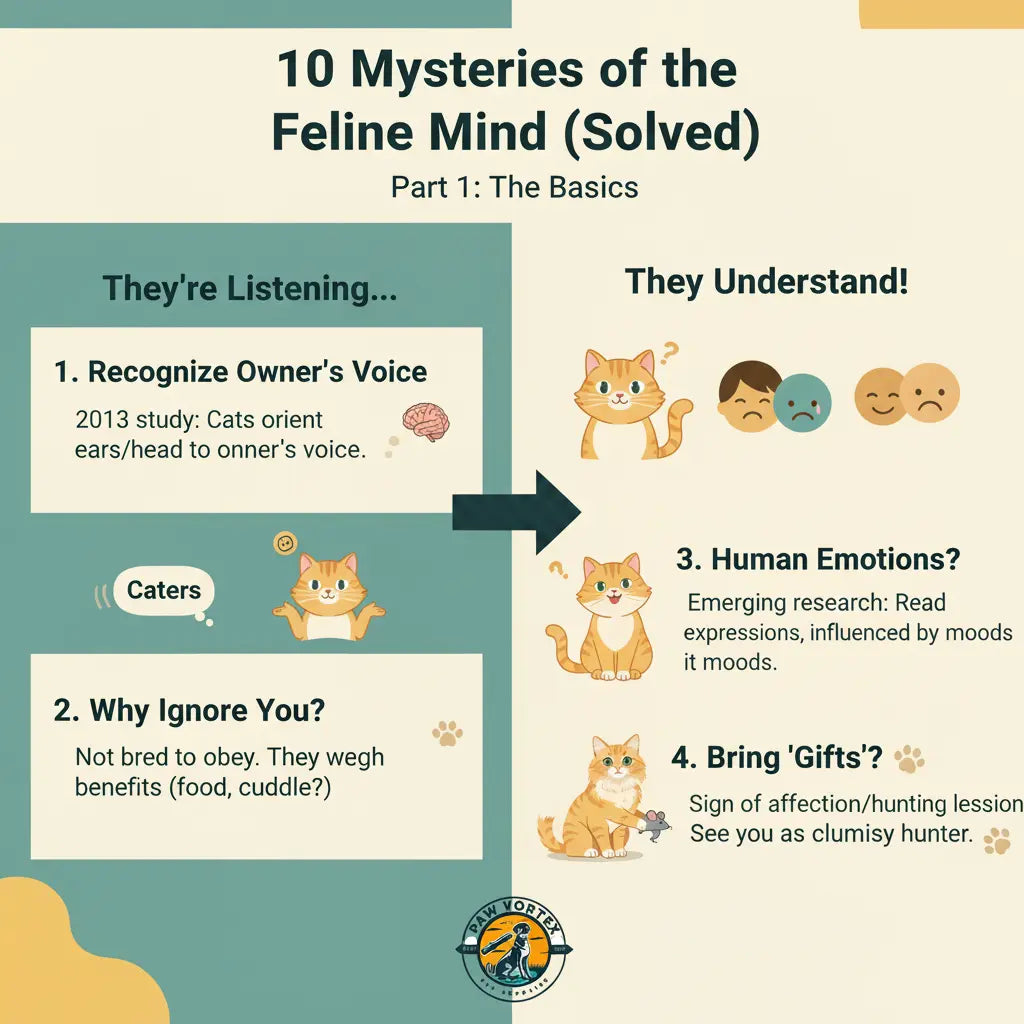
10 Other Mysteries of the Feline Mind (Solved!)
1. Do Cats Recognize Their Owner's Voice?
Yes. A 2013 study found that cats can identify their owner based on voice alone, responding with orienting behaviors like ear and head movements.
2. Why Do Cats Ignore Us When We Call Them?
This is where understanding cat behavior is key. Unlike dogs, cats weren't bred to follow commands. Their independence means they weigh the benefits of responding. Is there food? A cuddle? If not, the response is often a resounding "meh."
3. Can Cats Understand Human Emotions?
Emerging research says yes. Studies suggest cats can read human facial expressions and are influenced by their owner's moods. They often provide comfort when they sense we're upset.
4. Why Do Cats Bring Us "Gifts"?
That dead mouse on your pillow is actually a sign of affection and a hunting lesson. Your cat sees you as a clumsy, non-hunting family member who needs to be fed. Consider it a twisted compliment. Interactive pet toys can satisfy this instinct in a less messy way.
5. What Does a Cat's Purr Mean?
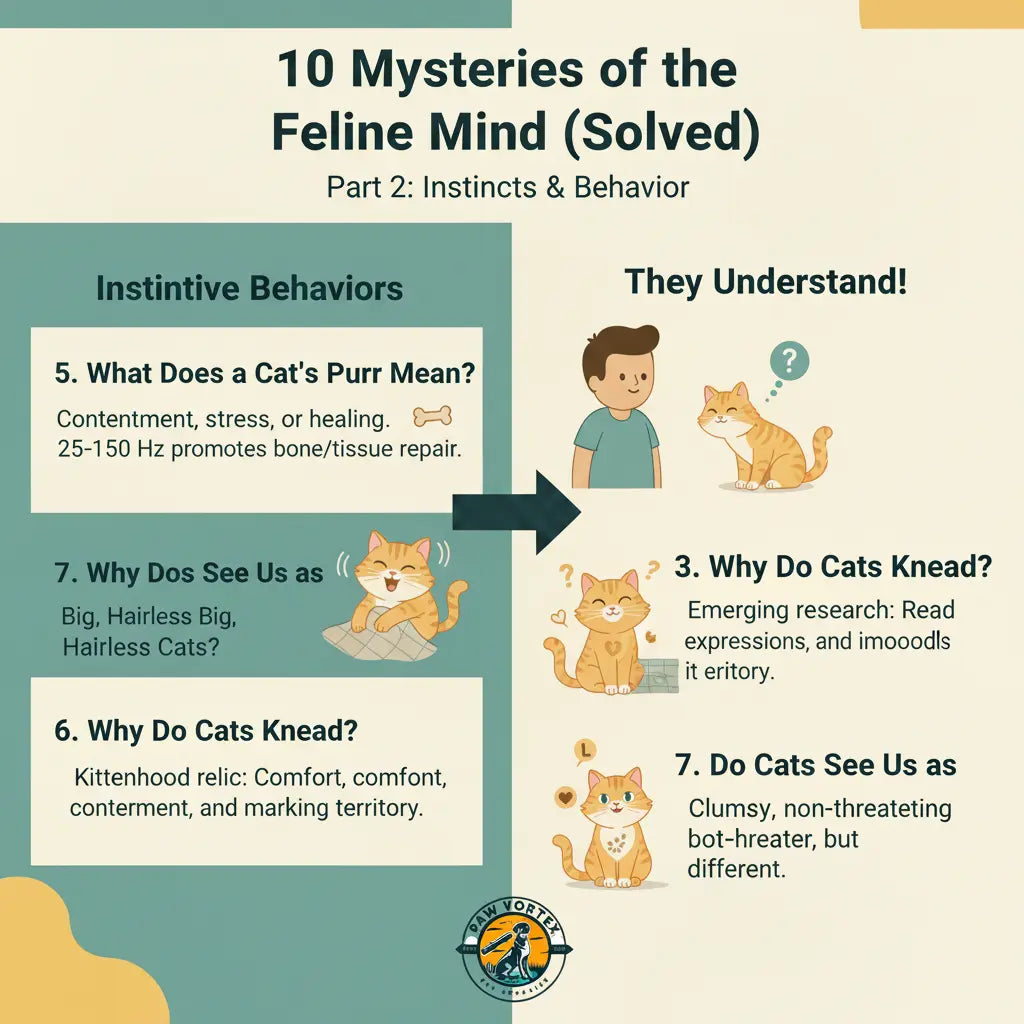
While contentment is a common reason, cats also purr when stressed, in pain, or to promote healing. The frequency of a cat's purr (25-150 Hz) has been shown to promote bone and tissue regeneration.
6. Why Do Cats Knead?
This "making biscuits" behavior is a holdover from kittenhood, when kneading stimulated milk flow from their mother. In adulthood, it's a sign of comfort, contentment, and marking territory with scent glands in their paws.
7. Do Cats See Us as Big, Hairless Cats?
Probably not. Leading behaviorists like John Bradshaw suggest cats see us as clumsy, non-threatening cats, but they understand we are different. They use specific vocalizations with humans that they don't use with each other.
8. Can Cats Feel Jealousy?
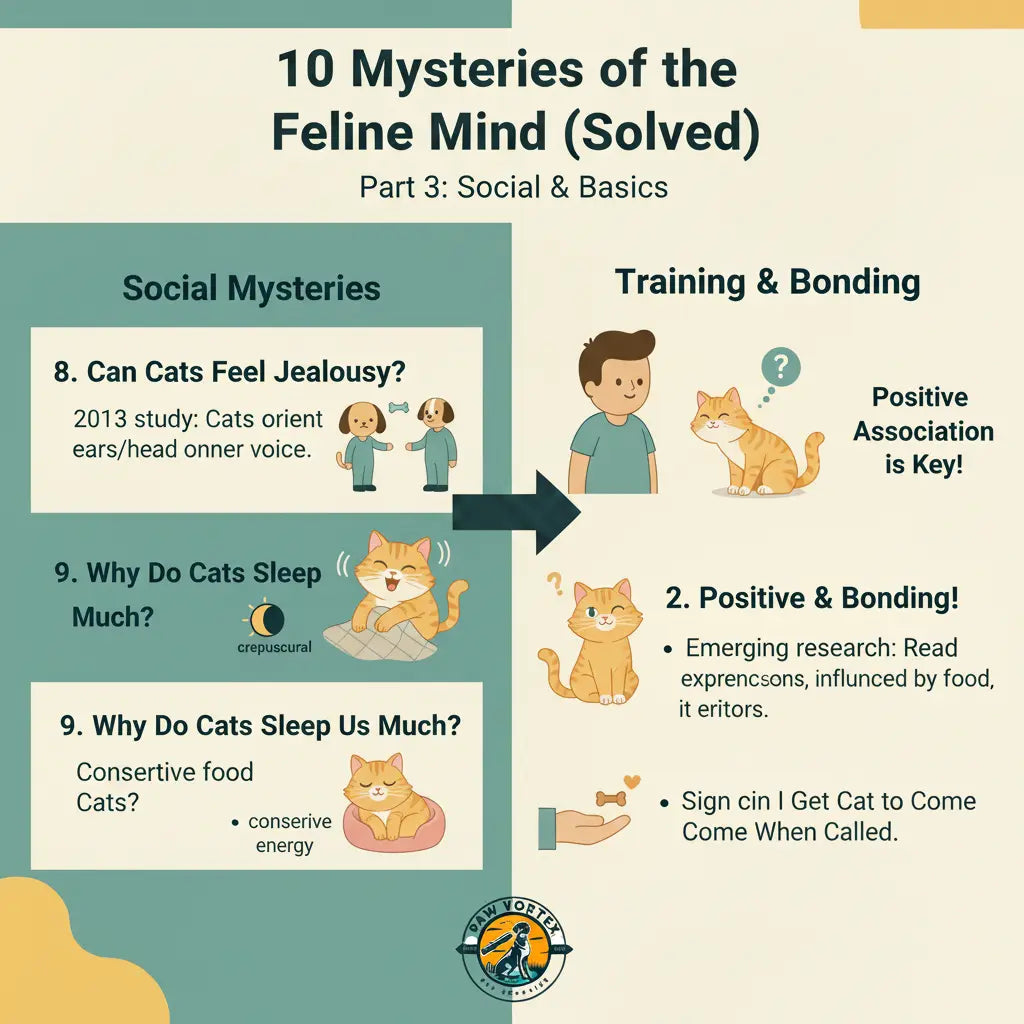
While not identical to human jealousy, cats can exhibit jealous-like behaviors, such as coming between you and another pet or person vying for your attention.
9. Why Do Cats Sleep So Much?
Cats are crepuscular (most active at dawn and dusk), a trait inherited from their wild ancestors. Their sleep-wake cycle is designed for conserving energy for hunting. A cozy cat bed is essential for their many naps.
10. How Can I Get My Cat to Come When Called?
The secret is positive association. Always reward them with a high-value treat, petting, or play when they come. Never call them for something they dislike, like a bath or medication.
 Final Thoughts
The science is clear: your cat is likely far more aware of you and their environment than they let on. They know their name, the names of their furry siblings, and your voice. Their occasional indifference isn't a lack of understanding—it's simply a reflection of their independent nature.
By understanding how your cat's mind works, you can build a richer, more communicative relationship with your fascinating feline friend.
Frequently Asked Questions
How many words can a cat understand?
There's no definitive number, but studies show they can learn specific words beyond their name, especially those associated with daily routines like "treat," "dinner," or "no."
Do cats know we love them?
While they may not conceptualize love as humans do, cats absolutely recognize and reciprocate affection, trust, and care through their own behaviors, like purring, head-butting, and grooming.
Why does my cat respond to my partner more than me?
This could be due to who feeds them most often, who plays with them most engagingly, or simply a matter of personality compatibility. Cats often bond strongly with one person.
Also Read:


